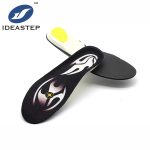
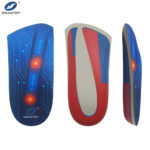
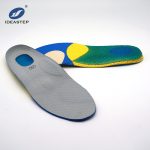
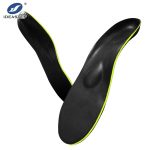
Material selection directly affects the structure, performance, and production cost of orthotic insoles. Leather, EVA, and PU are widely used in footwear manufacturing, but each serves a different purpose.
Leather is valued for its natural surface and moisture absorption, while EVA and PU offer greater flexibility in cushioning and structural design. For orthotic manufacturers and footwear brands, selecting the right material requires evaluating more than appearance or softness. Density, thickness, compression behavior, durability, and manufacturing compatibility also matter.
Understanding these differences helps B2B buyers develop insole products that meet specific footwear and market requirements.
1. Understanding Leather, EVA, and PU Materials
Each material has different characteristics and manufacturing applications.
Leather
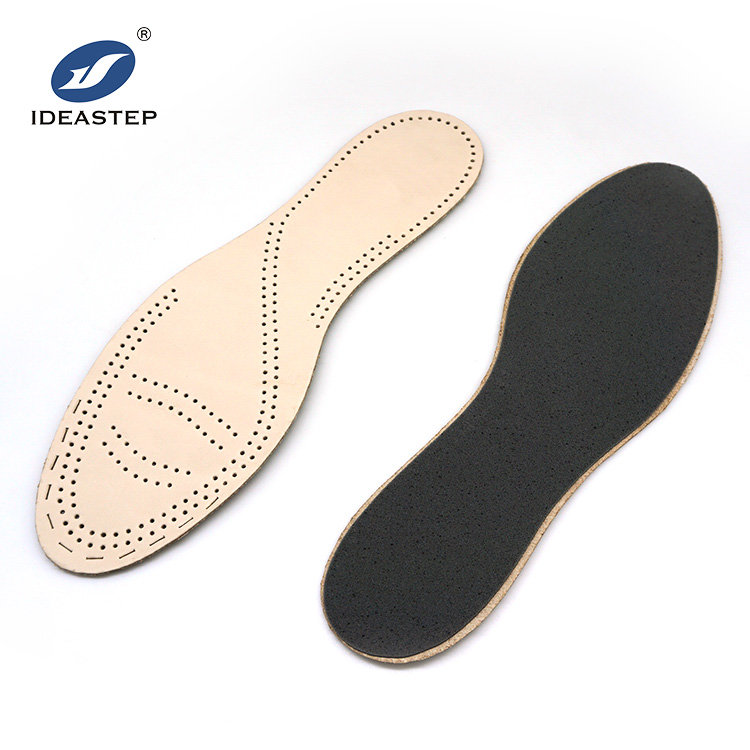
Leather is mainly used as an insole top cover or surface layer. Its natural grain, flexibility, and moisture absorption make it suitable for premium footwear and specialized orthotic products.
However, leather is not generally selected as the primary cushioning component. Its performance depends on material grade, thickness, tanning process, and surface treatment.
EVA Foam
EVA is widely used in orthotic insole manufacturing because of its lightweight structure and adjustable material specifications.
Manufacturers can select different densities, hardness levels, and thicknesses to meet specific cushioning and support requirements. EVA is also suitable for molding, cutting, and multilayer construction.
PU Foam
PU foam offers different cushioning and compression characteristics depending on its formulation and density.
It is commonly used as a cushioning layer in orthotic and footwear insoles. Its resilience and compression recovery make it a useful option for products requiring specific cushioning performance.
2. Leather vs Foam: Material Performance Comparison
The following table summarizes the main differences between leather, EVA, and PU.
| Performance factor | Leather | EVA Foam | PU Foam |
|---|---|---|---|
| Material type | Natural material | Synthetic foam | Synthetic foam |
| Surface characteristics | Natural grain and texture | Smooth or textured | Soft or engineered surface |
| Moisture absorption | Can absorb moisture | Generally low in closed-cell grades | Depends on foam structure |
| Weight | Depends on grade and thickness | Generally lightweight | Depends on density |
| Cushioning | Limited compared with dedicated foam | Adjustable through material selection | Depends on formulation |
| Structural applications | Mainly surface layers | Cushioning and supporting layers | Primarily cushioning layers |
| Specification consistency | Natural variation requires grading | Easier to standardize | Easier to standardize |
The materials are not direct substitutes in every application. Leather is primarily a surface material, whereas EVA and PU are more commonly selected for cushioning and structural functions.
3. Cushioning and Material Performance
For manufacturers, cushioning performance should be evaluated through material properties rather than general descriptions such as soft or comfortable.
Leather: Provides a natural surface and can absorb moisture. Its moisture-management performance varies with thickness, processing, and surface coatings.
EVA: Offers adjustable hardness and density, making it suitable for different insole constructions. Its compression behavior and thickness influence the cushioning and support characteristics of the finished product.
PU: Provides formulation-dependent resilience and cushioning. Density, compression recovery, and fatigue resistance should be considered when selecting specifications.
These differences make EVA and PU more suitable for engineered cushioning layers, while leather is generally used to achieve specific surface and finishing requirements.
4. Durability and Quality Considerations
Material durability depends on both raw material specifications and the finished product structure.
- Leather: Evaluate thickness consistency, abrasion resistance, surface treatment, and resistance to moisture-related changes.
- EVA: Check compression set, density consistency, dimensional stability, and repeated-loading performance.
- PU: Assess compression recovery, fatigue resistance, and material aging under relevant conditions.
For multilayer insoles, bonding strength is equally important. Poor adhesion between leather, foam, and supporting layers can lead to delamination during use.
Manufacturers should therefore test the complete construction rather than relying exclusively on individual material specifications.
5. Selecting Materials for Different Insole Applications
The appropriate material combination depends on footwear construction, product positioning, and performance requirements.
| Application | Suitable material combination | Main consideration |
|---|---|---|
| Premium dress footwear | Leather + EVA or PU | Surface finish and cushioning |
| Sports insoles | EVA or PU | Weight and cushioning performance |
| Custom orthotic insoles | EVA + support components | Density and structural requirements |
| Daily footwear insoles | Leather + EVA or PU | Surface quality and material compatibility |
| Specialized footwear | EVA, PU, and reinforcement materials | Application-specific construction |
For example, premium orthotic insoles may use leather as the top cover with EVA or PU underneath. Sports insole designs may rely more heavily on engineered foam to achieve specific weight and cushioning requirements.
6. Combining Leather and Foam in Custom Insole Design
Leather and foam are often more effective as complementary materials rather than competing options.
A typical multilayer construction may include:
- Leather top cover: Provides surface texture and moisture absorption.
- EVA cushioning layer: Offers lightweight cushioning and adjustable hardness.
- PU layer: Adds formulation-specific cushioning and resilience.
- Supporting base: Maintains the required shape and structural characteristics.
Manufacturers can adjust layer thickness, foam density, and material combinations according to the target footwear.
During development, particular attention should be given to bonding strength, dimensional stability, thickness tolerance, and compatibility between different materials.

7. What B2B Buyers Should Check Before Bulk Production
Before confirming an insole material specification, footwear brands and wholesale buyers should evaluate several production factors.
Material specifications: Confirm leather grade, foam density, hardness, and thickness rather than relying on general material descriptions.
Production consistency: Check color variation, dimensional tolerances, cutting quality, and material uniformity across batches.
Construction compatibility: Evaluate bonding strength and the interaction between leather, foam, and supporting components.
Finished-product performance: Test compression behavior, dimensional stability, and durability according to the intended application.
Sample approval: Review production samples before placing bulk orders to verify the complete insole construction against project specifications.
8. Custom Insole Manufacturing for B2B Buyers
For footwear brands, orthotic laboratories, and wholesale distributors, material combinations offer flexibility when developing differentiated insole product lines.
At Ideastep, we provide custom orthotic insole and EVA material solutions for B2B customers. Our manufacturing capabilities support different foam specifications, surface materials, and multilayer insole constructions.
Depending on project requirements, buyers can discuss:
- EVA foam density, hardness, and thickness.
- PU cushioning material options.
- Leather and fabric top cover combinations.
- Custom insole dimensions and structural configurations.
- OEM and ODM manufacturing specifications.
- Sample development and bulk production.
We recommend evaluating samples before confirming large orders to verify material compatibility, bonding quality, and finished-product specifications.
Contact Ideastep to discuss your custom insole requirements, request material samples, or explore wholesale manufacturing options.
Conclusion
Leather, EVA, and PU serve different functions in orthotic insole manufacturing. Leather provides natural surface characteristics, while EVA and PU offer greater flexibility in cushioning and structural design.
For many footwear applications, combining these materials is a practical approach to meeting specific product requirements.
The right selection depends on material specifications, footwear construction, production consistency, and target market positioning. For B2B manufacturers, evaluating the complete insole structure is essential before moving into bulk production.
Related Articles: Leather Orthotics: How Natural Materials Influence Comfort and Insole Design.