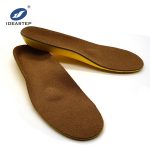
Leather remains a relevant material in orthotic insole manufacturing, particularly for products that require a natural surface finish, moisture absorption, and a premium appearance. Its flexibility and surface characteristics make it suitable for different footwear applications, but its performance depends heavily on material grade, thickness, and processing.
For orthotic manufacturers and footwear brands, the key is understanding how leather works with cushioning and support materials. Combining leather with EVA or PU can create functional insole constructions that balance surface quality, structural stability, and manufacturing requirements.

Why Leather Is Used in Orthotic Insole Manufacturing
Natural leather offers several material characteristics that make it suitable for specialized insole production.
Moisture absorption: Leather can absorb moisture through its fibrous structure. Its moisture-management performance depends on leather type, thickness, tanning process, and surface coating. Breathability and moisture absorption should be evaluated separately when selecting materials.
Flexibility: Leather offers a natural degree of flexibility, making it suitable for insole top covers and footwear components that require a relatively soft surface.
Surface quality: Natural grain, texture, and finishing options give leather a distinctive appearance. This makes it relevant to premium footwear, dress shoes, and specialized orthotic product lines.
Durability: Leather quality varies according to raw material selection and processing. Thickness consistency, abrasion resistance, and surface treatment should be considered when specifying leather for commercial production.
How Leather Influences Insole Construction
In most modern orthotic designs, leather functions as a surface material rather than the primary structural component. It can be combined with foam cushioning and supporting layers to meet different product specifications.
Leather Top Covers
Leather top covers provide a natural contact surface and a distinctive finish. They are commonly considered for premium orthotic insoles, dress footwear, and selected casual footwear applications.
During development, manufacturers should evaluate leather thickness, flexibility, surface consistency, and bonding compatibility. These factors affect the appearance and production quality of the finished insole.
Leather and EVA Foam Combinations
EVA foam is widely used in orthotic manufacturing because it is lightweight and available in different densities, hardness levels, and thicknesses.
A leather and EVA construction can include:
- Leather top cover: Provides surface texture and moisture absorption.
- EVA cushioning layer: Offers lightweight cushioning and adjustable material specifications.
- Supporting base: Maintains the required shape and structural characteristics.
This combination allows manufacturers to integrate natural surface materials with foam-based insole technology.
Leather and PU Foam Combinations
PU foam provides another option for multilayer insole construction. Its cushioning and resilience characteristics make it suitable for products requiring a different balance of softness and support.
When combined with leather, PU can serve as an intermediate cushioning layer. Material density, thickness, compression behavior, and bonding strength should be assessed as part of the finished structure.
Selecting the Right Leather for Insole Production
Different leather types offer different surface characteristics and manufacturing considerations.
| Leather type | Main characteristics | Potential application |
|---|---|---|
| Full-grain leather | Natural grain and distinctive surface | Premium insole top covers |
| Corrected-grain leather | More uniform processed surface | Commercial footwear insoles |
| Suede leather | Soft, napped texture | Selected insole surface applications |
| Nubuck leather | Fine, sanded grain surface | Premium footwear components |
The selection should reflect the target product’s appearance, performance requirements, and production cost.
Manufacturers should also check thickness tolerance, color consistency, surface defects, cutting performance, and material availability before confirming specifications for bulk orders.
Leather vs. Synthetic Materials in Insole Design
Leather and synthetic materials serve different functions in orthotic insole manufacturing. The appropriate choice depends on the required surface properties, structural design, and production specifications.
| Design factor | Natural leather | Synthetic materials |
|---|---|---|
| Surface texture | Natural grain and texture | Wide range of engineered finishes |
| Moisture absorption | Can absorb moisture | Depends on material composition |
| Appearance | Natural variation | More consistent finishes available |
| Specification consistency | Requires grading and selection | Often easier to standardize |
| Design flexibility | Depends on leather processing | Broad range of material options |
For many B2B projects, combining materials is more practical than using leather or synthetic materials exclusively.
Leather can provide the desired surface finish, while EVA, PU, and other materials contribute cushioning and structural performance.
Quality Control in Leather Orthotic Manufacturing
Material specifications alone cannot determine the quality of a finished insole. Manufacturers should evaluate the complete construction before approving mass production.
Key quality checks include:
1. Thickness and material consistency
Check leather thickness, surface defects, flexibility, and color variation to maintain consistent production quality.
2. Moisture performance
Evaluate water absorption and water vapor permeability according to the intended application. Surface coatings can significantly affect these properties.
3. Abrasion resistance
Assess surface durability under repeated friction to determine whether the leather is suitable for the target footwear category.
4. Bonding strength
Check adhesion between leather, EVA or PU foam, and supporting layers to reduce delamination during use.
5. Dimensional stability
Evaluate material deformation and changes in shape under relevant temperature and moisture conditions.
These checks help manufacturers establish more reliable product specifications and reduce quality issues during bulk production.
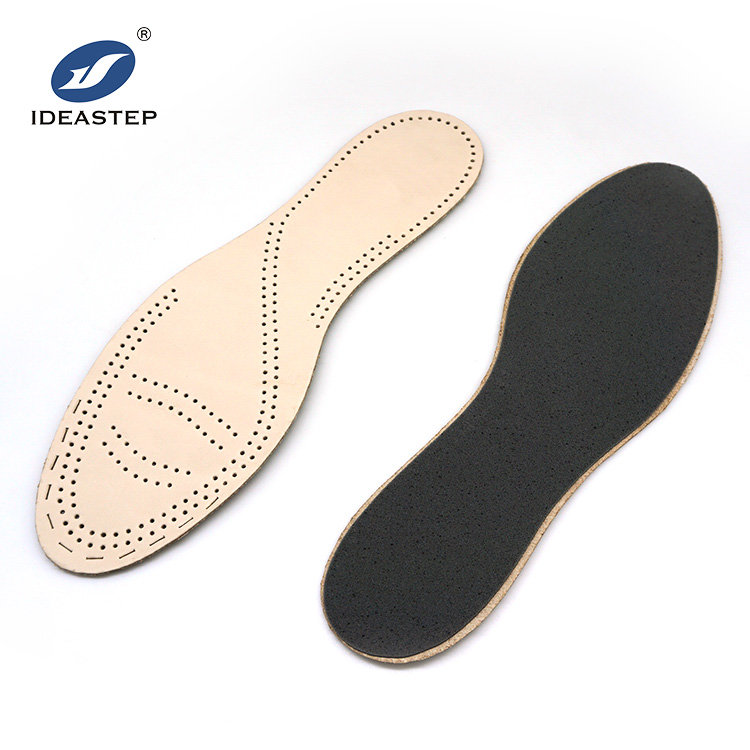
Custom Leather Orthotics for B2B Buyers
Leather orthotic insoles offer footwear brands and orthotic manufacturers an additional material option for developing differentiated product lines.
Depending on the project, manufacturers can combine leather top covers with EVA cushioning, PU foam, and other supporting materials to achieve specific construction requirements.
At Ideastep, we provide custom orthotic insole and EVA material solutions for B2B customers. Our manufacturing capabilities support projects involving different foam specifications, surface materials, and multilayer insole constructions.
For custom leather insole projects, buyers can discuss:
- Leather top cover materials and surface finishes.
- EVA density, hardness, and thickness.
- PU cushioning and multilayer combinations.
- Insole dimensions and structural requirements.
- OEM and ODM production specifications.
- Sample development and bulk manufacturing.
We recommend evaluating production samples before confirming large orders to verify material compatibility, bonding quality, surface consistency, and finished-product specifications.
Contact Ideastep to discuss your custom leather orthotic insole requirements, request samples, or explore wholesale manufacturing options.
Conclusion
Leather remains a practical surface material for orthotic insoles, offering natural texture, moisture absorption, and a distinctive finish.
Its role is most effective when integrated with suitable cushioning and supporting materials. Combining leather with EVA or PU allows manufacturers to develop different insole constructions while maintaining control over material specifications and production requirements.
For B2B buyers, selecting the right leather grade and manufacturing process is essential to achieving consistent product quality and meeting the requirements of different footwear markets.
Browse Related Products: https://www.aideastep.com/product/orthotic-insoles-genuine-leather-breathable-comfort-full-length/.