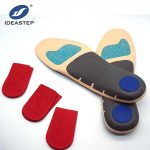
EVA foam is widely used in orthotic insole manufacturing because its density, hardness, and thickness can be adjusted for different structural requirements. Choosing the right grade, however, requires more than specifying whether the foam should be soft or firm.
Density and hardness measure different material properties. Both affect how EVA behaves under load, but neither alone determines cushioning, support, or durability.
For orthotic manufacturers, footwear brands, and wholesale buyers, understanding these differences is essential for selecting materials and maintaining consistent production quality.
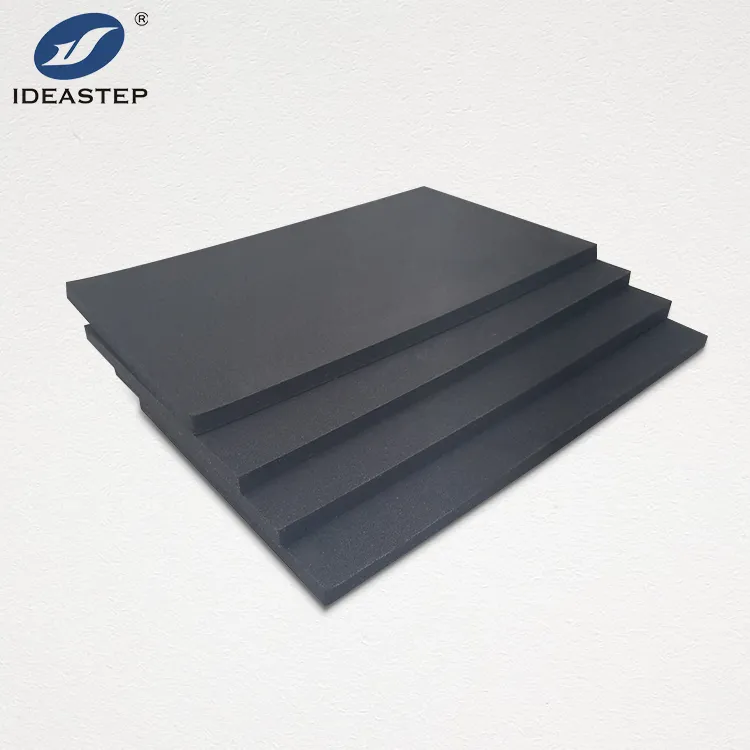
1. Understanding EVA Foam Density
Density refers to the mass of a material per unit volume. It is commonly expressed in kg/m³ or g/cm³.
In EVA foam manufacturing, density helps define material weight and provides a basis for comparing different foam grades.
- Low-density EVA: Generally lighter and more compressible. Often used in cushioning layers where weight reduction is a priority.
- Medium-density EVA: Offers a balance of weight and structural performance for various insole constructions.
- High-density EVA: Often selected for applications requiring greater material stability and resistance to deformation.
These are general material tendencies rather than fixed performance rules. Foam formulation and cell structure also influence how EVA behaves under compression.
2. Understanding EVA Foam Hardness
Hardness measures a material’s resistance to indentation. EVA foam is commonly tested using a Shore durometer, with Shore A frequently used for flexible foam materials.
A lower Shore A value indicates a softer material, while a higher value indicates a firmer one.
In orthotic insole production, hardness helps manufacturers specify the firmness of individual layers.
- Softer EVA: Suitable for cushioning layers and applications requiring greater surface compliance.
- Medium-hardness EVA: Used where cushioning and structural stability need to be balanced.
- Firmer EVA: Suitable for supporting layers that require greater resistance to indentation.
Hardness values should be compared using consistent test methods and specimen conditions. Thickness and testing procedures can affect measurement results.
3. EVA Density vs Hardness: What Is the Difference?
Density and hardness are not interchangeable. Density describes mass per unit volume, while hardness measures resistance to indentation.
| Property | Density | Hardness |
|---|---|---|
| Definition | Mass per unit volume | Resistance to indentation |
| Common unit | kg/m³ or g/cm³ | Shore A |
| Indicates | Material mass and structure | Material firmness |
| Relevance to insoles | Weight and material characteristics | Indentation resistance |
| Specification purpose | Compare foam grades | Define required firmness |
A higher-density EVA is not necessarily harder than a lower-density grade. Formulation, cell structure, and processing conditions can all affect the relationship between these properties.
For this reason, B2B buyers should specify density and hardness separately when sourcing EVA sheets or blocks.
4. How Density and Hardness Affect Insole Construction
Material selection should reflect the function of each layer rather than rely on a single specification.
Cushioning: Softer EVA generally deforms more easily under pressure. Its suitability depends on compression behavior and the required thickness of the finished layer.
Structural support: Firmer EVA may be appropriate for layers that need to resist indentation and maintain their shape. Compression set and dimensional stability should also be evaluated.
Product weight: Density directly affects the weight of an EVA component when its volume remains unchanged. This is an important consideration in lightweight insole development.
Repeated loading: Compression set, resilience, and fatigue performance help indicate how the foam responds to repeated loading. Hardness alone cannot establish long-term performance.
5. Selecting EVA for Different Insole Layers
Different parts of an orthotic insole have different material requirements. A multilayer construction allows manufacturers to combine EVA grades according to their intended functions.
| Insole component | Typical material direction | Key considerations |
|---|---|---|
| Top cushioning layer | Softer EVA | Surface compliance and thickness |
| Mid-layer | Medium-density EVA | Compression behavior and cushioning |
| Supporting base | Firmer EVA | Shape stability and structural requirements |
| Heel support area | Application-specific EVA | Resistance to deformation |
| Full-length base | Selected according to design | Weight, thickness, and overall stability |
For example, a multilayer orthotic insole may combine a softer upper layer with a firmer base. This separates the cushioning function from the structural requirements.
The final material specifications should be determined by the insole design, footwear construction, and intended loading conditions.
6. Other EVA Properties to Evaluate
Density and hardness are only part of the material specification. Manufacturers should also consider:
- Compression Set: Measures permanent deformation after compression and indicates how well the foam retains its original thickness.
- Resilience: Describes the material’s response to deformation and recovery.
- Tear Strength: Indicates resistance to tearing during cutting, shaping, and use.
- Abrasion Resistance: Relevant when foam surfaces are exposed to repeated friction.
- Dimensional Stability: Measures the ability to maintain dimensions under specified conditions.
- Thermoforming Performance: Important for heat-moldable applications. Processing temperature, forming time, and shape retention should be evaluated.
The relevant tests depend on the material’s intended function and the requirements of the finished insole.
7. Material Specifications to Confirm Before Bulk Orders
For orthotic manufacturers and wholesale buyers, clear specifications help reduce variation between production batches.
Before approving an EVA material, confirm:
Density and hardness: Define target values, tolerances, and test methods separately.
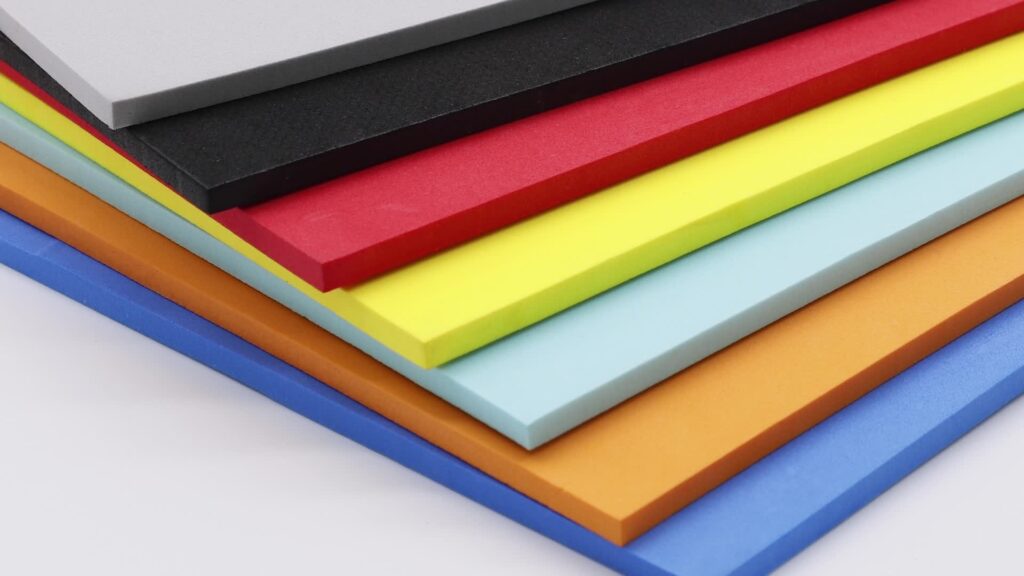
Dimensions: Specify sheet or block thickness, length, width, and acceptable tolerances.
Batch consistency: Check whether material properties remain stable across production runs.
Processing compatibility: Verify suitability for cutting, grinding, molding, and bonding.
Performance testing: Evaluate compression set, resilience, and other properties relevant to the application.
Sample approval: Test the material in the intended insole construction before confirming bulk production.
EVA may behave differently after cutting, molding, or bonding with other layers. Material approval should therefore include the finished construction, not just the raw foam.
8. Custom EVA Foam for Orthotic Insole Manufacturing
Different orthotic products require different combinations of EVA density, hardness, and thickness. Material specifications should match both the product design and the manufacturing process.
Ideastep supplies EVA foam materials and custom insole manufacturing solutions for footwear brands, orthotic laboratories, and wholesale buyers.
Project requirements can include:
- EVA density and Shore hardness specifications.
- Custom sheet and block thicknesses.
- Different foam grades and material combinations.
- Cutting, grinding, and molding requirements.
- Multilayer orthotic insole construction.
- OEM and ODM production.
Buyers can provide their target specifications for material evaluation and sample development before bulk production.
Contact Ideastep to discuss EVA foam specifications, request samples, or explore wholesale supply options.
Conclusion
Density and hardness serve different purposes in EVA foam selection. Density defines mass per unit volume, while hardness measures resistance to indentation.
For orthotic insole manufacturing, both should be evaluated alongside compression set, resilience, dimensional stability, and layer function.
A clear material specification helps manufacturers select suitable EVA grades, control production consistency, and develop insole structures that meet project requirements.
Explore More:
Dual Density EVA Foam Blocks for CNC Orthotic Insole Manufacturing
Choosing EVA Foam Sheets for Custom Orthotic Insole Production