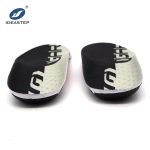
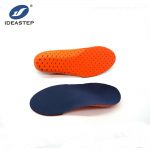
Full-length and three-quarter length orthotics differ in coverage, construction, and footwear compatibility. Although both can incorporate heel cups and arch support, their forefoot structures and material requirements vary.
For orthotic brands, footwear manufacturers, and distributors, insole length affects more than product dimensions. It also influences material usage, thickness distribution, shoe compatibility, and manufacturing specifications.
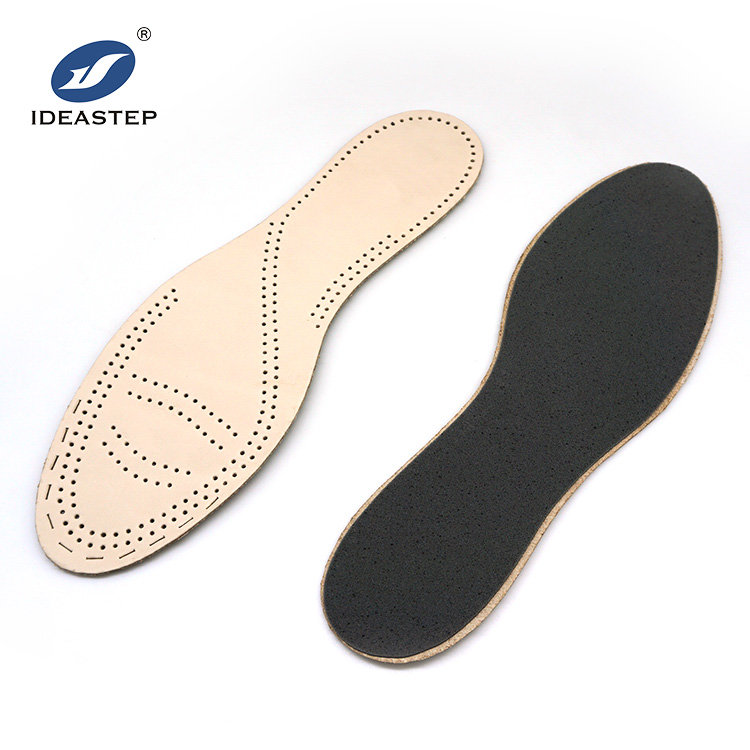
1. Full-Length Orthotics: Structure and Design
Full-length orthotics extend from the heel to the toe area, covering the entire plantar surface. They are generally designed to replace the original shoe sockliner or fit inside the footwear as a complete footbed, depending on available internal space.
This continuous coverage allows manufacturers to coordinate cushioning and support across the rearfoot, arch, and forefoot.
Common construction features include:
- EVA or PU cushioning layers
- Heel cups and integrated arch support
- Forefoot cushioning or reinforcement
- Fabric, mesh, leather, or synthetic top covers
- Multilayer structures combining different material properties
The continuous platform gives designers greater control over support and cushioning across the footbed. However, overall thickness must be managed carefully. An overly thick orthotic may reduce internal shoe volume, particularly when the original sockliner remains in place.
Therefore, development should account for the target footwear dimensions, including toe-box height, forefoot width, and existing footbed thickness.
2. Three-Quarter Length Orthotics: Structure and Design
Three-quarter length orthotics extend from the heel through the arch and stop before the toes, leaving the front section of the original shoe footbed exposed.
This format suits footwear where a full-length replacement is unnecessary or forefoot space is limited.
Typical construction features include:
- A defined heel cup
- Integrated or separate arch support
- A shorter cushioning platform
- A tapered front edge
- EVA, PU, or thermoplastic support components
The shorter design can reduce material usage and offer more flexibility for certain shoe constructions. However, the transition between the orthotic’s front edge and the remaining shoe footbed requires careful attention.
An abrupt height difference may create a ridge or affect stability. Front-edge thickness, taper, surface finishing, and bonding quality should therefore be checked during development.
3. Full-Length vs. Three-Quarter Length Orthotics: Key Differences
The main difference is coverage, which also affects construction, material distribution, and footwear compatibility.
| Design Factor | Full-Length Orthotics | Three-Quarter Length Orthotics |
|---|---|---|
| Coverage | Heel to toe area | Heel to forefoot, stopping before the toes |
| Forefoot structure | Integrated into the orthotic | Usually relies partly on the existing shoe footbed |
| Cushioning | Can cover the entire footbed | Concentrated within the shorter platform |
| Thickness control | Requires consistent thickness across the full length | Requires careful front-edge transition |
| Edge finishing | Perimeter and toe-area finishing | Tapered front edge is particularly important |
| Material usage | Generally requires more material | Generally uses less material |
| Shoe compatibility | Often designed to replace the original sockliner | Can work with the existing forefoot footbed, depending on construction |
| Typical applications | Athletic, casual, work, and orthotic footwear | Selected dress and casual footwear with limited forefoot space |
Neither format is inherently better. Full-length orthotics provide a continuous cushioning and support platform, while three-quarter length designs may suit footwear with restricted forefoot space.
Selection should depend on the shoe’s internal construction, required support area, and product specifications.
4. Structural Design: Heel Cup, Arch Support, and Forefoot Transition
The heel, arch, and forefoot sections need to work together, even when the orthotic does not cover the entire foot.
Heel Cup and Rearfoot Structure
Both designs can incorporate a heel cup to define the rearfoot structure.
Its depth, width, and wall geometry should match the target footwear. A heel cup that is too wide or deep may cause fitting problems in shoes with limited internal space.
During development, manufacturers should check:
- Heel cup depth and contour
- Rearfoot width
- Shell stiffness
- Heel-to-arch transition
- Compatibility with the shoe’s internal geometry
These dimensions should be confirmed through sample fitting rather than estimated from overall insole length.
Arch Support Structure
Arch support is a key structural element in both designs. The main difference is how the arch section connects with surrounding materials.
In full-length orthotics, the arch connects with both the rearfoot and forefoot sections. This allows manufacturers to coordinate support components and cushioning across the footbed.
Three-quarter length orthotics have a shorter platform. Consequently, the arch structure must transition into the front edge without creating an abrupt change in thickness or stiffness.
Depending on the design, manufacturers may use EVA, TPU, or other thermoplastic components to achieve the required structural characteristics.
Forefoot Design and Edge Finishing
Forefoot construction is one of the main differences between these formats.
Full-length orthotics include a dedicated forefoot section, allowing manufacturers to specify cushioning thickness, top-cover materials, and local structural features.
Three-quarter length orthotics stop before the toes, making the front edge a critical design detail.
A gradual thickness transition helps the shorter orthotic integrate with the remaining shoe footbed. The edge should also be smooth and stable to reduce lifting, curling, or separation during use.
5. Material Selection for Different Orthotic Lengths
Both formats can use similar materials, but their distribution and structural roles depend on the design.
EVA Foam
EVA foam is widely used in orthotic insole manufacturing and is available in different densities and hardness levels.
In full-length orthotics, EVA can cover the heel, arch, and forefoot. Different grades may also be combined to adjust cushioning and support within one product.
For three-quarter length orthotics, EVA can form the main base or cushioning layer. Since the platform is shorter, thickness control and front-edge finishing require particular attention.
Density and hardness should be specified separately because they describe different material properties. Manufacturers should also evaluate compression behavior, resilience, and dimensional stability for bulk production.
PU Foam
PU foam is another option for cushioning layers and multilayer constructions.
Depending on its formulation and physical properties, PU can provide different cushioning characteristics. It may be combined with EVA or structural support components in either orthotic format.
Material evaluation should cover compression behavior, thickness stability, bonding compatibility, and performance under repeated loading.
TPU and Thermoplastic Support Materials
TPU and other thermoplastic materials can form semi-rigid or structured support components.
For example, a thermoplastic shell may be integrated into the heel and arch sections, with softer materials providing surrounding cushioning.
In three-quarter length designs, the support component usually ends before the forefoot. Its front edge and transition to surrounding cushioning materials therefore need careful control.
Top-Cover Materials
Fabric, mesh, leather, microfiber, and other surface materials can be used with either orthotic length.
Full-length products require consistent coverage across the footbed. By comparison, three-quarter length orthotics need a clean, durable finish around the exposed front edge.
Material compatibility, adhesive selection, and resistance to surface separation should be checked on the finished construction rather than on individual materials alone.

6. Footwear Compatibility and Product Applications
Orthotic length should be determined by the internal structure of the target footwear, not simply by a preference for longer or shorter products.
Full-Length Orthotics
Full-length orthotics suit product development requiring a continuous heel-to-forefoot platform.
Common applications include:
- Athletic and sports footwear
- Casual footwear
- Work boots and occupational footwear
- Orthotic footwear
- Replacement sockliner programs
Manufacturers should assess shoe volume, toe-box height, forefoot flexibility, and original sockliner thickness.
In work boots and athletic footwear, excessive insole thickness can reduce available foot space and affect fit. Sample evaluation should therefore use the actual footwear models whenever possible.
Three-Quarter Length Orthotics
Three-quarter length orthotics can suit footwear with limited forefoot space or designs where the existing front footbed needs to remain in place.
Potential applications include:
- Selected dress shoes
- Casual footwear with limited internal volume
- Footwear designed around a shorter support platform
- Product ranges requiring a compact orthotic structure
Compatibility depends on more than available shoe length. Heel height, internal shape, sockliner construction, and orthotic positioning also influence the final fit.
A physical fitting check is necessary to confirm stability and avoid an unwanted height difference at the front edge.
7. Manufacturing and Quality Control
Both designs can use similar materials and production technologies, but their manufacturing priorities differ.
Full-length orthotics require consistent thickness, bonding, and surface finishing across a larger area. The forefoot section must also maintain its intended flexibility and structural profile.
Three-quarter length orthotics need closer attention to the front edge. The transition between the orthotic and the shoe’s existing footbed should be checked for height differences, lifting, and surface irregularities.
Key inspection points include:
- Overall length, width, and dimensional tolerances
- Heel cup geometry and arch profile
- Material hardness and thickness
- Bonding strength between layers
- Edge finishing and surface condition
- Structural consistency across production batches
- Fit within representative footwear samples
For multilayer constructions, adhesive compatibility and material stability also require assessment. A well-performing individual layer does not automatically guarantee a reliable finished product.
During sample approval, manufacturers should test orthotics in the intended shoe models to identify dimensional or fitting issues before bulk production.
8. OEM and ODM Development Considerations
Both full-length and three-quarter length orthotics can be developed through OEM and ODM projects. However, their technical specifications should reflect their different structural requirements.
For full-length orthotics, development generally covers:
- Overall length and width
- Forefoot thickness and cushioning
- Arch profile and heel cup geometry
- EVA, PU, and TPU combinations
- Top-cover materials and surface finishing
- Size grading and trimming specifications
For three-quarter length orthotics, the development process should also define:
- Overall platform length
- Front-edge taper and finishing
- Heel and arch support geometry
- Compatibility with existing shoe footbeds
- Structural stability at the forefoot transition
- Material thickness and bonding requirements
Before sampling, buyers and manufacturers should confirm product drawings, material specifications, size ranges, target footwear, and inspection requirements.
Clear specifications make sample evaluation more efficient and provide a consistent basis for quotations, production planning, and repeat orders.
Browse Related Products: https://www.aideastep.com/product/orthotic-insoles-genuine-leather-breathable-comfort-full-length/.