For footwear OEMs, wholesale distributors and foot care partners, one simple rule applies: a custom insole built for running shoes rarely works well in dress shoes, safety boots or therapeutic footwear. Every footwear category has its own internal space limits, use scenarios and end-user expectations. When you tailor custom insoles to match each shoe type and target market, you cut down fit complaints and product returns, and build more compelling product lines for your B2B buyers. This article walks through practical design considerations, material picks and market opportunities for custom insoles across major footwear categories.
1. Athletic and Performance Footwear
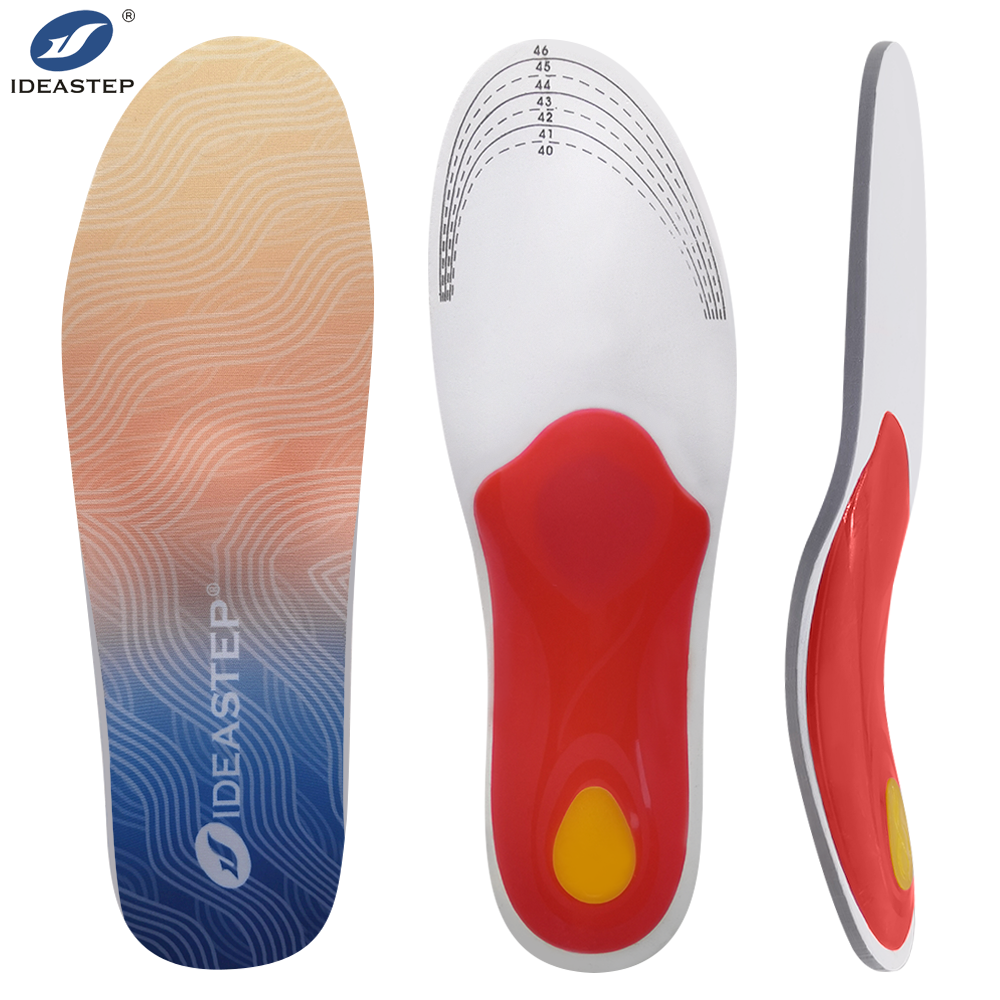
Running trainers, trail shoes, basketball and multi-sport footwear prioritise dynamic stability, impact absorption and low weight. Custom insoles for this segment typically use semi-rigid TPU or carbon fibre shells paired with high-rebound EVA top layers. Breathable, moisture-wicking surface fabrics are standard, as athletes deal with heavy sweating and repeated foot movement.
The design balances arch support and metatarsal relief without restricting natural foot flexion. Overly thick, stiff inserts crowd the toe box and disrupt gait. For sports retailers, team suppliers and athletic clinics, these custom insoles work great as an upsell option — either pre-installed in premium footwear or sold separately as replacement SKUs.
2. Work and Safety Footwear
Work boots, safety shoes and industrial footwear are made for users who stand or walk for hours on hard ground. Durability and anti-fatigue support are the top priorities. Custom inserts here use dense foam composites, reinforced heel cups and sturdy lamination that resists flattening after long shifts.
Many buyers in construction, healthcare and logistics need insoles compatible with safety toe caps and slip-resistant soles. The shape must sit securely inside the boot without shifting. This is a steady wholesale segment, ideal for distributors serving industrial supply chains and occupational health partners.
3. Casual and Lifestyle Footwear
Everyday sneakers, walking shoes and lightweight casual lines focus on all-day comfort instead of strong corrective support. Low-profile custom insoles with gentle arch contours are the go-to solution. Cork or soft EVA builds keep the insert slim, so the shoe still feels natural on the foot.
This is a good entry point for customisation. Brands can offer a comfort upgrade without full medical orthotic specifications. It fits high-volume wholesale orders, with simple branding options like embossed logos and custom colours for private label ranges.
4. Dress Footwear and High Heels
Formal oxfords, flats and high heels bring the biggest space challenge: internal volume is very limited. Custom insoles for this category must be ultra-thin, low-profile and precisely contoured. Bulkier orthotic shells simply cannot fit.
Designs focus on subtle arch support, metatarsal padding and heel stabilisation, rather than aggressive correction. For high heels, forefoot relief is critical to ease pressure on the ball of the foot. This niche serves fashion footwear brands, women’s shoe collections and clinics supporting professionals who need foot support for formal workwear.
5. Orthopaedic and Diabetic Footwear
This is a medical-grade segment with stricter performance and compliance requirements. Custom insoles for diabetic feet, foot drop, bunions and high arch issues are engineered for pressure redistribution, not just comfort. Seamless, low-friction top fabrics reduce blister and ulcer risk, while soft, compliant foams avoid sharp pressure points.
These inserts require full batch traceability, material biocompatibility testing and supporting documentation to meet CE and ISO standards. Buyers are mainly podiatry clinics, physical therapy practices, medical distributors and orthopaedic footwear specialists. Orders often mix small patient-specific runs and semi-custom bulk production.
6. Outdoor and Hiking Footwear
Hiking and trekking boots strike a balance between athletic flexibility and work-boot durability. Custom insoles here deliver reliable support, shock absorption over uneven ground and resistance to mud, moisture and temperature swings. Many buyers choose water-resistant top covers and reinforced heel containment.
Wholesale clients include outdoor gear brands, adventure retailers and camping supply distributors. This segment lends itself well to tiered customisation, letting customers pick standard comfort or heavy-duty support options.
B2B Buyer Differences Across Market Segments
- Footwear OEMs: Prioritise insole geometry matched to shoe lasts, consistent batch quality and smooth integration into mass production. They need reliable lead times and flexible MOQ.
- Wholesale distributors: Look for tiered product portfolios, private label branding and mix-and-match SKUs for different retail channels.
- Podiatry and rehab clinics: Need medical-grade designs, patient scan compatibility, small-batch flexibility and complete compliance paperwork.
- Fashion and retail brands: Focus on slim profiles, custom styling and easy-to-explain comfort features that appeal to everyday consumers.
A common mistake is using one single insole template across all these groups. An orthotic built for clinical use rarely matches the cost budget or thickness limits of fashion footwear.
Practical Sourcing & Design Guidance for B2B Partners
- Internal shoe volume: Confirm last dimensions and test sample footwear before finalising CAD geometry.
- Core user goal: Clarify whether the insert is for everyday comfort, sports performance, anti-fatigue work support or medical pressure relief.
- Compliance rules: Flag medical-grade applications early, so your supplier applies the correct testing, labelling and traceability process.
Working with a supplier that handles both semi-custom bulk orders and scan-based patient orthotics simplifies your product roadmap. You can run a unified custom insole programme while meeting the unique specs of athletic, work, dress and therapeutic footwear lines.
Final Takeaway
Custom insoles are never one-size-fits-all. Material stack, thickness, support profile and compliance needs change drastically from running shoes to high heels, safety boots and diabetic orthopaedic footwear. By building category-specific insole solutions, footwear brands and wholesale partners can reach more market segments, cut fit-related returns, and turn custom footbeds into a steady source of differentiated, higher-margin products.
If you want to develop category-specific custom insoles for your footwear lines, with flexible OEM sampling, medical-grade options and CE ISO certified production, reach out to our team to work through your product specifications.
Related Reading: Custom Insoles for Shoes: What Wholesale Buyers Need Beyond Standard Designs.