Safety and work boots operate in a far harsher environment than everyday footwear. Stiff internal shanks, rigid safety toe caps, waterproof liners and long hours of standing or walking create unique fit and durability challenges. For workwear distributors, safety boot manufacturers, outdoor gear suppliers, and podiatry clinics serving industrial workers, generic off-the-shelf insoles frequently fail. Custom boot insoles hold their contour, resist sweat and abrasion, and deliver steady biomechanical support across large production batches. Understanding material choices, last-matching steps, and bulk quality controls helps you cut product returns, avoid fit complaints, and lock in a reliable supply chain.
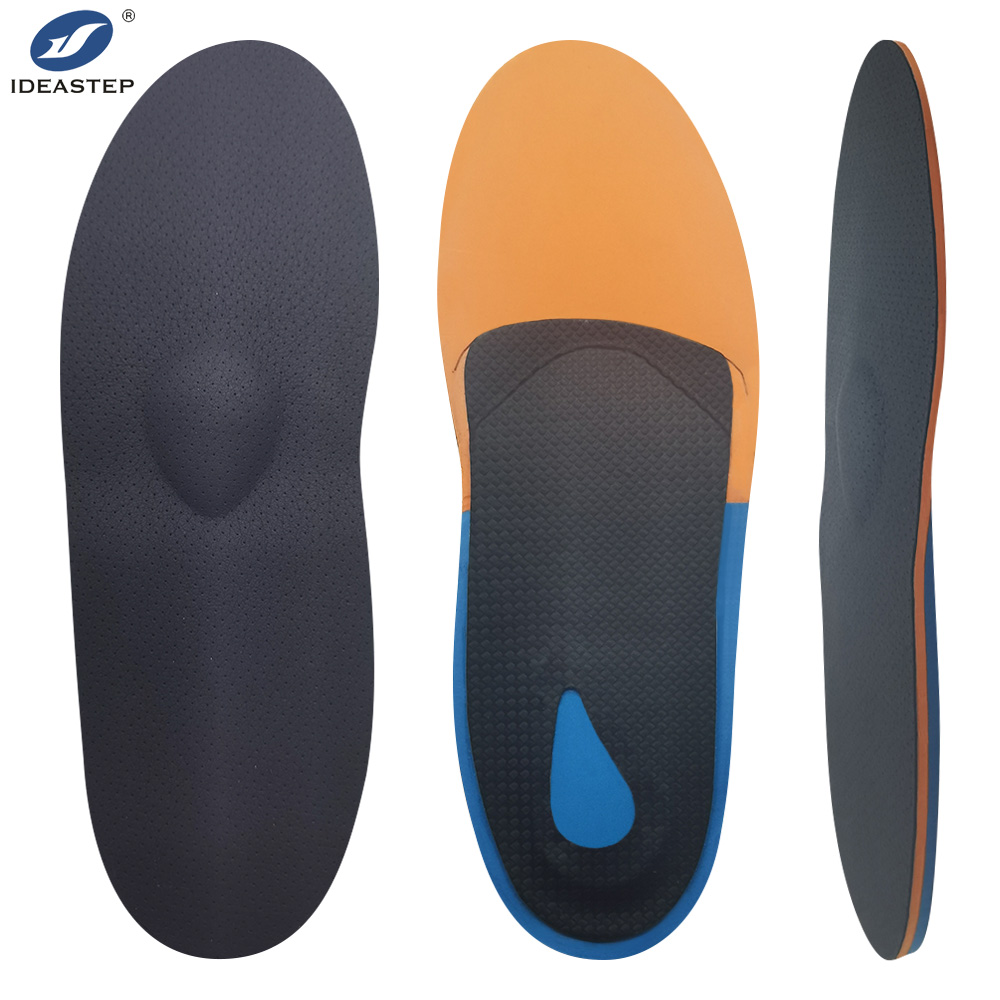
Material Selection Tailored for Boot Applications
Material selection starts with the end-use scenario. Factory floor work, cold-weather field jobs, forestry, and hiking each subject insoles to different loads. A single foam stack rarely performs well across all these use cases.
We match every substrate and cover to the boot’s working conditions:
- High-density EVA: Our most widely used base substrate. We pick precise durometer grades that resist packing down after weeks of continuous weight bearing. It bonds cleanly to top fabrics, trims neatly to match boot last contours, and balances consistent performance with stable bulk pricing. It works best for safety boot and outdoor boot lines where reducing worker fatigue is the primary goal.
- Polypropylene (PP) Shell: We use these rigid thermoplastic bases when structured orthotic correction is required. The shell retains arch and rearfoot control under repeated impact. We carefully tune shell thickness, because boots have limited internal room. An overly thick orthotic shell can lift the heel or crowd toes under safety toe caps and trigger discomfort.
- Cork: It delivers stable, damped support and strong resistance to permanent compression. It works reliably for staff who stand 8+ hours daily, where softer foams quickly lose shape. Cork-EVA blends remain a popular configuration. Cork maintains structural integrity, while the EVA layer adds shock absorption over uneven ground.
- Carbon Fiber: These shells bring high stiffness at minimal thickness. This advantage matters for boots with tight internal cavities or composite safety toes, where every millimetre of available space counts. We specify carbon fiber mainly for premium orthotic boot builds for clients who need firm correction without fit interference.
- PORON and open-cell PU cushion layers: These foams sit above structural bases. They withstand repeated impact and resist compression set far better than standard soft foams. They handle sweat and dirt well, and pair seamlessly with moisture-wicking or antimicrobial top covers.
- Top cover fabrics: Heavy-duty woven covers withstand scuffs and friction in industrial settings. Antimicrobial treatments suit shared work gear and clinical dispensing programs. Fast-dry, water-resistant textiles work for logging, hunting, and wet outdoor use. Leather fits premium lines, though it needs extra surface treatment to cope with prolonged dampness.
Every layered build follows the boot last instead of generic shoe templates. Full-length, three-quarter and heel-only profiles are all common options for different boot designs.
Pre-Production: Last Verification, Prototyping and Tooling Setup
Bulk manufacturing never starts with mass molding.
- Map the boot last
Even within one boot model, safety toe geometry, shank placement, and liner thickness change the usable space for an insole. Our team reviews engineering drawings and physical boot samples alongside your performance requirements before finalising the insole contour. - Build and test prototypes
For therapeutic boot orthotics, we follow either a clinician’s prescription or a predefined support profile, then mill or thermoform trial units. Each prototype goes through fit tests inside the target boot. We check toe clearance, heel lock, arch positioning, and how the insole performs under load. We adjust overall thickness, edge radius, and relief zones at this stage, before tooling is locked in. This front-end refinement eliminates most costly fit issues later. - Finalise tooling and project specs
Once samples pass fit and performance validation, we set up compression molds, vacuum forming jigs, or CNC machining programs to replicate the approved shape reliably. For private label orders, we add branding, colour coding and packaging specifications to the production brief here.
Bulk Production Workflow
Our production sequence follows an auditable, repeatable process for high-volume orders.
- Raw material preparation: We cut foam sheets, thermoplastic shells and cover fabrics into pre-programmed blanks. We spot-check every batch of raw material for density consistency, uniform colour and surface defects before lamination begins.
- Structural forming: We heat PP or carbon fiber blanks and vacuum-form them over the master mold. For EVA and cork builds, we choose compression molding or CNC milling. Milling delivers precise shaping for metatarsal relief and custom offloading pockets. Compression molding supports faster throughput for standard high-volume support profiles.
- Lamination: We bond cushion foams and top fabrics with adhesives that stand up to sweat, temperature fluctuation and repeated flex inside boots. Weak lamination sits among the top failure modes for low-quality boot insoles. We sample bond integrity from every production run.
- Trimming and edge finishing: We cut insoles precisely to match the boot last outline, then sand and taper the edges. Sharp, unrounded edges catch on stiff boot liners and drive customer discomfort. Tapered, smooth edges sit cleanly and reduce return rates.
- Batch quality inspection: We sample finished units continuously to verify thickness, hardness, contour accuracy, bond strength and dimensional alignment with the boot cavity. Medical-grade orthotic boot insoles include full supporting documentation: batch traceability, material certificates and compliance records that meet ISO and CE standards.
- Packing and marking: We label, bag or box finished insoles to match your packaging requirements. Custom brand printing, product inserts and carton marking can all join the line.
QC, Compliance and Flexible OEM / ODM Support
Boot insole buyers often face two persistent pain points: inconsistent support between batches and fit drift when footwear manufacturers revise their lasts mid-season. Our regular batch sampling and documented process controls keep geometry consistent. When a boot last receives an update, we adjust molds and CNC files quickly and run fresh pre-production samples before we resume bulk output.
We support private label and fully custom ODM development. You can select from our existing boot-optimised support profiles, or send us your boot samples and performance goals for a purpose-built design. Flexible MOQs let you launch a therapeutic safety boot insole line without overstocking inventory. Many distributors use this offering to differentiate their catalog from commodity comfort insoles and capture higher margins.
Who Gets the Most Value From Custom Boot Insoles
Custom molded boot insoles fit naturally within the product lineup of safety footwear brands, workwear distributors, outdoor suppliers, and clinical teams supporting industrial staff. Prefabricated insoles only address mild fatigue. These custom builds manage overpronation, metatarsal pressure, heel pain and diabetic offloading, while fitting properly within the restrictive boot chassis. They work well as a high-value add-on and generate repeat orders.
If you are ready to develop custom boot insoles for your brand or distribution catalog, share your boot samples, intended use case and preferred material stacks. We can supply fit prototypes, outline MOQ and lead times, and walk you through the complete workflow from tooling through bulk delivery.
Frequently Asked Questions
Can custom boot insoles fit safety toe and composite toe boots?
Yes. We design contour and thickness around the boot’s toe box and internal shank. Thinner shell options, including carbon fiber, serve as our primary solution for tight safety toe boots with limited internal space.
What separates boot-specific custom insoles from regular orthotic shoe inserts?
Boot insoles follow the boot last, shape to work with stiff boot liners, and use abrasion-resistant, moisture-stable materials. Standard orthotic inserts are often too thick or carry edge profiles that rub and bind inside boots.
Can these insoles carry our own brand and packaging?
Private labeling, custom packaging and printed information inserts are available. We also take on ODM projects if you need a boot-exclusive support profile built around your footwear range.
Are these insoles suitable for diabetic foot programs and clinic dispensing for workers?
Yes. We manufacture low-pressure accommodative boot orthotics with appropriate top materials, paired with full batch documentation for audit and billing workflows.
How do you handle changes when the boot manufacturer updates the boot last?
We maintain clear revision logs. Once you provide the revised boot sample, we adjust molds or CNC files and produce updated pre-production samples before we restart bulk production.