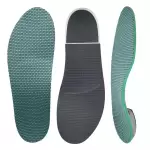
For footwear brands and wholesale manufacturers, product differentiation depends on more than upper design and outsole construction. Insole structure also affects internal shoe fit, support characteristics, and how the footwear responds to movement.
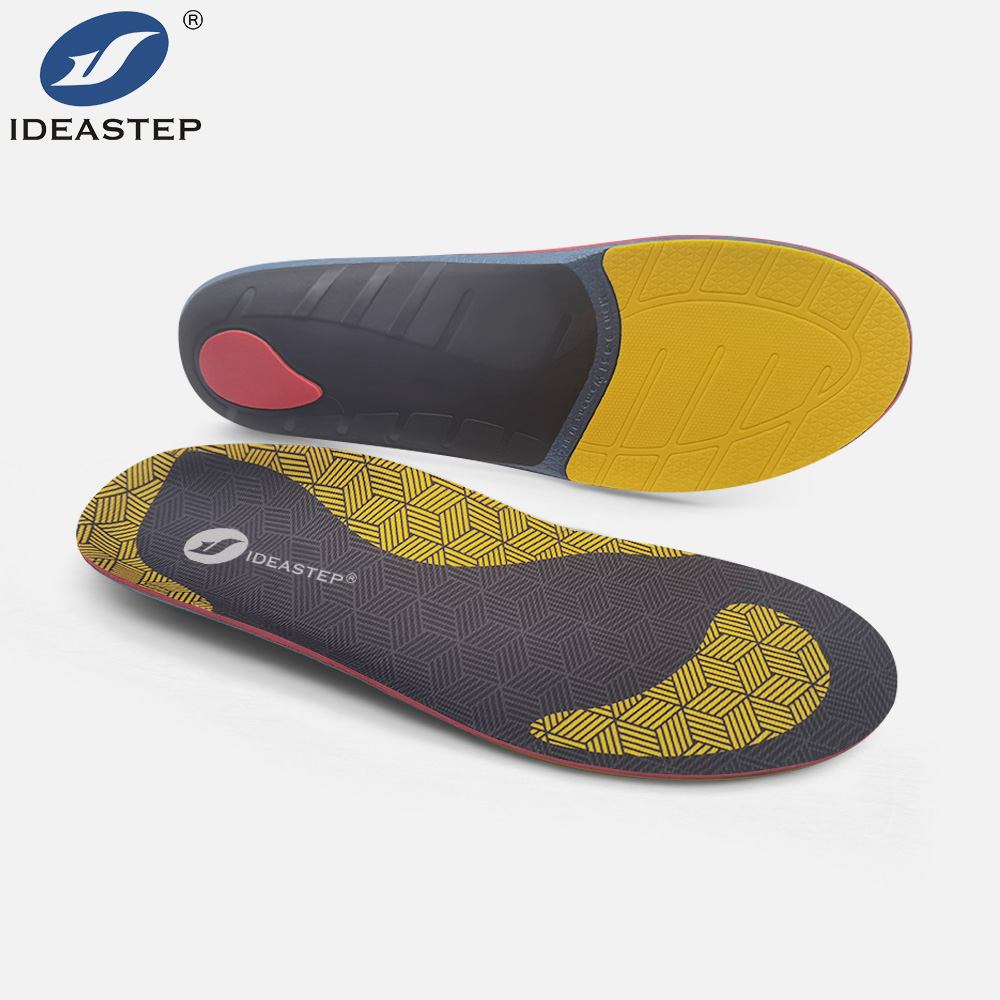
Custom insole orthotics allow manufacturers to adjust arch profiles, heel cup geometry, cushioning zones, and material stiffness to match specific footwear designs. Integrating these components into product development gives brands greater control over internal construction and creates opportunities for more specialized wholesale shoe lines.
1. The Role of Custom Insole Orthotics in Footwear Design
The insole forms the interface between the foot and the shoe. Its geometry and material properties influence contact distribution, internal volume, and structural support.
Standard insoles may not meet the requirements of every footwear category. Custom designs allow manufacturers to control several key parameters:
- Arch profile: Height, width, and contour of the midfoot support area.
- Heel cup geometry: Depth, width, and wall shape for rearfoot positioning.
- Forefoot construction: Thickness and flexibility according to footwear bending requirements.
- Material stiffness: Resistance to deformation under mechanical loading.
- Overall thickness: Available internal volume and compatibility with the shoe last.
These specifications should be developed alongside the shoe structure to avoid conflicts between the insole, upper, outsole, and heel counter.
2. Biomechanical Fit: Arch, Heel and Forefoot Design
Biomechanical fit depends on the relationship between foot structure, insole geometry, and footwear construction. Manufacturers can influence this relationship by adjusting three main areas.
Arch Geometry
Arch height, width, and contour determine the shape of the midfoot contact area. The transition between the arch and surrounding sections also affects how the insole fits within the shoe.
For custom development, manufacturers should define the arch profile according to the target design rather than rely on a standard shape across different footwear models.
Heel Cup Structure
Heel cup depth, width, and wall geometry influence rearfoot positioning and internal shoe fit. The design must also account for the shoe’s heel counter and available space.
Excessive depth or unsuitable wall angles may create fitting conflicts, making prototype evaluation necessary.
Forefoot Thickness and Flexibility
Forefoot construction should match the bending characteristics of the footwear. Thickness, material stiffness, and edge transitions affect how the insole integrates with the outsole and toe-box structure.
The arch, heel, and forefoot should be evaluated as one integrated profile rather than separate components.
3. Material Selection for Custom Orthotic Insoles
Material selection determines the cushioning, stiffness, weight, and durability of the finished insole. Different materials serve different functions within a multilayer construction.
| Material | Main Properties | Typical Application |
|---|---|---|
| EVA foam | Lightweight, adjustable hardness and density | Cushioning bases and support layers |
| PU foam | Resilience and cushioning properties | Comfort layers and multilayer constructions |
| TPU | Elasticity, mechanical strength, and abrasion resistance | Flexible or reinforced support components |
| Thermoplastics | Adjustable stiffness and formability | Semi-rigid and rigid support shells |
| Mesh and fabric | Textile surface and different airflow characteristics | Top covers |
| Microfiber and leather | Surface finish and material durability | Premium insole covers |
Combining materials can provide more control over the finished structure. For example, an EVA base can reduce component weight, while a TPU or thermoplastic shell reinforces selected areas. Mesh, microfiber, or leather can serve as the top-cover material.
The final construction should be evaluated as a complete assembly, including layer thickness, adhesive compatibility, and bonding strength.
4. Developing Insoles for Different Wholesale Shoe Categories
Different footwear categories have distinct structural requirements. Custom insole configurations allow manufacturers to adapt internal construction without relying on one standard design.
- Casual Footwear: Lightweight EVA or PU constructions can provide cushioning and flexibility, with additional support components where required.
- Sports Footwear: Arch and heel structures can be adjusted alongside forefoot flexibility to match the shoe’s intended movement characteristics.
- Work and Safety Footwear: Material durability, structural stability, and compatibility with protective footwear components require particular attention. Insole modifications should not compromise applicable footwear certification.
- Orthopedic and Specialty Footwear: More specific arch profiles, heel cup geometry, and material stiffness may require custom tooling and sample development.
Each category requires specifications that match its footwear construction, target performance, and production requirements.
5. Using Custom Insoles to Differentiate Wholesale Shoe Lines
Custom insoles offer footwear brands another way to develop distinct product specifications.
Manufacturers can differentiate insole configurations through:
- Arch variations: Different heights, widths, and contour profiles.
- Material combinations: EVA, PU, TPU, and thermoplastic components for different structural requirements.
- Thickness adjustments: Different internal profiles to match shoe last dimensions.
- Layered constructions: Separate cushioning and support components within one assembly.
- Top-cover options: Mesh, microfiber, leather, and other materials to match footwear positioning.
These options allow brands to develop different insole specifications across product collections while retaining shared components or manufacturing processes where appropriate.
6. Integrating Insole Development Into Shoe Production
Insole design should begin during footwear development, not after the shoe construction has been finalized. Early coordination helps identify fitting conflicts and reduces unnecessary sample revisions.
A typical development process includes:
1. Footwear Specification Review
Define the shoe category, last dimensions, outsole structure, heel counter, and available internal volume.
2. Insole Structure Design
Specify arch geometry, heel cup dimensions, forefoot thickness, material selection, and component layout.
3. Prototype Production
Manufacture samples based on the agreed specifications. Check dimensions, material properties, bonding, and component alignment.
4. Footwear Compatibility Evaluation
Install the samples in the target shoe and inspect heel positioning, arch contact, forefoot clearance, and interference with other components.
5. Sample Approval and Mass Production
Confirm the final construction, material specifications, dimensional tolerances, and inspection standards before bulk production.
7. Quality Control for Wholesale Custom Insoles
Bulk production requires consistent control over dimensions, materials, structure, and assembly quality.
| Inspection Area | Key Requirements |
|---|---|
| Dimensions | Length, width, thickness, and size grading |
| Arch structure | Height, contour, and profile consistency |
| Heel cup | Depth, width, and shape accuracy |
| Material properties | Hardness, density, and thickness |
| Bonding | Adhesion between layers and component stability |
| Surface quality | Top-cover alignment, wrinkles, and finishing |
| Batch consistency | Material and dimensional variation |
Finished insoles should also be checked inside the target footwear model. This confirms compatibility with the shoe’s internal dimensions and helps identify assembly issues before mass production.
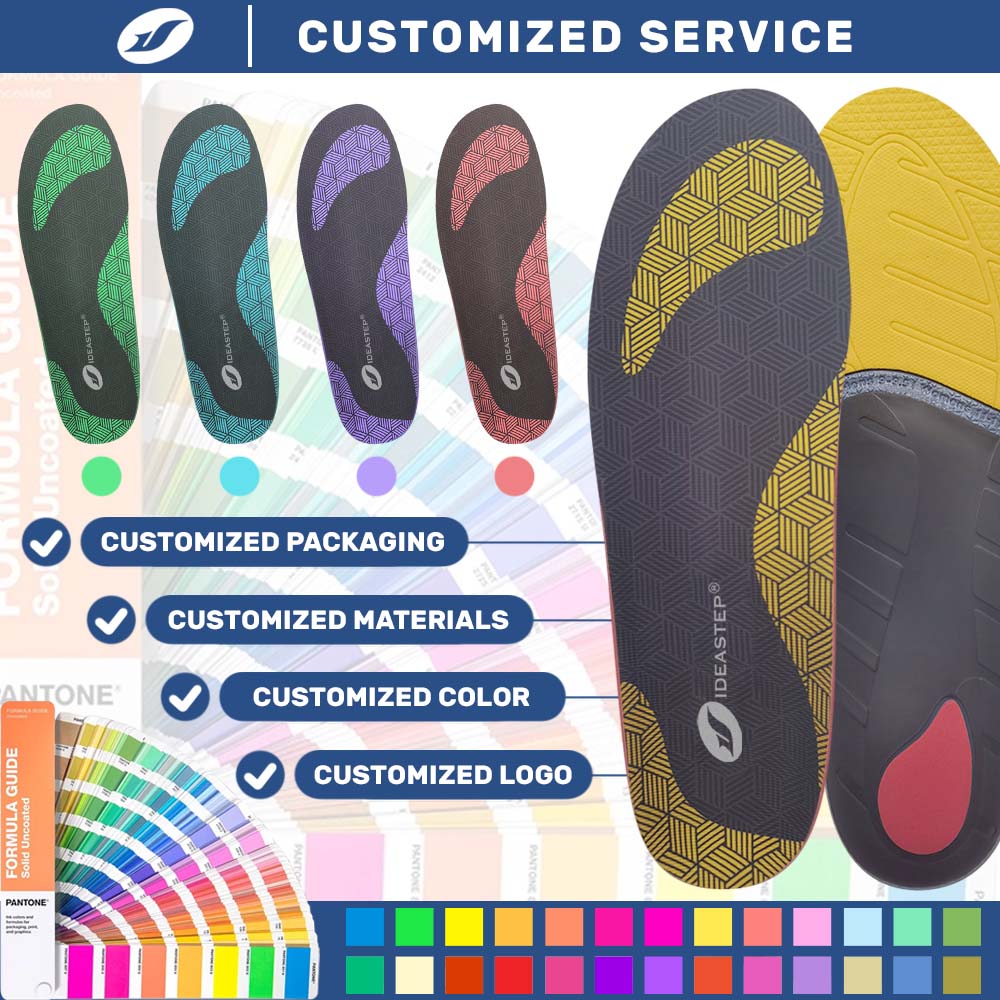
8. OEM and ODM Development for Wholesale Footwear Brands
An experienced insole manufacturing partner can support footwear brands with material selection, structural development, sampling, and bulk production.
OEM projects generally follow brand-provided drawings, specifications, or reference samples. ODM projects may involve additional support with insole geometry, material combinations, and construction development.
When evaluating a supplier, wholesale buyers should review:
- EVA, PU, TPU, and thermoplastic material capabilities
- Custom arch and heel structure development
- Multilayer insole manufacturing
- Prototype production and design adjustments
- Dimensional and material quality control
- Production capacity and bulk order management
Clear technical specifications and sample approval procedures help maintain consistency between development and mass production.
Conclusion
Custom insole orthotics give wholesale footwear brands greater control over internal fit, support geometry, and material construction. Adjustments to arch profiles, heel cups, forefoot thickness, and material combinations allow manufacturers to develop insole configurations for different footwear categories.
Integrating insole development into the shoe production process helps improve component compatibility and reduce unnecessary revisions. For footwear brands, custom insole design provides a practical route to more differentiated and technically specified wholesale shoe lines.
Related Reading:
Custom Insole Orthotics Reduce Product Complaints For Footwear OEM Brands