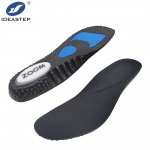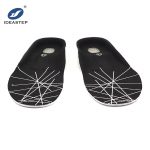
Developing insoles for low arches involves more than increasing the arch height. The support profile needs to fit the footbed and shoe while maintaining a good balance of stability, cushioning, flexibility, and space.
For footwear brands and insole distributors, these factors should be considered together from the beginning of product development.

What Makes a Good Low Arch Insole?
A suitable low arch insole should provide controlled support without creating excessive pressure under the midfoot.
Key considerations include:
- Midfoot support
- Heel stability
- Pressure distribution
- Cushioning
- Overall thickness
- Footwear compatibility
Arch height is only one part of the design. The width, length, firmness, and transition of the support area also affect the final fit.
Key Structural Features
Arch Support
The arch profile should follow the shape of the footbed rather than simply being made higher.
Depending on the application, manufacturers can adjust:
- Arch height and length
- Support firmness
- Midfoot width
- Heel-to-arch transition
A gradual transition generally creates a smoother fit, while a firmer support zone can add more structure when required.
Heel and Midfoot Support
A shaped heel cup can help keep the foot positioned inside the shoe. TPU or thermoplastic components can also be added through the heel and midfoot when additional reinforcement is needed.
The support should be firm enough to maintain structure without making the insole unnecessarily rigid.
Forefoot Flexibility
Support does not need to extend through the entire insole. A reinforced heel and midfoot combined with a more flexible forefoot can provide a practical balance for walking and everyday footwear.
Materials Used in Low Arch Insoles
Different materials can be combined according to the performance and cost requirements of the product.
| Material | Main Function |
|---|---|
| EVA Foam | Cushioning and lightweight base |
| PU Foam | Comfort and cushioning |
| TPU | Structural reinforcement |
| Thermoplastic Sheet | Semi-rigid arch support |
| PORON | Targeted cushioning |
| Microfiber | Durable top surface |
| Breathable Fabric | Surface comfort and airflow |
A common construction may use EVA for the main cushioning layer and TPU or thermoplastic material for additional support. Density, hardness, thickness, and material combinations can all be adjusted during development.
Choosing the Right Construction for Different Shoes
Walking Shoes
Walking insoles generally need moderate support, cushioning, and flexibility. A lightweight EVA base with a breathable top cover can work well for everyday use.
Running Shoes
Running places greater demands on weight, cushioning, and flexibility. A lightweight foam base with a strategically positioned support component is often more practical than a heavy rigid structure.
Work and Safety Shoes
Durability becomes more important for work footwear. Higher-density foam, reinforced support, and durable top covers can be used for extended daily wear.
Casual Footwear
Space inside casual shoes can be limited. A thinner insole can provide moderate support without making the shoe feel too tight.
Customization Options
For OEM and private-label projects, customization can cover both structure and materials.
Structural Customization
Options may include:
- Arch profile
- Heel cup depth
- Support layer thickness
- Cushioning zones
- Overall thickness
- Forefoot flexibility
Material and Appearance
Brands can select different foam densities, support materials, top covers, colors, logos, sizes, and packaging based on their product requirements.
The functional structure should be confirmed first, followed by appearance and packaging details.

Low Arch Insole Development Process
1. Define the Requirements
Confirm the footwear type, target users, support level, cushioning, thickness, and target cost.
2. Develop the Structure
Design the arch, heel, cushioning layers, and support components around the shoe.
3. Test Samples
Check fit, arch contact, cushioning, flexibility, thickness, and compatibility with the footwear.
4. Start Production
After approval, production focuses on material consistency, dimensions, bonding, finishing, and quality inspection.
Choosing a Low Arch Insole Manufacturer
For wholesale projects, look beyond production capacity. Experience with EVA foam, arch support structures, TPU or thermoplastic components, footwear integration, and prototype development can make product development more efficient.
Consistent material properties and dimensions are equally important when moving from samples to repeat orders.
Conclusion
The best insoles for low arches are not defined by arch height alone. Support structure, cushioning, flexibility, thickness, and footwear compatibility all affect the final product.
For footwear brands and distributors, starting with the shoe and intended application makes it easier to select the right structure and materials—and develop a product that is practical for both the market and volume production.
Related Reading:
Running Insoles Arch Support: Design and OEM Solutions for Sports Footwear Brands