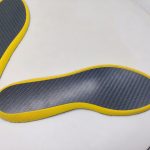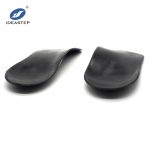
Carbon fiber orthotic insoles are not simply a comfort upgrade to traditional foam-based inserts. In most real product development scenarios, they function as structural reinforcement components that control foot motion under load, particularly during midstance and toe-off phases of gait.
From a B2B manufacturing perspective, carbon fiber is typically introduced when EVA or PU-based systems can no longer provide sufficient mechanical control in performance, medical, or high-fatigue environments such as sports footwear, safety shoes, and corrective orthotic lines.
1. Where Carbon Fiber Actually Fits in Orthotic Insole Design
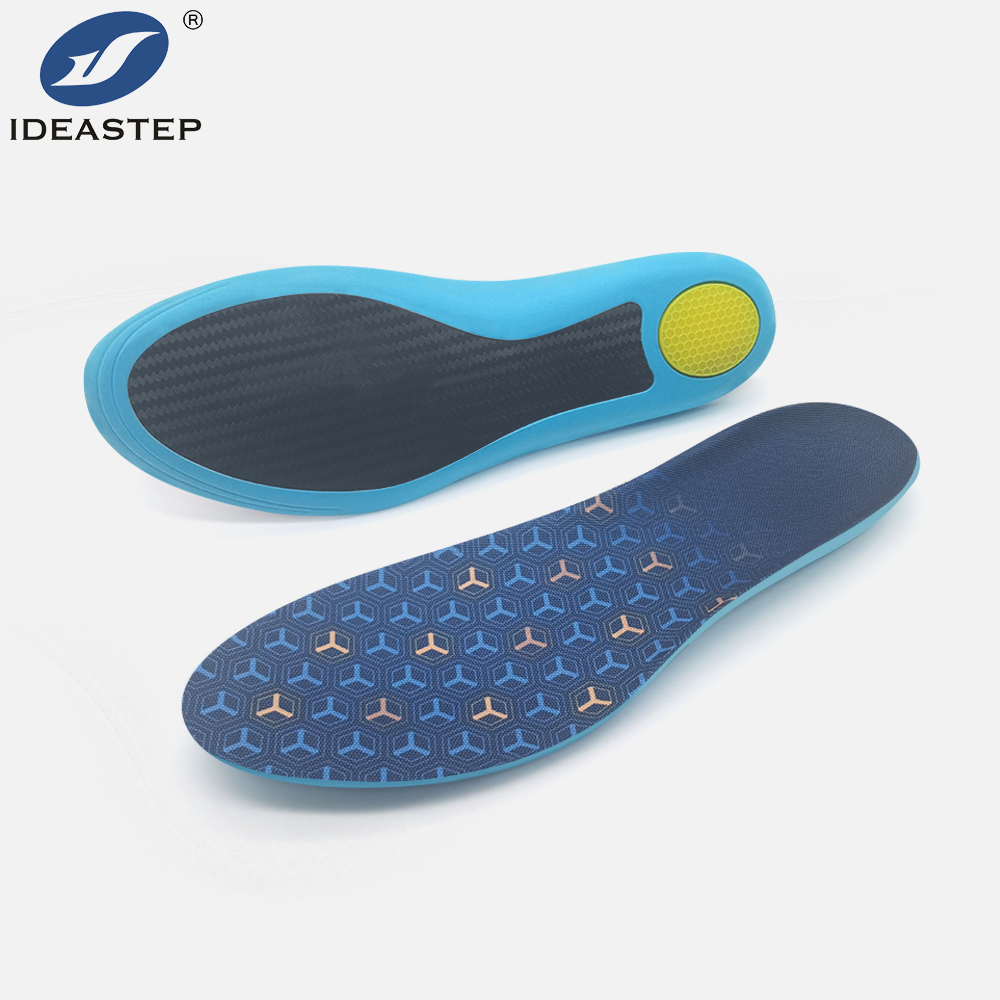
In commercial production, carbon fiber is rarely used as a full-length soft insole replacement. Instead, it is engineered as a thin rigid or semi-rigid plate embedded within a multi-layer structure.
The purpose is not cushioning. It is mechanical control—specifically limiting excessive midfoot flexion and stabilizing energy transfer from heel strike to toe-off.
In practice, this means carbon fiber insoles behave more like a load-bearing spring plate than a traditional foam insole.
2. Material Behavior: Why Carbon Fiber Changes Foot Mechanics
Stiffness-to-Weight Advantage
The most important characteristic of carbon fiber is its high stiffness combined with extremely low weight. This allows designers to introduce structural resistance without significantly increasing footwear mass.
Unlike EVA or PU, which deform progressively under load, carbon fiber maintains its geometry even under repeated high-pressure cycles.
Controlled Deformation Instead of Cushioning
A common misunderstanding is that carbon fiber improves comfort. In reality, it reduces unwanted deformation. This shift changes how forces are distributed across the foot, especially during propulsion.
In running and fast walking scenarios, users typically notice a more “direct” push-off response rather than a soft compression feel.
3. Biomechanical Function in Real Gait Conditions
Carbon fiber orthotic insoles primarily influence the mid-to-late stance phase of gait, where structural control has the greatest impact on efficiency and alignment.
Midfoot Control and Pronation Limitation
One of the key functions is reducing excessive midfoot collapse. This helps limit overpronation patterns that often lead to secondary stress in the ankle, knee, and plantar fascia.
However, this effect is not achieved through cushioning. It is achieved through stiffness-based resistance that guides foot motion rather than absorbing it.
Toe-Off Efficiency
During toe-off, carbon fiber plates store and release mechanical energy. This creates a more efficient transition into the swing phase, particularly noticeable in running and high-repetition walking environments.
4. Application Scenarios in B2B Footwear Markets
In commercial distribution, carbon fiber orthotic insoles are mainly used in three product directions rather than as a universal solution.
Performance Footwear Upgrades
Sports brands use carbon fiber reinforcement to improve stability during dynamic movement. This is especially relevant in running, basketball, and court sports where directional changes are frequent.
Orthotic and Medical Product Lines
In corrective footwear systems, carbon fiber is used to support conditions such as overpronation, plantar fasciitis, and midfoot instability. It is typically combined with softer top layers to balance comfort and control.
Industrial and Safety Footwear
For work environments requiring prolonged standing or walking, carbon fiber helps reduce muscular fatigue by limiting excessive foot deformation under static load conditions.
5. Structural Design: How Carbon Fiber Is Actually Manufactured Into Insoles
In production, carbon fiber is not used alone. It is integrated into a layered system where each layer serves a different function.
Typical Multi-Layer Architecture
- Top layer: Comfort interface (foam, fabric, or antimicrobial textile)
- Middle layer: Carbon fiber reinforcement plate for structural control
- Bottom layer: Stability and anti-slip base material
The key engineering challenge is not stacking materials, but ensuring the carbon fiber plate interacts predictably with surrounding foam layers under repeated stress.
Production Reality: Tolerance and Consistency
In manufacturing, small variations in carbon fiber thickness, curing conditions, or lamination pressure can significantly affect stiffness behavior.
For OEM buyers, batch-to-batch consistency is often more critical than the raw material grade itself.
6. Limitations and Practical Considerations
Carbon fiber orthotic insoles are not suitable for all users or all footwear categories.
Adaptation Requirements
Users transitioning from soft foam insoles often require an adjustment period. The increased rigidity changes load perception, particularly in the forefoot and midfoot regions.
Comfort vs Control Trade-Off
Carbon fiber prioritizes structural control over softness. In applications where cushioning is the primary requirement, EVA or PU-based systems remain more appropriate.
Misapplication Risk
One of the most common product failures occurs when carbon fiber stiffness is over-specified. Excessive rigidity can lead to compensatory gait behavior, especially in low-strength or sensitive-foot users.
7. OEM/ODM Manufacturing Perspective: What Buyers Should Evaluate
For B2B buyers, selecting a carbon fiber insole supplier is less about material claims and more about engineering capability.
Key Evaluation Criteria
- Ability to control carbon fiber stiffness levels across product ranges
- Precision in plate shaping and thickness consistency
- Integration capability with EVA/PU multi-layer systems
- Long-term deformation and fatigue testing standards
- Stability across mass production batches
Engineering Over Marketing
In this category, product differentiation is rarely achieved through branding alone. It is determined by how consistently the insole performs under real mechanical load across thousands of units.
Conclusion: Carbon Fiber Insoles as Functional Mechanical Systems
Carbon fiber orthotic insoles represent a shift from comfort-based cushioning products to function-driven mechanical support systems.
They do not aim to make footwear softer. They aim to make movement more controlled, efficient, and structurally stable under load.
For B2B manufacturers and distributors, the real value lies in their ability to deliver predictable biomechanics at scale—especially in performance, medical, and industrial footwear categories where consistency and control matter more than softness.
Related product links: https://www.aideastep.com/product/jf-308-3-thin-carbon-fiber-insoles/.