Carbon Fiber Sports Orthotics: Why Athletes and OEM Brands Are Switching to High-Performance Insoles
Carbon fiber sports orthotics are no longer just a niche performance accessory. In real-world sports footwear development, especially in OEM and private label projects, they are increasingly used in premium running shoes, basketball footwear, and professional training insoles where stability, energy efficiency, and structural control matter more than simple cushioning.
For sports brands, podiatry clinics, and orthotic suppliers, the shift is clear: athletes are demanding more than comfort—they need controlled biomechanics under high-load conditions.
What Are Carbon Fiber Sports Orthotics?
Carbon fiber sports orthotics are performance-grade insoles that use a thin carbon fiber plate as a structural support core. Unlike traditional foam-based insoles that rely mainly on softness, carbon fiber introduces controlled rigidity into the footwear system.
In most industrial designs, the carbon fiber plate is typically around 0.6–1.2 mm thick, depending on stiffness requirements. The fiber orientation (layup direction) is engineered to control flexibility in specific zones such as the arch, heel, or forefoot.
To balance comfort and support, carbon fiber is usually combined with:
- EVA foam mid-layer for shock absorption
- PU or PORON cushioning for pressure relief
- Fabric top cover for comfort and moisture control
This hybrid structure is widely used in performance footwear OEM programs.
Why Athletes Prefer Carbon Fiber Sports Orthotics
Superior Arch Control Under High Load
During sprinting, jumping, or sudden directional changes, the foot arch is exposed to extreme loading forces. Standard EVA insoles tend to compress over time, reducing structural support.
Carbon fiber, however, provides controlled stiffness that resists excessive arch collapse without feeling overly rigid.
This makes it particularly valuable in sports such as basketball, football, and tennis, where repeated explosive movements are common.
Improved Stability in Dynamic Movement
Athletic performance depends heavily on foot stability during motion. Excessive pronation or lateral instability can affect balance and increase injury risk.
Carbon fiber orthotics help stabilize the midfoot and control unwanted motion during:
- Rapid acceleration
- Sudden deceleration
- Lateral cutting movements
For OEM sports brands, this stability feature is often a key selling point in premium performance product lines.
More Efficient Energy Transfer
One of the key advantages of carbon fiber is its ability to store and return mechanical energy during movement.
Instead of absorbing force like soft foam materials, carbon fiber structures provide a more responsive rebound effect, improving propulsion efficiency during running or jumping phases.
While this does not replace athletic training, it supports a more efficient biomechanical cycle, especially in endurance and high-intensity sports.
Lightweight Structure for Performance Use
Weight reduction is critical in modern sports footwear design.
Carbon fiber offers a high strength-to-weight ratio, allowing manufacturers to build rigid support structures without adding unnecessary bulk.
This is especially important for:
- Long-distance runners
- Professional training athletes
- Competitive sports footwear lines
Even small weight reductions can contribute to improved comfort over long durations.
How Carbon Fiber Orthotics Improve Athletic Performance
Better Running Efficiency
In running biomechanics, repetitive foot strikes require consistent stability. Carbon fiber orthotics help maintain a more controlled gait pattern by reducing excessive midfoot collapse and improving foot alignment throughout the stride cycle.
Enhanced Explosive Power
In sports that require sprinting or jumping, force transfer efficiency is critical.
The stiffness of carbon fiber helps transmit energy more directly through the foot, supporting quicker push-off response and improved explosive movement performance.
Improved Lower Limb Alignment
Foot mechanics directly influence the entire kinetic chain, including ankles, knees, hips, and lower back.
By stabilizing the foot foundation, carbon fiber orthotics help maintain better lower-limb alignment during dynamic movement, reducing unnecessary mechanical stress on joints.
Consistent Long-Term Performance
Unlike traditional foam insoles that gradually lose structure due to compression, carbon fiber maintains its stiffness and shape over time.
This consistency is particularly important for:
- Professional athletes
- Sports team training systems
- High-frequency usage environments
From a product lifecycle perspective, this also improves brand value and user satisfaction.
Carbon Fiber Orthotics in Sports Injury Prevention
Plantar Pressure Distribution
By supporting the arch structure, pressure is distributed more evenly across the foot, reducing overload on the plantar fascia during repetitive impact.
Overpronation Control
Excessive inward rolling of the foot can lead to instability in the lower limbs. Carbon fiber provides structural resistance that helps control this motion during dynamic activity.
Reduced Joint Stress
Improved foot alignment can reduce abnormal loading patterns that travel upward to the ankles and knees, particularly during high-impact sports.
Sports Rehabilitation Support
In clinical and rehabilitation settings, carbon fiber orthotics are often used as part of a broader recovery strategy for athletes returning from overuse injuries.
Which Sports Benefit Most?
Running Sports
Marathon runners, trail runners, and triathletes benefit from improved gait stability and reduced fatigue over long distances.
Basketball
Frequent jumping, landing, and quick directional changes require strong midfoot control and impact stability.
Football (Soccer)
High-frequency sprinting and cutting movements make stability and energy return especially valuable.
Tennis and Court Sports
Lateral movement and rapid reaction demands require precise foot control.
Golf
Improved balance and weight transfer can enhance swing consistency and posture stability.
Carbon Fiber vs Traditional Sports Insoles
Compared to standard EVA-based insoles, carbon fiber orthotics provide a fundamentally different performance profile.
- Higher structural support
- Better resistance to deformation
- More consistent arch control
- Improved energy return behavior
- Longer service life under high-load use
EVA insoles remain important for comfort-oriented applications, but carbon fiber is increasingly used in performance-driven product categories.
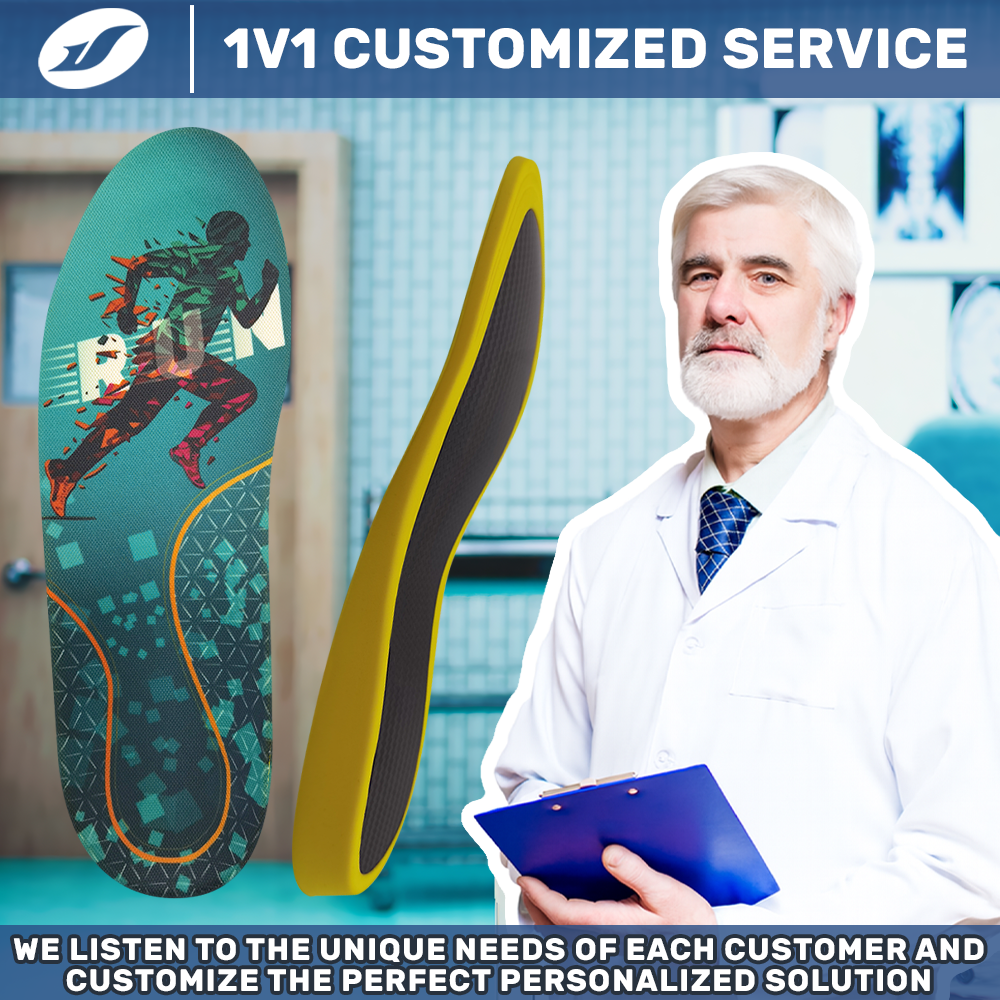
Choosing a Carbon Fiber Orthotics Manufacturer (B2B Perspective)
For brands and distributors, product performance is only part of the decision. Manufacturing capability is equally important.
Key evaluation factors include:
- Carbon fiber grade consistency and stiffness control
- OEM/ODM customization capability (arch height, stiffness zones, plate geometry)
- Prototype development speed (typically 7–15 days for sampling)
- MOQ flexibility for new product development
- Multi-material integration capability (EVA, PU, cushioning foams)
- Fatigue and durability testing under simulated sports conditions
- Scalable production capacity for global distribution
A reliable supplier should not only provide materials, but also support biomechanical design and product optimization for specific sports applications.
Conclusion
Carbon fiber sports orthotics represent a clear evolution in performance footwear design. Their combination of lightweight structure, controlled rigidity, and biomechanical efficiency makes them increasingly valuable across professional sports, training environments, and premium footwear markets.
For athletes, they offer improved stability and movement efficiency. For OEM sports brands and orthotic suppliers, they provide a strong foundation for developing high-performance product lines that meet the growing demand for advanced sports technology.
As sports footwear continues to evolve toward performance engineering rather than simple cushioning, carbon fiber orthotics are expected to play a more central role in both athletic performance and product innovation.
Related product links: https://www.aideastep.com/product/jf-435-2-carbon-fiber-arch-support-insoles/.