How Orthotic Insole Orders Scaled from 5,000 to 100,000 Pairs: A Real Manufacturing Case Study
Scaling orthotic insole production is never just about “making more units.” In real manufacturing environments, it is a step-by-step restructuring of production logic, material behavior control, and OEM workflow stability.
This case study explains how a B2B orthotic insole program evolved from an initial 5,000-pair order into a stable 100,000-pair production system, and what actually changed inside the factory when the scale increased.
1. Project Background: The 5,000-Pair Starting Point
The project began with a mid-sized European foot health distributor expanding into private-label orthotic insoles. The initial order volume was 5,000 pairs, mainly for market validation and user feedback collection.
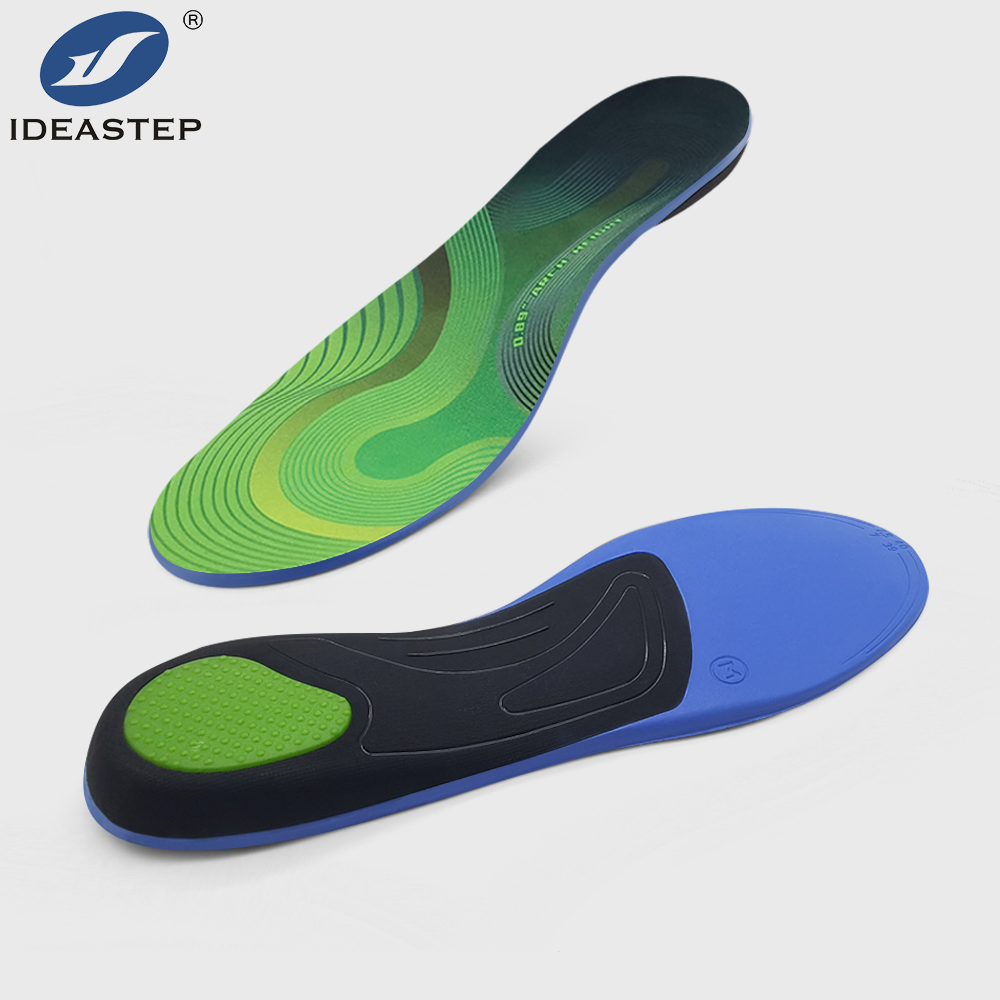
At this stage, the product was relatively simple: a standard EVA-based orthotic insole designed for daily comfort and light arch support. The goal was not optimization—it was stability and repeatability.
Key characteristics of the first batch:
- Single EVA density structure for fast production
- Basic arch support geometry without customization complexity
- Manual-assisted thermoforming process
2. When Scaling Started: The First Real Bottlenecks
The turning point came when repeat orders pushed volume beyond 20,000 pairs per cycle. At that stage, the problem was no longer demand—it was process stability.
2.1 Molding capacity became the first constraint
Once daily output exceeded approximately 15,000 pairs, EVA thermoforming cycles started to overlap. Different production shifts began producing slightly different rebound behaviors, even when using the same formulation.
This is where scaling usually fails in orthotic manufacturing: not in design, but in subtle material variation across batches.
2.2 EVA consistency issues appeared under load
Small variations in EVA density—within what would normally be considered acceptable tolerance—started to affect long-duration comfort testing. In orthotic products, even minor deviations in compression behavior become noticeable during walking cycles.
3. Engineering the Scale-Up: What Actually Changed
3.1 Moving from single-layer EVA to functional density zoning
Instead of relying on one uniform EVA structure, the product architecture was split into functional zones.
- Arch area: higher-density EVA for structural support
- Heel area: shock-absorbing medium-density EVA
- Forefoot area: softer EVA for flexibility and push-off comfort
This change reduced batch variation because each zone had a defined physical role, making quality deviations easier to detect and control.
3.2 Production was restructured into parallel lines
Instead of one linear production flow, manufacturing was split into multiple synchronized lines:
- Thermoforming line dedicated to arch structures
- Cutting and shaping line for dimensional control
- Finishing line for surface and edge consistency
This reduced dependency on a single bottleneck process and allowed production to scale without destabilizing output quality.
3.3 OEM workflow shifted from “custom requests” to modular systems
At higher volumes, fully custom workflows became too slow. The solution was a modular OEM structure:
- Standard base models with controlled variation points
- Pre-defined arch height and stiffness options
- Faster sampling cycles using locked production parameters
Once a sample was approved, it was not re-engineered for mass production—it was directly locked into batch manufacturing settings.
4. Quality Control: Why a Single Inspection Was No Longer Enough
At 5,000 pairs, final inspection was sufficient. At 50,000+ pairs, it became unreliable.
Quality control had to be split into multiple checkpoints to prevent hidden variation from reaching final packaging.
New QC structure included:
- Raw EVA density and hardness testing before molding
- In-process dimensional verification during cutting
- Final compression and rebound testing per batch
This structure ensured that variation was detected early, not after production was completed.
5. Scaling to 100,000 Pairs: What Made It Stable
5.1 Batch-based production replaced large single runs
Instead of producing 100,000 pairs in one continuous cycle, production was divided into controlled batches of 5,000–20,000 pairs. This allowed consistent monitoring and reduced risk accumulation.
5.2 Raw material supply was locked in advance
At higher scale, EVA supply chain stability became critical. Raw material procurement was scheduled 60–90 days in advance to prevent formulation drift between suppliers.
5.3 Logistics were aligned with production rhythm
Export packaging and labeling were standardized early to avoid delays at shipping stage. Sea freight was used for stable batches, while air freight was reserved for urgent replenishment orders.
6. Business Impact: What Changed After Scaling
The transition from 5,000 to 100,000 pairs fundamentally changed the commercial structure of the program.
- Lower unit cost due to stable high-volume production
- Faster SKU expansion across different markets
- Improved consistency for retail and medical distribution channels
- Stronger long-term OEM partnership structure
At this stage, the supplier relationship evolved from production outsourcing to a long-term manufacturing partnership with shared product development responsibility.
7. Key Lessons for Orthotic Insole Manufacturers
Standardization is the foundation of scale
Without a standardized internal structure, scaling quickly leads to instability rather than growth.
Process design matters more than equipment
Adding machines does not solve scaling problems if workflow logic remains unchanged.
Material behavior defines product limits
EVA density control, rebound consistency, and compression stability are the real constraints in orthotic production.
OEM capability is a long-term competitive advantage
Manufacturers that can balance customization with mass production flexibility are better positioned for global expansion.
8. Conclusion
Orthotic insole manufacturing is moving from small-batch customization toward industrial-scale personalization. The companies that succeed at scale are not necessarily those with the largest factories, but those that understand how to control consistency under growth pressure.
When production reaches 100,000 pairs and beyond, success is no longer about making insoles—it is about building a system that makes every pair behave the same.
Expand more related content: Why Industry Partners Choose Ideastep for Custom Orthotic Insoles.