Material selection directly affects the performance, manufacturing process, and cost of orthotic insoles. For manufacturers and wholesale buyers, choosing the right material is not simply a matter of comparing prices or hardness levels. It requires evaluating how each material performs under load, how it responds to processing, and whether it meets the technical requirements of the finished product.
EVA and polyurethane (PU) are widely used in orthotic insole production, while PE, TPU, polypropylene (PP), cork, and specialized cushioning materials serve more specific purposes.
Understanding their differences helps manufacturers develop suitable product constructions, maintain consistent quality, and make better purchasing decisions for bulk production.
1. Key Factors in Orthotic Insole Material Selection
Before selecting a material, manufacturers should define the functional and production requirements of the insole. A cushioning layer, a semi-rigid support shell, and a custom-molded base do not require the same mechanical properties.
The main factors to evaluate include:
- Density and hardness: Determine material weight, firmness, and suitability for different product structures.
- Compression resistance: Indicates how the material responds to applied pressure.
- Compression set: Measures permanent deformation after compression and recovery.
- Resilience: Describes the material’s ability to recover after deformation.
- Tear and tensile strength: Affect durability during cutting, grinding, molding, and use.
- Moisture resistance: Influences suitability for different insole constructions and environments.
- Processing compatibility: Determines whether the material can be thermoformed, CNC-machined, laminated, or molded.
These properties should be assessed together. Higher density does not automatically mean better support or durability. The actual performance depends on material formulation, cellular structure, thickness, and product design.
2. EVA Foam: A Versatile Choice for Custom Orthotic Production
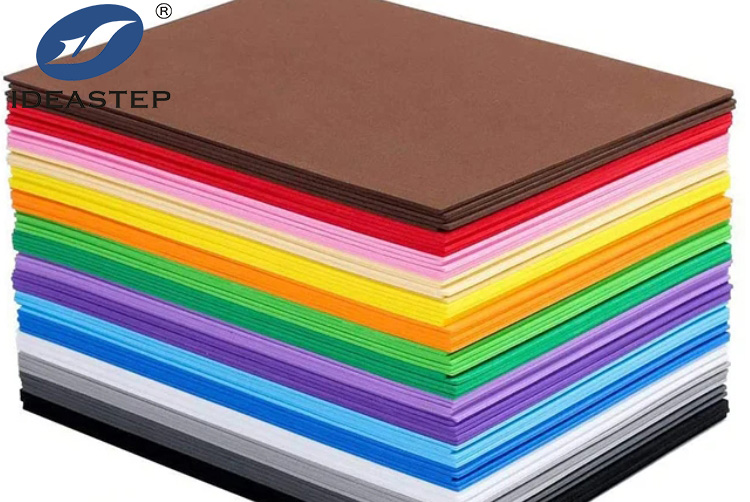
EVA (Ethylene Vinyl Acetate) is one of the most widely used materials in orthotic insole manufacturing. Its lightweight structure, adjustable firmness, and processing flexibility make it suitable for various custom and wholesale product lines.
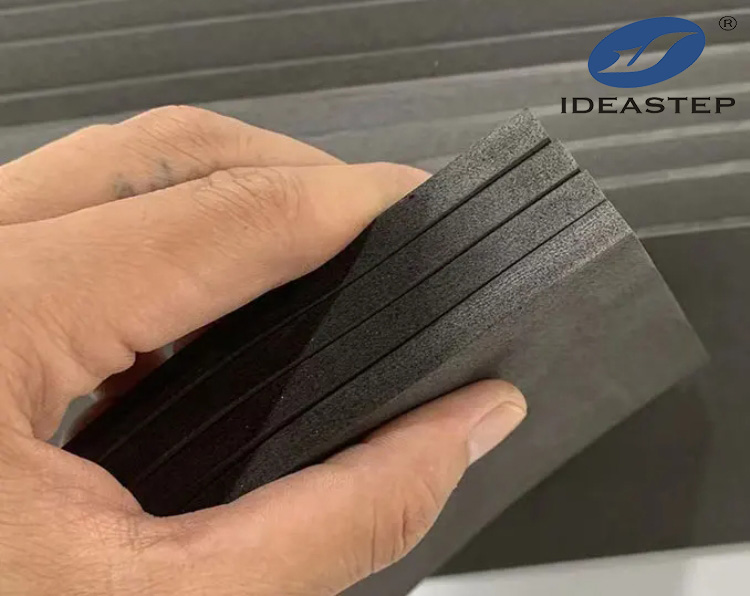
EVA foam is available in different densities, hardness levels, and thicknesses. Manufacturers can select suitable grades for cushioning layers, structural bases, or multi-density constructions.
Main Properties and Applications
- Lightweight: Suitable for insole designs where material weight needs to be controlled.
- Adjustable firmness: Different grades can provide soft cushioning or firmer structural support.
- Easy to process: Can be cut, ground, skived, laminated, and, depending on the grade, heat-formed.
- Low moisture absorption: Closed-cell EVA generally absorbs less water than many open-cell foam materials.
Common applications include custom orthotic bases, arch support insoles, sports insoles, heel cushioning, and multi-layer constructions.
One advantage of EVA is the ability to combine different grades within the same product. For example, a firmer EVA base can provide structural stability, while a softer layer adds cushioning. This allows manufacturers to develop different product specifications without relying on a single material grade.
What Buyers Should Check
When sourcing EVA foam in bulk, buyers should request more than a general hardness specification. Important parameters include:
- Density (kg/m³)
- Hardness and test method
- Compression deflection
- Compression set
- Tensile and tear strength
- Thickness and dimensional tolerances
- Batch consistency
For long-term supply agreements, maintaining consistent density, hardness, and thickness across production batches is particularly important.
3. PU Foam: For Cushioning and Specialized Insole Structures
Polyurethane (PU) is another important material in orthotic manufacturing. Different PU formulations offer varying levels of softness, resilience, compression performance, and moisture management.
Flexible open-cell PU foams are commonly used for cushioning, while other formulations are designed for more demanding mechanical applications.
Main Properties and Applications
- Cushioning performance: Selected formulations provide effective shock absorption and compression response.
- Conformability: Softer grades can adapt to specific product contours.
- Formulation flexibility: Density, hardness, resilience, and cell structure can be adjusted.
- Variable moisture characteristics: Open-cell structures generally allow more airflow but may retain more moisture than closed-cell EVA.
PU is commonly used in heel pads, forefoot cushioning, pressure-distribution layers, and multi-material orthotic insoles.
However, PU should not be treated as a single standardized material. Different formulations can behave very differently under repeated compression. Buyers should therefore evaluate the specific grade against the intended application.
Key Purchasing Parameters
For bulk procurement, manufacturers should pay attention to:
- Density and hardness
- Compression deflection and compression set
- Resilience
- Tensile and tear strength
- Cell structure
- Moisture absorption
- Bonding compatibility
The material should also be tested after lamination to confirm that the complete construction maintains its intended performance.
4. Other Materials Used in Orthotic Insole Manufacturing
EVA and PU cover many common production requirements, but other materials are useful when a design calls for specific structural, mechanical, or processing characteristics.
4.1 PE Foam
Polyethylene (PE) foam is available in different densities and firmness levels, including cross-linked and non-cross-linked grades.
Its lightweight, closed-cell structure makes it suitable for selected padding and cushioning applications.
Typical applications:
- Orthotic padding
- Protective cushioning layers
- Accommodative insole components
- Custom orthotic modifications
When selecting PE, manufacturers should check its forming characteristics, bonding compatibility, and compression performance.
4.2 TPU
Thermoplastic polyurethane (TPU) combines flexibility with mechanical strength and is increasingly used in advanced orthotic designs.
Unlike conventional foam materials, TPU can be processed into structural components with controlled geometry. It is particularly relevant to additive manufacturing.
Typical applications:
- 3D-printed orthotic insoles
- Semi-rigid support structures
- Reinforcement components
- Flexible orthotic shells
For 3D-printed products, performance depends on the TPU grade, printing parameters, wall thickness, and lattice geometry. Material selection and structural design must therefore be evaluated together.
4.3 Polypropylene (PP)
Polypropylene is a thermoplastic commonly used for relatively rigid orthotic structures.
Its stiffness and shape-retention properties make it suitable for applications requiring more controlled structural support than conventional foam materials can provide.
Typical applications:
- Functional orthotic shells
- Semi-rigid and rigid support components
- Heel cups
- Reinforcement parts
Thickness, shell geometry, thermoforming consistency, and flexibility should be specified according to the intended product design.
4.4 Cork
Cork is a natural material used in molded footbeds and orthotic constructions. It provides a relatively firm base and can be combined with foam or fabric layers.
Typical applications:
- Orthotic footbeds
- Molded support bases
- Cork-and-foam composite insoles
For bulk sourcing, buyers should evaluate density, dimensional consistency, surface quality, and bonding compatibility.
4.5 PORON® and Specialized Cushioning Materials
PORON® is a branded range of polyurethane cushioning materials. Selected grades are used in orthotic products where localized cushioning and controlled compression performance are required.
Typical applications:
- Heel cushioning
- Metatarsal pads
- Localized pressure-management layers
- Multi-layer orthotic constructions
Buyers should specify the exact grade rather than treating PORON® as a generic material category. Different grades have different mechanical characteristics and intended applications.
5. Comparison of Common Orthotic Insole Materials
The following comparison provides a practical reference for material selection. Actual performance varies by grade, formulation, thickness, and manufacturing process.
| Material | Main Characteristics | Common Applications | Key Considerations |
|---|---|---|---|
| EVA | Lightweight, adjustable firmness, easy to process | Orthotic bases, cushioning, arch support | Density, hardness, compression set |
| PU | Formulation-dependent cushioning and resilience | Heel pads, forefoot cushioning | Compression behavior, cell structure |
| PE | Lightweight, closed-cell options | Padding, accommodative layers | Bonding and forming compatibility |
| TPU | Flexible, mechanically strong thermoplastic | 3D-printed insoles, support structures | Printability, geometry, hardness |
| PP | Relatively rigid and shape-retaining | Orthotic shells, reinforcement | Thickness, stiffness, forming consistency |
| Cork | Natural, relatively firm | Molded footbeds, composite insoles | Density, surface quality |
| PORON® | Specialized PU cushioning grades | Heel and metatarsal cushioning | Exact grade and compression performance |
Selecting Materials by Product Requirements
Rather than choosing one material for every product, manufacturers should match material properties to the intended construction.
- Cushioning-focused insoles: EVA and selected PU grades.
- Semi-rigid orthotic structures: Higher-density EVA, suitable TPU, or PP components.
- Localized cushioning: Selected PU and PORON® grades.
- Thermoformed orthotic products: Suitable EVA, PE, and PP grades, depending on the required structure.
- 3D-printed orthotic products: TPU.
- Natural-material footbeds: Cork or cork-based composites.
Multi-material constructions are often more practical than using a single material throughout the insole.
6. Material Selection for Different B2B Product Lines
Material decisions should also reflect the technical requirements and commercial positioning of each product category.
Medical and Custom Orthotic Insoles
These products may require a combination of structural support, cushioning, and controlled deformation. Multi-density EVA constructions are one option, while PU cushioning and PP or TPU support components can be incorporated according to the design.
Material specifications should be validated against the intended application. Medical or therapeutic performance claims also require appropriate product-specific evidence.
Sports and Performance Insoles
Sports insole production places particular emphasis on weight, resilience, compression fatigue, and bonding strength.
EVA is widely used as a base and cushioning material. Selected PU grades can provide additional cushioning, while TPU components may be incorporated where structural reinforcement is required.
Repeated-load testing is important when evaluating materials for these applications.
Diabetic and Accommodative Insoles
These products require careful consideration of material softness, compression recovery, pressure distribution, and surface integrity.
Selected PU cushioning materials and softer foam layers can be combined with a supportive base. The complete construction should be evaluated rather than relying on the properties of an individual material.
Wholesale and Private-Label Programs
For wholesale distributors and private-label brands, material selection must balance performance, target pricing, MOQ, and supply stability.
A practical product range may include:
- Standard EVA constructions for cost-conscious wholesale programs.
- Multi-density EVA or EVA-PU combinations for differentiated cushioning requirements.
- Semi-rigid constructions incorporating suitable TPU or PP components.
- Specialized cushioning designs for specific orthotic applications.
This approach allows manufacturers to establish clear product specifications while maintaining greater control over material sourcing and production.
7. Material Testing and Quality Control Before Bulk Production
A material sample may appear suitable during initial inspection but perform differently during processing or repeated compression. Testing before mass production helps reduce quality risks and avoid unnecessary production costs.
Density and Hardness
Density and hardness are basic parameters for evaluating foam materials. However, similar hardness readings do not necessarily indicate similar compression behavior or durability.
Buyers should confirm test methods, measurement conditions, and acceptable tolerances.
Compression Set and Fatigue
Compression set measures the permanent deformation a material retains after being compressed and allowed to recover. Repeated-load testing helps evaluate its ability to maintain performance over time, making both properties important when selecting materials for orthotic insoles.
Tensile and Tear Resistance
Insole materials undergo cutting, grinding, skiving, and bonding. Insufficient tear resistance may cause damage during fabrication or affect the stability of thin sections.
These properties should be evaluated against the actual manufacturing process.
Bonding and Lamination
Multi-layer insoles often combine foam, fabric, thermoplastic shells, and cushioning components.
Before production, manufacturers should evaluate:
- Adhesion between different layers
- Adhesive and surface compatibility
- Delamination after repeated flexing
- Edge stability after cutting and grinding
Dimensional and Batch Consistency
For wholesale orders, consistency between batches is essential. Variations in thickness, density, hardness, and dimensions can affect assembly efficiency and finished-product quality.
A suitable quality-control process should include incoming material inspection, batch identification, production checks, and final product inspection.
8. What to Confirm Before Ordering Materials in Bulk
A clear technical specification helps suppliers recommend suitable materials and reduces misunderstandings during quotation and production.
Before placing an order, wholesale buyers should confirm the following:
1. Application: Define the intended product category, such as custom orthotics, sports insoles, or medical footwear components.
2. Material structure: Specify the required materials, layer positions, thicknesses, and functions.
3. Technical parameters: Confirm density, hardness, dimensions, compression properties, and relevant mechanical requirements.
4. Processing method: Identify whether the material will be thermoformed, CNC-machined, molded, laminated, or 3D-printed.
5. Quality requirements: Agree on testing methods, tolerances, batch consistency, and documentation.
6. Commercial terms: Confirm MOQ, sample availability, production lead time, packaging, and shipping terms.
A qualified supplier should be able to explain the differences between available material grades and recommend suitable options based on the actual production requirements.
9. Why Multi-Material Constructions Matter
Modern orthotic insole manufacturing increasingly relies on combining materials with different mechanical properties.
A single foam grade may not provide the required balance of cushioning, support, flexibility, and durability. Combining materials allows manufacturers to assign specific functions to different sections of the insole.
For example, a firm EVA base can provide a stable foundation, a PU layer can add cushioning, and a TPU shell can contribute structural reinforcement. A suitable fabric top cover completes the construction.
However, material compatibility must be considered throughout product development. Bonding strength, thickness control, flex performance, and dimensional stability should all be tested on the assembled insole.
For OEM and private-label manufacturers, this approach also creates opportunities to develop differentiated product specifications without redesigning the entire production process.

10. Conclusion: Match Material Performance with Production Requirements
EVA, PU, PE, TPU, PP, cork, and specialized cushioning materials each serve different purposes in orthotic insole manufacturing.
EVA remains a versatile option for custom and wholesale insole production. PU offers a range of cushioning solutions, while PE is suitable for selected padding applications. TPU and PP provide options for structural components, and cork and specialized PU materials support more specific product constructions.
For manufacturers and wholesale buyers, the right choice depends on product function, processing compatibility, quality requirements, and target production costs.
At Ideastep, we provide B2B solutions for custom orthotic insoles and EVA materials, supporting wholesale, OEM, and ODM projects. Our team can help evaluate material options and product constructions according to your specifications.
Contact Ideastep to discuss your material requirements, request samples, and develop suitable solutions for your next orthotic insole production project.