
In most OEM orthotic programs, custom moldable insoles are not treated as simple comfort accessories. They are engineered products designed to manage controlled deformation based on individual foot structure and plantar pressure behavior.
The real performance standard is not softness. It is whether the insole can maintain stable biomechanical support while adapting to dynamic pressure changes during walking and standing.
Moldable vs Traditional Insoles: A Fundamental Engineering Difference
Traditional insoles rely on fixed geometry. Their support structure remains unchanged regardless of foot shape, load variation, or gait phase. This limits adaptability in real-world walking conditions.
In contrast, custom moldable insoles introduce controlled deformation behavior. This allows partial structural adaptation based on pressure distribution and material response.
In most OEM systems, this difference determines whether the product performs consistently in long-duration standing or daily walking environments.
Why Foot Structure and Pressure Points Define Insole Performance
Foot Structure Is a Mechanical Foundation
Every insole design starts with foot morphology. Key parameters include:
- Arch height (low, neutral, high)
- Heel alignment and rearfoot angle
- Forefoot load distribution
These factors directly determine how force is transmitted through the insole during movement.
Pressure Points Are Dynamic, Not Static
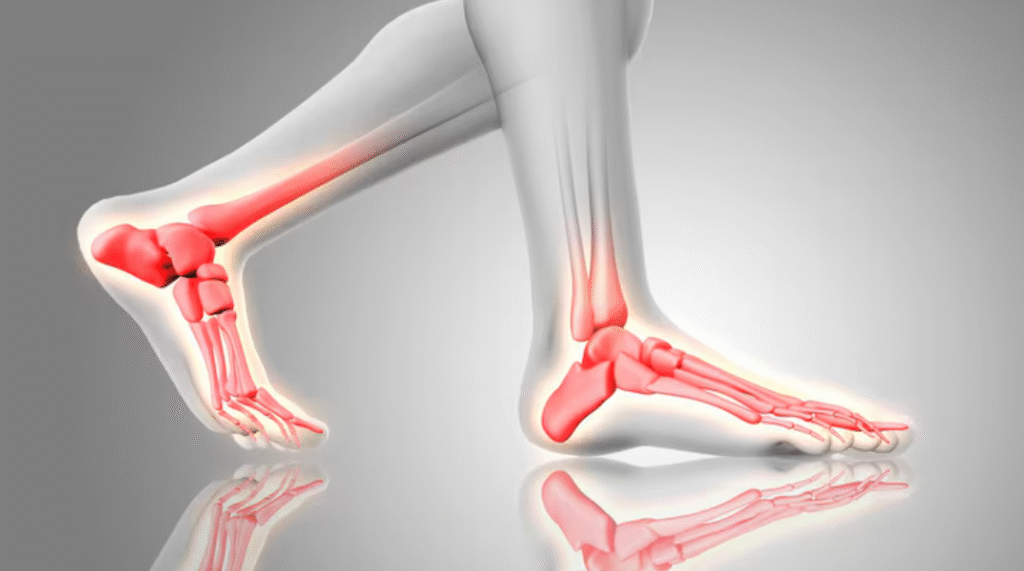
Plantar pressure is not constant. It shifts significantly during gait phases: heel strike, mid-stance, and toe-off.
High-pressure zones typically appear under the heel and metatarsal heads, requiring targeted structural design rather than uniform cushioning.
How Custom Moldable Insoles Are Engineered Around Individual Foot Data
1. Biomechanical Data Collection
OEM development begins with foot scanning and pressure mapping. This data identifies structural asymmetry, load concentration zones, and gait imbalance patterns.
The output is translated into engineering parameters rather than visual foot shape alone.
2. Structural Zoning Based on Load Behavior
Instead of uniform foam construction, custom moldable insoles use functional zoning:
- Heel impact absorption zone
- Arch support and stabilization zone
- Forefoot pressure dispersion zone
Each zone uses different material density and stiffness to control deformation behavior.
3. Controlled Moldability Design
Moldability is achieved through engineered deformation materials, typically EVA-based thermoplastic systems.
However, in OEM production, deformation is not unlimited. It is restricted within defined structural boundaries to prevent collapse or instability after shaping.
Material Systems Used in Custom Moldable Insoles
EVA: Primary Adaptive Material Layer
In most OEM orthotic systems, EVA remains the baseline material for moldable layers due to its predictable thermal behavior and stable processing performance.
However, EVA has a known limitation: under continuous loading, it may experience rebound loss and compression set if not structurally reinforced.
PU: Structural Stability Backbone
PU (polyurethane) is used to maintain long-term structural integrity. It resists permanent deformation and helps preserve arch height under repeated walking cycles.
In engineered systems, PU functions as the structural backbone that stabilizes EVA after molding.
TPU: Motion Control Reinforcement Layer
TPU is applied in targeted zones where dynamic stability is required. It helps control excessive lateral movement and improves motion consistency during walking.
How Pressure Point Optimization Improves Real Walking Performance
Heel Pressure Reduction During Impact
By redistributing load across the heel zone, peak impact force is reduced during ground contact, improving comfort during long-duration standing.
Forefoot Load Balancing
Pressure under the metatarsal heads is distributed more evenly, reducing localized fatigue during walking and travel activities.
Gait Stability Improvement
Balanced pressure distribution improves mid-stance control and reduces instability during transition phases of walking.
Moldable Insoles vs Traditional Insoles in Real-World Use
Traditional insoles provide static support that does not change under varying load conditions. This limits their effectiveness in long walking or standing scenarios.
Custom moldable insoles introduce adaptive structural behavior that responds to pressure distribution and foot movement patterns.
In real applications, this difference directly impacts fatigue reduction and long-term comfort stability.
Engineering Limitations of Custom Moldable Insoles
Although moldable insoles improve adaptability, they also introduce engineering constraints that must be controlled in OEM production.
If EVA thermal deformation exceeds design limits during molding, structural imbalance may occur after cooling, affecting support consistency.
Another limitation is rebound degradation in EVA-only systems under repeated loading cycles, especially in high-frequency walking environments.
For this reason, most professional OEM designs rely on multi-layer composite structures combining EVA, PU, and TPU.
What B2B Buyers Should Evaluate in OEM Suppliers
In OEM sourcing, moldable insoles should not be evaluated based on softness or unit cost alone.
Key engineering evaluation factors include:
- Consistency of deformation behavior across production batches
- Stability of EVA structure after heat molding
- Long-term rebound retention under repeated loading
- Capability of multi-material integration (EVA + PU + TPU)
Suppliers without controlled material engineering processes often show significant performance variation between samples and mass production.
Common Misunderstandings in Custom Insole Design
A common misconception is that softer materials automatically improve comfort. In reality, excessive softness reduces arch stability and increases long-term fatigue.
Another misunderstanding is that customization alone guarantees performance. True performance depends on the balance between material behavior and structural engineering control.
Conclusion: True Customization Is Controlled Engineering, Not Unlimited Adaptation
Custom moldable insoles are most effective when individual foot data is combined with controlled material behavior and structured zoning design.
For OEM and ODM buyers, the key evaluation factor is not whether the insole can mold, but whether it can maintain stable biomechanical support after repeated deformation cycles.
Brands that succeed in this category focus on engineering consistency, material stability, and validated production systems rather than simple customization claims.
Industry Insights: The Benefits of Heat Moldable Insoles for Professional Athletes.