Introduction: Why EVA and PU Dominate Orthotic Insole Design
In orthotic insole manufacturing, EVA (ethylene-vinyl acetate) and PU (polyurethane) remain the two most widely used functional materials. They are not direct substitutes, but different engineering solutions designed for specific biomechanical roles.
In most OEM orthotic programs, material selection is not based on a single property such as softness or hardness. Instead, it depends on load conditions, target user groups, and long-term performance requirements.
What Is EVA Foam in Orthotic Insoles?
EVA foam is a lightweight, closed-cell polymer material widely used in footwear cushioning systems. It is known for its low density, flexibility, and impact absorption capability.
In real production environments, EVA is mainly positioned as a comfort and cushioning material rather than a structural support component. It helps reduce impact forces during walking and standing by distributing pressure more evenly across the plantar surface.
What Is PU Material in Orthotic Insoles?
PU (polyurethane) is a higher-density material with stronger mechanical stability and better resistance to deformation under continuous load.
In orthotic systems, PU is typically used in structural zones such as the arch and heel areas, where long-term support and alignment control are required.
EVA vs PU: Real Engineering Performance Comparison
Weight and Wearing Feel
EVA is significantly lighter and provides a softer wearing sensation. In most daily-use insole programs, this is the primary reason for its widespread adoption.
PU is slightly heavier, but delivers a more grounded and stable foot feel, especially under long-duration standing conditions.
Shock Absorption Behavior
EVA absorbs impact through compression and rebound, offering a softer cushioning response. However, under continuous loading, this cushioning effect may gradually reduce.
PU provides firmer shock control with less deformation, making it more consistent in long-hour occupational use environments.
Structural Support and Stability
PU demonstrates significantly better structural stability compared to EVA. It maintains arch geometry more effectively under repeated pressure cycles.
EVA alone is generally not used for structural correction because it tends to compress over time under sustained load.
Durability in Real-World Use
In long-term use scenarios, EVA may experience compression fatigue, especially in high-load or high-frequency walking environments.
PU offers better long-term resistance to deformation and is therefore preferred in medical-grade or occupational orthotic systems.
Cost and Manufacturing Efficiency
EVA is more cost-efficient and easier to process at scale, making it suitable for mass-market comfort insoles.
PU has a higher material cost but provides more stable performance consistency, especially in professional and clinical applications.
Functional Roles in Orthotic Insole Systems
In modern orthotic engineering, EVA and PU are rarely used as standalone materials. Instead, they are combined in layered structures to achieve balanced performance.
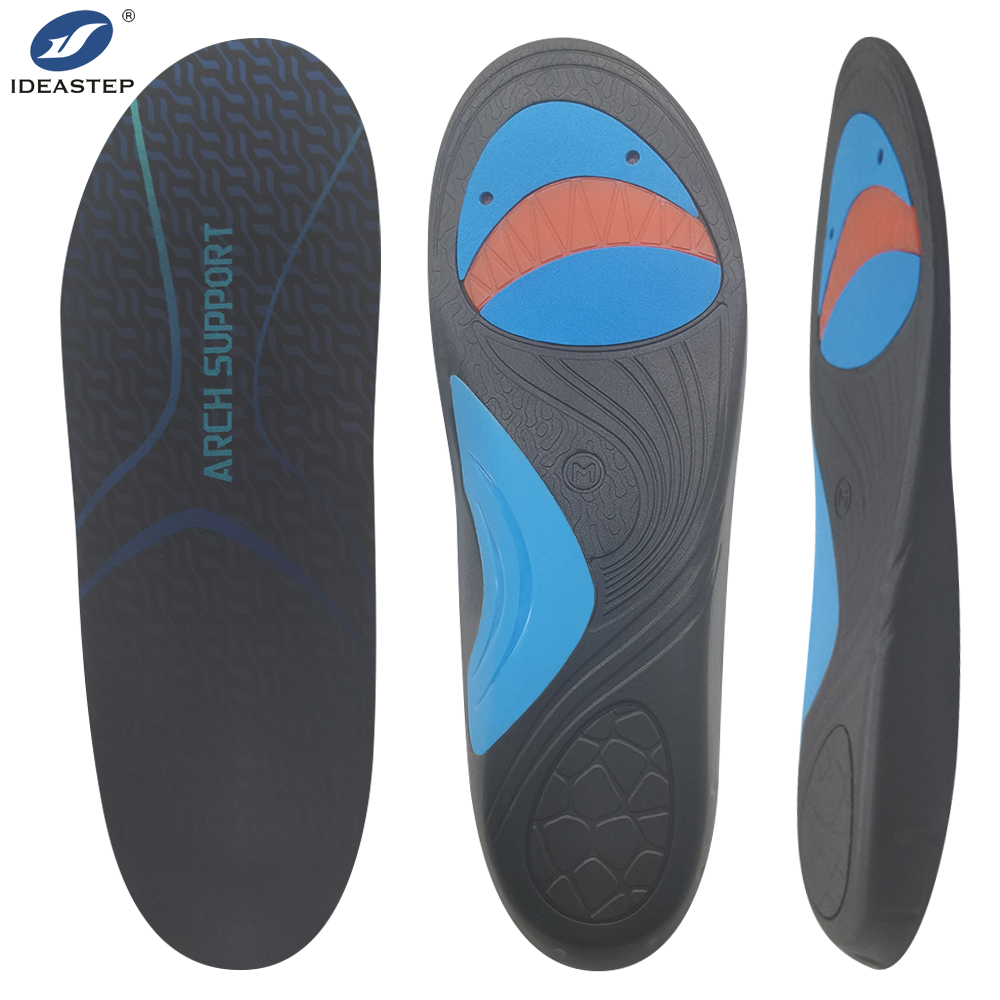
- EVA: cushioning layer for comfort and impact absorption
- PU: structural layer for arch support and stability
This division of function is the standard approach in most mid-to-high-end OEM orthotic insole designs.
When EVA Performs Better in Real Applications
EVA is generally preferred in scenarios where lightweight comfort is the primary requirement.
In most sports and casual footwear programs, EVA remains the default choice mainly because of its weight advantage and production efficiency, rather than purely biomechanical superiority.
When PU Performs Better in Real Applications
PU is more suitable for environments requiring long-term structural stability.
In occupational footwear and medical orthotic systems, PU is often selected because it maintains arch integrity under continuous load, especially during prolonged standing on hard surfaces.
Engineering Reality: Why Single-Material Insoles Are Limited
From an orthotic engineering perspective, relying on a single material often leads to performance trade-offs.
EVA alone may provide comfort but lacks long-term stability. PU alone may offer excellent support but can feel too rigid for extended daily wear.
This is why most high-performance insoles adopt multi-layer structures combining EVA, PU, and sometimes TPU to optimize different functional zones.
- Top layer: skin contact comfort and moisture management
- Mid layer: EVA cushioning for impact reduction
- Core layer: PU structural support for arch control
Real-World Limitations of EVA and PU Materials
In real-world use, EVA may gradually lose thickness and rebound performance due to compression fatigue, especially under higher body weight or long standing durations.
PU, while more durable, may feel excessively rigid in low-impact daily walking scenarios, reducing perceived comfort in some user groups.
For this reason, material selection is always based on usage environment rather than isolated material properties.
OEM and ODM Manufacturing Perspective
In OEM orthotic production, EVA and PU selection is typically validated through prototype testing, including compression set analysis, arch stability evaluation, and long-term wear simulation.
For international footwear brands, material configuration is usually determined not only by cost, but also by target market positioning, expected usage intensity, and product lifecycle requirements.
Density adjustment, hardness calibration, and structural layering are commonly used to fine-tune performance for different customer segments.
How to Choose Between EVA and PU Insoles
Material selection should always be based on functional requirements rather than subjective softness:
- Low arches or flat feet: PU-based structural support is recommended
- Long standing work environments: PU provides better stability under load
- Sports and lightweight use: EVA is preferred for flexibility and weight reduction
- High body weight users: PU offers better long-term deformation resistance
Conclusion: EVA and PU Are Complementary, Not Competitive
In orthotic insole design, EVA and PU should not be viewed as competing materials. Instead, they represent two functional components within a single engineering system.
EVA provides lightweight cushioning and comfort, while PU delivers structural support and long-term stability under load.
In most advanced orthotic solutions, the optimal performance is achieved through a hybrid material system that balances comfort, durability, and biomechanical control based on application requirements.
For OEM and ODM buyers, understanding this material synergy is essential for developing competitive orthotic products in medical, sports, and occupational footwear markets.
Recommended Reading: Foam Material – EVA & TPU.