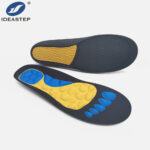
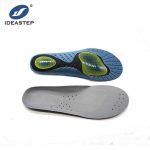
A deep heel cup is a key structural feature in many orthotic insoles. Its depth, curvature and sidewall design help contain the rearfoot and maintain a defined heel position within the insole.
For orthotic manufacturers and footwear brands, developing an effective heel cup requires careful control of geometry, material rigidity and integration with the arch support structure. These factors directly affect the fit, stability and durability of the finished product.

1. Deep Heel Cup Structure and Function
A deep heel cup features raised sidewalls that partially surround the calcaneus. Compared with a shallow heel profile, it provides greater rearfoot containment and a more defined support structure.
Its main design elements include:
- Heel cup depth: Determines the height of the surrounding sidewalls.
- Cup width: Defines the available space for the heel.
- Sidewall geometry: Influences containment and structural rigidity.
- Heel seat curvature: Determines the shape of the base supporting the rearfoot.
- Arch transition: Connects the heel cup with the medial arch structure.
These dimensions must be developed together to match the intended insole design and footwear profile.
2. How Heel Cup Geometry Affects Stability
Heel cup performance depends on more than sidewall height. The relationship between the heel seat, surrounding walls and arch structure determines how the insole supports the rearfoot.
Rearfoot Containment
The raised sidewalls create a defined space around the heel, helping limit excessive movement within the insole.
Sidewall height and curvature should provide sufficient containment without creating unnecessary bulk or interfering with the footwear construction.
Heel Seat Design
The heel seat provides the base of the cup. Its curvature and dimensions should correspond to the intended product geometry.
Poorly controlled contours can affect fit and create localized pressure. Consistent shaping is therefore important during product development and manufacturing.
Integration with Arch Support
The heel cup and medial arch should form a coordinated structure. Their transition affects the overall support profile and the distribution of contact across the rearfoot and midfoot.
For insoles with pronounced arch support, the heel cup geometry should be developed alongside the arch height rather than designed independently.
3. Materials Used in Deep Heel Cup Construction
Material selection determines the rigidity, flexibility, weight and forming requirements of the heel cup.
Polypropylene (PP)
PP is commonly used in semi-rigid and rigid orthotic shells. It offers good formability and structural stability, making it suitable for molded heel cup constructions.
Sheet thickness and forming conditions influence the final rigidity and shape retention.
Thermoplastic Polyurethane (TPU)
TPU is available in different hardness and flexibility grades. It can be used in heel support structures where controlled flexibility is required.
Its deformation characteristics should be evaluated against the intended structural requirements.
EVA Foam
EVA is widely used in cushioning layers and selected heel support constructions. Different density and hardness grades allow manufacturers to adjust cushioning and compression characteristics.
In structured orthotic insoles, EVA is often combined with a more rigid shell to provide cushioning alongside rearfoot support.
Composite Construction
Combining a thermoplastic shell with EVA or PU cushioning allows each material to perform a specific function.
The shell provides structural support, while the foam layer contributes cushioning. Material compatibility, overall thickness and bonding strength should be considered during development.
4. Key Design Considerations
Consistent heel cup performance requires control over several structural parameters.
Depth and Width
Heel cup depth determines sidewall height, while width affects the internal space and overall heel fit.
Both dimensions should correspond to the target product size and foot profile. They must also account for the available space inside the footwear.
Sidewall Thickness and Rigidity
Sidewall thickness affects resistance to deformation. Increasing thickness may improve rigidity but can also add weight and reduce flexibility.
The appropriate specification depends on the material, cup geometry and intended support level.
Curvature and Surface Transitions
The heel seat, sidewalls and arch transition should form a continuous structure. Abrupt changes in curvature can affect fit and create localized pressure.
Accurate modeling and forming help maintain consistent geometry across different sizes.
Layer Integration
In multi-layer insoles, the position of the heel cup must be coordinated with the cushioning layer and top cover.
Incorrect alignment or uneven bonding can affect the finished profile and create defects around the heel section.

5. Manufacturing Process and Quality Control
Deep heel cups are commonly produced through thermoforming or molding, depending on the selected material and product construction.
Key production stages include:
Design and modeling: Define cup depth, width, curvature, sidewall thickness and arch transition.
Material preparation: Check sheet thickness, hardness and surface condition against approved specifications.
Forming: Control heating, pressure and forming conditions to maintain consistent geometry.
Trimming: Ensure accurate dimensions, clean edges and consistent symmetry.
Layer assembly: Integrate the heel cup with cushioning materials and top covers using suitable bonding methods.
Final inspection: Check cup dimensions, shape consistency, surface defects and bonding strength.
For bulk production, consistent forming conditions and dimensional inspection are essential to maintaining repeatable product quality.
6. Sourcing Considerations for Deep Heel Cup Insoles
For orthotic laboratories, footwear brands and wholesale buyers, supplier evaluation should focus on structural capabilities and manufacturing consistency.
Important specifications include:
- Available heel cup depths and structural designs
- PP, TPU, EVA and composite material options
- Shell thickness and rigidity
- Compatibility with different arch support structures
- Size range and dimensional tolerances
- Sample development and approval procedures
- MOQ, production capacity and lead time
- Quality control for repeat orders
Technical drawings, reference samples and clear material specifications help suppliers confirm the required construction before bulk production.
Custom Deep Heel Cup Insoles for Wholesale Supply
Developing a deep heel cup insole requires careful coordination of cup geometry, material properties and layer construction. The final specification should reflect the intended footwear application and support requirements.
Ideastep works with orthotic brands, distributors and manufacturers on custom insole development and bulk production.
If you are developing a new deep heel cup design or looking for a suitable manufacturing partner, you are welcome to share your product specifications with us. Free samples are available for qualified project evaluation. Contact our team to discuss your requirements, and we will be happy to help.
Related Reading:
Work Insoles for Safety Shoes with Deep Heel Cup and Arch Support
Why Are Children’s Insoles Designed with Deep Heel Cups?