Cooling fabric insoles combine breathable surface materials with cushioning layers designed to manage heat and moisture inside footwear. For insole manufacturers, footwear brands and wholesale suppliers, their performance depends on more than the top fabric. Material compatibility, layer construction and manufacturing consistency all affect the finished product.
This article examines the materials and production factors involved in developing cooling fabric insoles for sports, work and everyday footwear applications.
What Are Cooling Fabric Insoles?
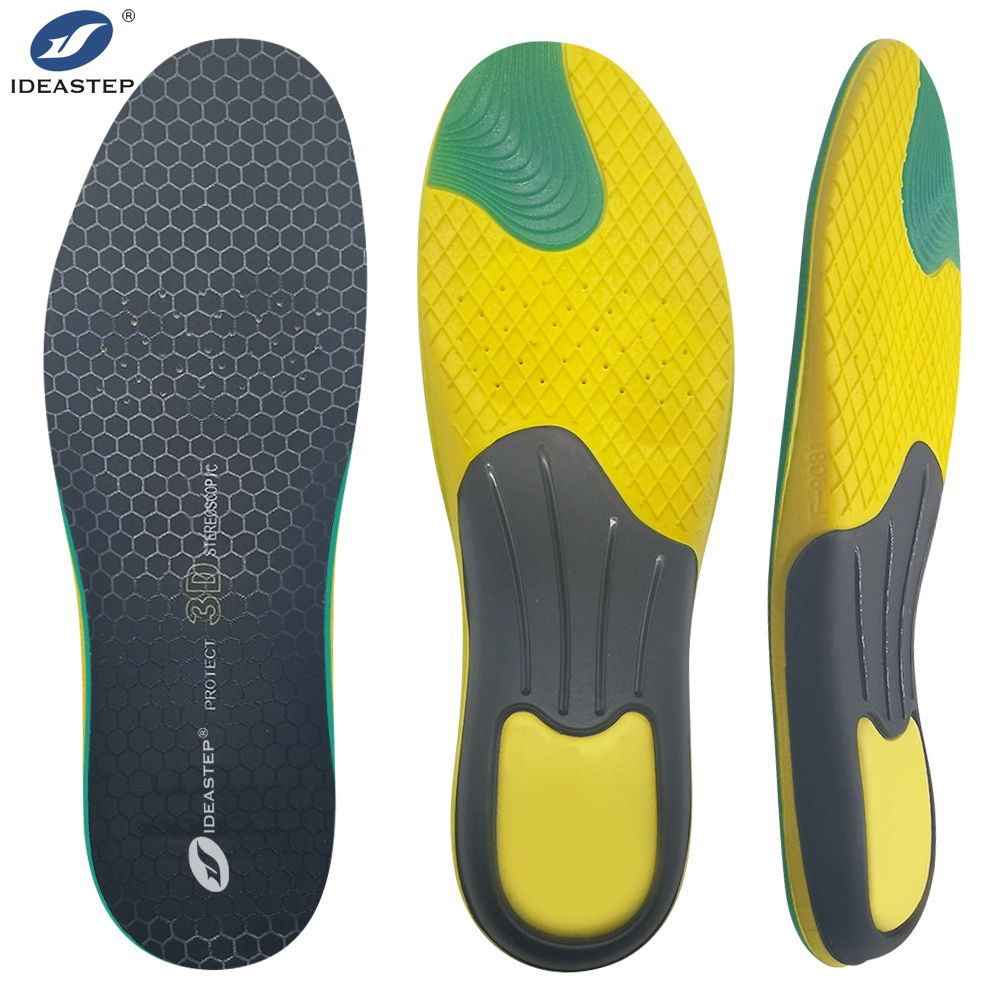
Cooling fabric insoles use breathable or moisture-wicking textiles to improve airflow and manage moisture at the foot-contact surface. They are commonly developed with mesh fabrics, moisture-wicking top covers and foam cushioning layers.
The term cooling fabric does not necessarily mean the material actively lowers temperature. In most insole applications, the effect comes from reducing moisture buildup and supporting airflow around the foot.
For manufacturers, the main development priorities are fabric performance, cushioning requirements, layer bonding and suitability for the target footwear category.
Key Materials Used in Cooling Fabric Insoles
Material selection determines how well an insole manages moisture while maintaining comfort, durability and structural stability.
Moisture-Wicking Fabric
Polyester, nylon and blended textiles are commonly used as insole top covers. Their surface structure can help move moisture away from the contact area, supporting faster evaporation.
When selecting a fabric, manufacturers should assess its moisture-management performance, abrasion resistance, thickness, color consistency and compatibility with the underlying foam.
Breathable Mesh Fabric
Mesh fabrics feature an open structure that allows air to pass through the material. They are often used in sports and casual insoles where ventilation is an important design requirement.
Mesh density and construction affect both airflow and surface durability. A more open structure may improve ventilation, but it must still provide sufficient coverage and withstand repeated friction.
Breathable Foam Materials
EVA and PU foam are widely used in insole cushioning layers. Their density, hardness and cell structure influence cushioning, flexibility and overall product weight.
Perforated foam can provide additional airflow paths through the insole structure. However, hole size, spacing and position need to be considered alongside the required support and durability.
How Moisture Management Works in Insole Design
Moisture management depends on how the top cover and underlying layers work together.
- Moisture absorption: The fabric receives moisture from the contact surface. Its ability to absorb moisture depends on fiber type and textile construction.
- Moisture transfer: Moisture-wicking fabrics help move moisture across the textile surface, reducing localized buildup.
- Moisture evaporation: Airflow around the fabric supports evaporation. Mesh structures and suitable perforations can help improve ventilation.
These functions should be evaluated as part of the complete insole construction. A moisture-wicking top cover alone cannot compensate for a poorly designed or insufficiently breathable layer structure.
Designing a Breathable Multi-Layer Insole Structure
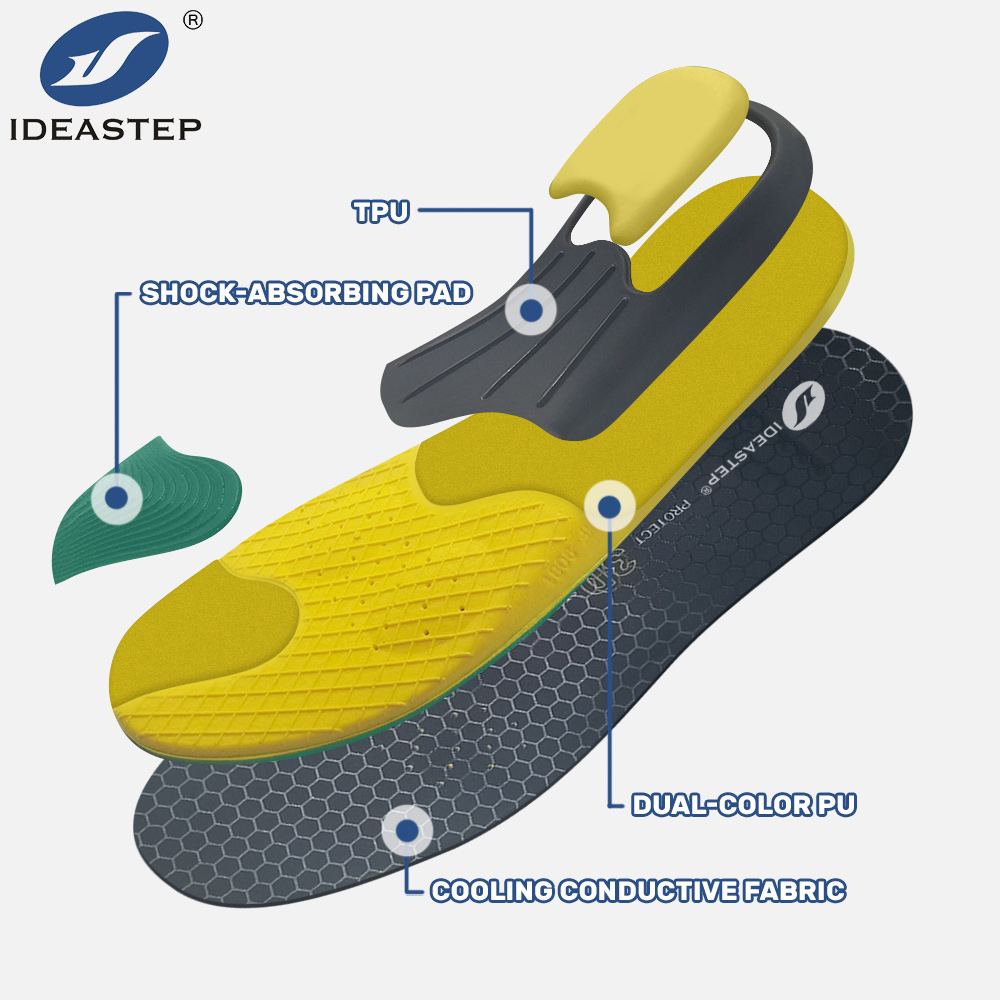
A cooling fabric insole usually combines several materials, each serving a different function.
Top Cover
The top cover provides the primary contact surface. Moisture-wicking polyester, nylon and mesh fabrics are common options. Fabric thickness, texture and abrasion resistance should match the intended application.
Cushioning Layer
EVA or PU foam provides cushioning and helps determine the insole’s flexibility and compression response. Manufacturers can adjust foam density and hardness to meet different product requirements.
Base Layer
The base layer supports the overall structure and helps maintain shape during use. Its material and thickness depend on the footwear design and the required level of support.
Perforation and Airflow Channels
Perforations and airflow channels can improve ventilation when incorporated into suitable areas of the insole. Their layout should not compromise cushioning, bonding strength or structural integrity.
Applications of Cooling Fabric Insoles
Cooling fabric constructions can be adapted for several footwear categories:
- Sports and running footwear: Lightweight mesh and moisture-wicking top covers are commonly used in designs where ventilation and cushioning are priorities.
- Work and safety footwear: Durable top fabrics and stable foam layers are important for insoles intended for extended wear and demanding working environments.
- Casual footwear: Breathable textiles and flexible cushioning materials can be combined to meet different shoe constructions.
- Private-label products: Fabric type, foam density, thickness, color and surface finish can be adjusted to meet brand specifications.
The appropriate construction depends on the footwear category, target performance requirements and production budget.
Manufacturing Considerations
Consistent production requires control over both material properties and processing conditions.
Key factors include:
- Fabric consistency: Check thickness, surface quality, color and textile performance between batches.
- Foam selection: Match EVA or PU density and hardness to the required cushioning and structural properties.
- Layer bonding: Select compatible adhesives and control bonding conditions to reduce delamination.
- Perforation: Maintain consistent hole size and positioning without weakening critical areas.
- Cutting accuracy: Ensure the fabric and foam layers align with the required insole dimensions and shape.
- Quality inspection: Check bonding strength, surface defects, dimensional consistency and overall finish.
Material samples and production trials can help verify the construction before bulk manufacturing.
What to Consider When Sourcing Cooling Fabric Insoles
For wholesalers, footwear brands and insole distributors, sourcing decisions should be based on product specifications and supplier capabilities.
Before placing a bulk order, confirm:
- Available moisture-wicking and breathable fabric options
- EVA or PU foam specifications, including density and hardness
- Insole thickness, dimensions and layer construction
- Bonding, cutting and perforation capabilities
- Sample availability and production lead time
- MOQ, packaging and private-label requirements
- Quality control procedures for repeat orders
Clear specifications help reduce sample revisions and improve consistency between production batches.
Custom Cooling Fabric Insoles for Wholesale Supply
Cooling fabric insoles can be developed with different textile surfaces, foam materials and layer structures to suit sports, work, casual and other footwear applications.
Ideastep supports B2B insole projects with material selection, product development and bulk manufacturing. Buyers can discuss fabric options, sample requirements, product specifications and private-label production with the team.
Browse Related Products: https://www.aideastep.com/product/ideastep-9081-dual-color-pu-insoles-with-tpu-support-and-cooling-conductive-fabric/.