A custom ankle foot orthosis (AFO) supports the lower leg, ankle, and foot while controlling movement according to specific functional requirements. Its performance depends on several factors, including shell geometry, material properties, ankle alignment, and structural rigidity.
For orthotic manufacturers and laboratories, these factors need to be considered together during product development. A well-designed AFO should meet the required support and movement specifications while remaining practical to manufacture.
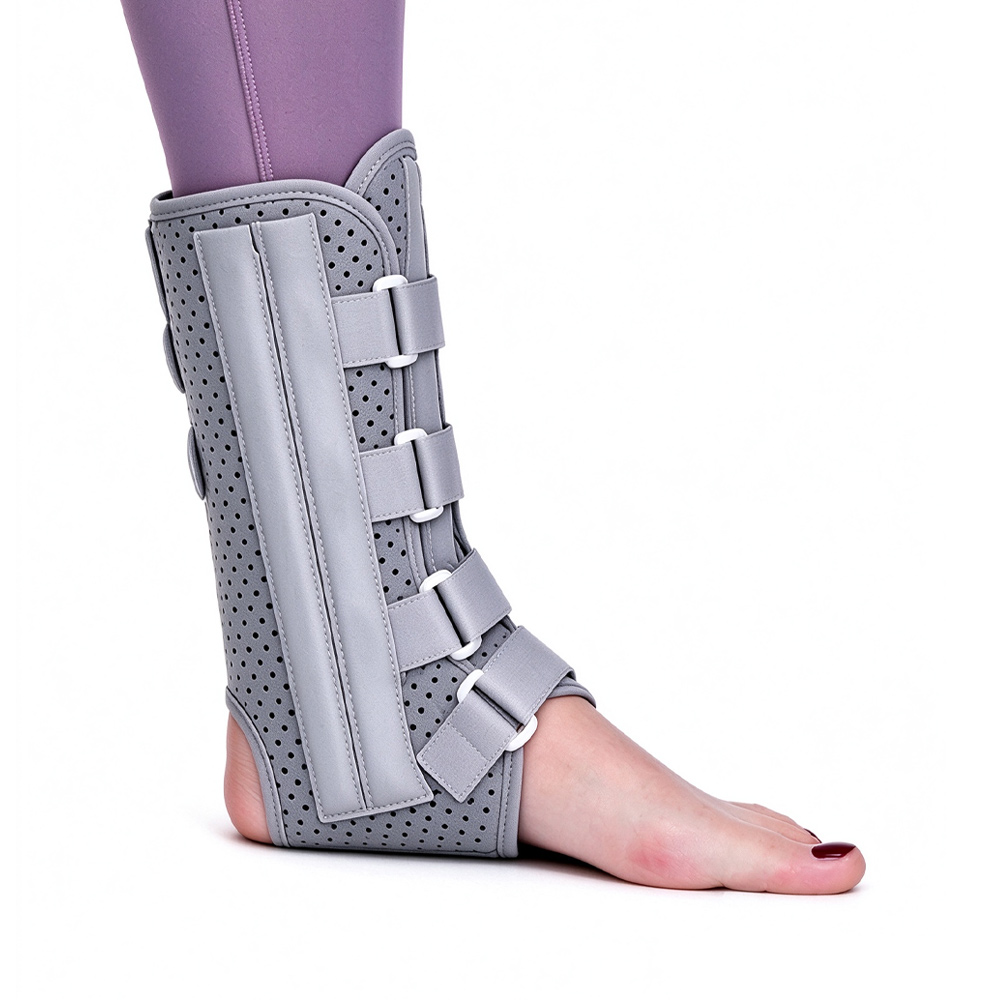
Understanding Custom Ankle Foot Orthosis Design
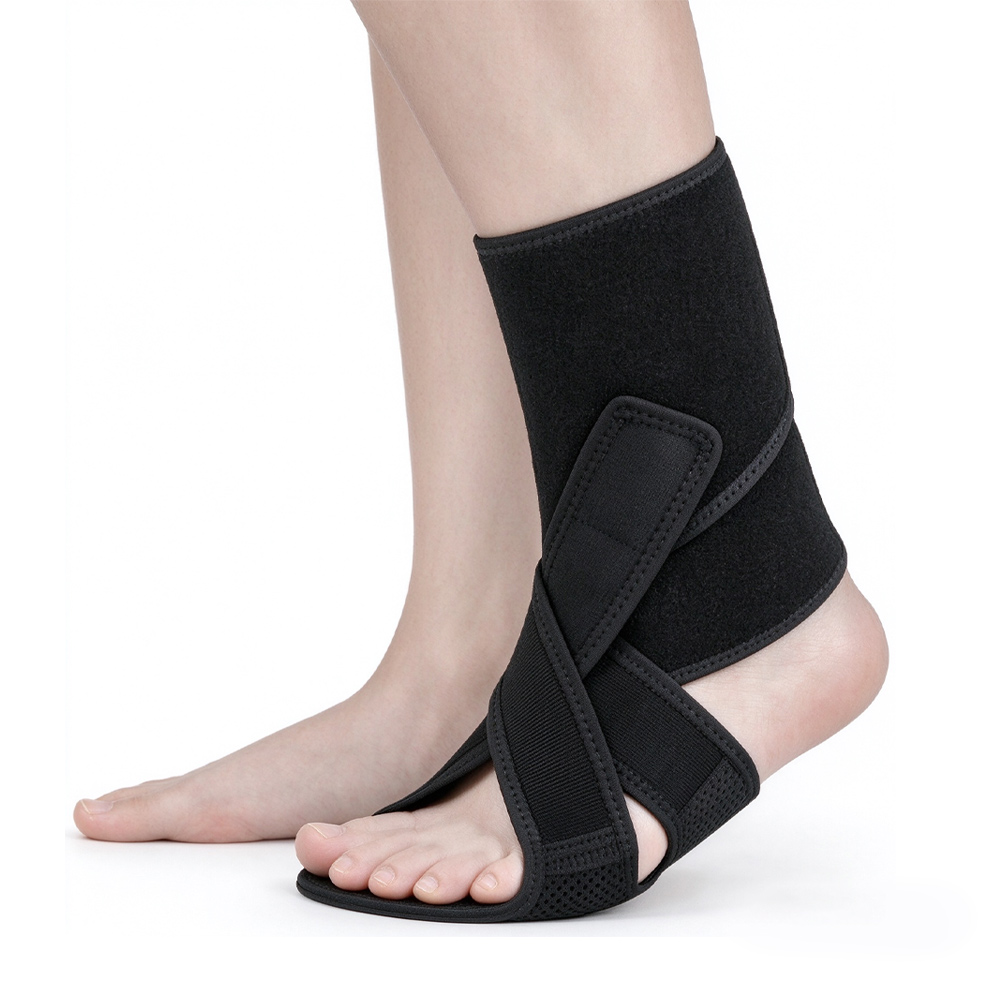
An AFO extends from the lower leg to the foot. Its structure and level of flexibility depend on the intended application.
Common designs include:
- Solid AFO: A rigid structure that limits selected ankle movements and provides stability.
- Hinged AFO: Uses mechanical joints to allow controlled ankle movement.
- Posterior Leaf Spring AFO: Features a flexible posterior section that allows controlled movement.
- Dynamic AFO: Uses a flexible construction to accommodate movement while maintaining support.
Each design requires different shell dimensions, material properties, and fabrication methods. The configuration should follow the approved prescription and technical specifications.
Key Design Considerations for a Custom Ankle Foot Orthosis
1. Structural Rigidity and Flexibility
The balance between rigidity and flexibility determines how an AFO supports and controls movement. Solid designs generally require greater stiffness, while posterior leaf spring and dynamic designs need flexibility in specific areas.
The final stiffness depends on more than material hardness. Important factors include:
- Material type and mechanical properties
- Shell thickness and distribution
- Overall geometry
- Reinforcement around the ankle and lower leg
- Footplate and posterior section design
Manufacturers should evaluate these factors together to achieve the required support without adding unnecessary weight or bulk.
2. Anatomical Fit and Shell Geometry
The shell should follow the contours of the lower leg, ankle, and foot. Accurate dimensions help maintain the intended alignment and reduce fitting issues.
Key design areas include:
- Calf section: Shape, width, and height determine lower-leg coverage and fit.
- Malleolar area: Sufficient clearance around the ankle bones helps avoid unwanted contact.
- Heel and ankle region: The shape should support the intended foot and ankle position.
- Footplate: Length, width, and contour should match the required foot coverage.
- Trim lines: Their position affects shell coverage, flexibility, and structural control.
Foot scans, casting, and CAD modeling can help achieve accurate and repeatable shell dimensions.
3. Material Selection for AFO Construction
Material choice affects shell stiffness, weight, durability, forming methods, and production cost. The selection should match the AFO design and its mechanical requirements.
| Material | Main Characteristics | Typical Application |
|---|---|---|
| Polypropylene (PP) | Lightweight, formable, and available in different thicknesses | Rigid and semi-rigid thermoplastic AFO shells |
| TPU | Flexible, elastic, and abrasion-resistant | Selected AFO designs requiring controlled flexibility |
| Carbon Fiber Composite | High strength-to-weight ratio and stiffness | Lightweight, high-stiffness AFO structures |
| EVA Foam | Lightweight and cushioning | Padding, liners, and contact areas |
PP, TPU, and carbon fiber composites serve different structural requirements. EVA is generally used for cushioning rather than as the primary load-bearing shell material.
4. Weight and Overall Profile
An AFO should provide the required support without unnecessary material thickness or bulk. Excessive material can increase weight and make footwear integration more difficult.
Design considerations include shell thickness, reinforcement placement, lower-leg coverage, and footplate dimensions. Material should be concentrated where structural requirements demand it rather than added uniformly across the entire device.
5. Ankle Joint Design and Alignment
For hinged AFOs, joint position and alignment are critical. The joint must correspond with the intended ankle movement and fit the surrounding shell structure.
Manufacturers should consider:
- Joint type and mechanical function
- Position relative to the anatomical ankle axis
- Range-of-motion settings
- Attachment points and reinforcement
- Compatibility with the shell material
Incorrect alignment or assembly can affect the intended movement. Joint specifications and positioning should follow the approved design and clinical prescription.
6. Footplate and Component Integration
The footplate connects the lower-leg section with the foot portion of the AFO. Its length, width, and contour should match the overall design and intended footwear.
Other components may include ankle joints, straps, closures, padding, and liners. Their dimensions and attachment positions should be defined during product development to avoid unnecessary adjustments during assembly.
Custom Ankle Foot Orthosis Manufacturing Process
The manufacturing process varies according to the AFO design and selected material. A typical workflow includes the following stages.
1. Design Data and Model Preparation
Production begins with the approved prescription, measurements, scans, or positive models. These provide the reference for shell dimensions and anatomical contours.
2. CAD Design
CAD modeling defines shell geometry, thickness, trim lines, reinforcement areas, and footplate dimensions. Hinged designs also require accurate joint positioning and attachment details.
3. Material Processing and Shell Fabrication
Thermoplastic shells may be formed over a positive model, while carbon fiber composite structures require suitable layup and curing processes. The method depends on the material and AFO configuration.
4. Trimming and Finishing
The formed shell is trimmed to the specified dimensions. Edges are smoothed, and required openings and attachment points are completed.
5. Component Assembly
Depending on the design, this stage includes installing joints, straps, closures, padding, and liners. All components should follow the approved positioning and assembly specifications.
6. Quality Inspection
Final inspection should cover shell dimensions, thickness, surface finish, component positioning, joint alignment where applicable, and overall workmanship.
Common AFO Design and Manufacturing Challenges
Several production issues can affect AFO quality and consistency.
- Uneven shell thickness: Can cause variations in stiffness and deformation. Defined thickness specifications and process controls help reduce this problem.
- Insufficient anatomical clearance: Poor clearance around the ankle bones can create fitting issues. These areas should be checked during design and model preparation.
- Incorrect joint alignment: May affect movement in hinged AFOs. Accurate positioning and assembly checks are essential.
- Excessive weight and bulk: Often result from unnecessary thickness or reinforcement. Material distribution should match the structural requirements.
- Batch inconsistencies: Variations in materials and forming conditions can affect finished products. Incoming material checks and consistent production procedures help maintain quality.
What to Consider When Sourcing Custom AFOs
For orthotic manufacturers, laboratories, and medical device distributors, choosing a manufacturing partner involves more than comparing unit prices. Technical capability and production consistency are equally important.
Before placing an order, buyers should check:
- Design capability: Can the supplier work with custom drawings, dimensions, and AFO configurations?
- Material specifications: Are material type, thickness, and relevant mechanical properties clearly defined?
- Component compatibility: Can the design accommodate the required joints, straps, and other components?
- Sample evaluation: Are samples available for design and quality assessment?
- Production consistency: Are dimensional requirements and inspection standards maintained across batches?
- Production capacity: Can the supplier meet the required order volume and delivery schedule?
For OEM and ODM projects, clear drawings, material requirements, and acceptance criteria help reduce revisions during production.
Custom Ankle Foot Orthosis Manufacturing for B2B Projects
Custom AFO production requires careful coordination of shell design, material selection, joint positioning, and fabrication quality. Each configuration has different structural requirements, making accurate specifications essential from development through bulk production.
Ideastep supports B2B orthotic projects with manufacturing and material solutions. Contact our team to discuss custom AFO specifications, material options, sample evaluation, and OEM/ODM production requirements.
Related Articles:
Finding Support: Exploring Wholesale Pre-Fabricated Orthotics for Foot & Ankle Pain Relief
Design and Manufacturing Considerations for Custom Made Ankle Braces