Custom orthopedic supports require careful coordination of materials, structural components, branding, and manufacturing processes. Product requirements vary across ankle, knee, wrist, and foot support categories, so material selection and construction methods must match the intended design.
For brands, distributors, and medical device suppliers, a successful project depends on clear specifications, approved samples, and consistent production. These factors help control product quality and reduce unnecessary changes during bulk manufacturing.

1. Common Types of Orthopedic Supports
Different product categories require different materials and structural configurations.
| Product Category | Common Construction | Key Design Considerations |
|---|---|---|
| Ankle Supports | Elastic fabric, straps, reinforced panels, or molded components | Flexibility, compression, and structural stability |
| Knee Supports | Textile sleeves, straps, hinges, or rigid side supports | Joint control, component strength, and fastening |
| Wrist Supports | Fabric panels, straps, splints, or molded stays | Rigidity, flexibility, and fastening |
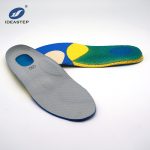
| Foot Supports | Orthotic shells, foam layers, heel cups, and arch components | Shell stiffness, cushioning, and footwear compatibility |
| Custom Orthotic Components | Molded shells, foam pads, and reinforcement structures | Dimensions, material properties, and component integration |
Product structure should be established before material selection and quotation. This allows manufacturers to assess the required processes, tooling, and production costs more accurately.
2. Materials Used in Custom Orthopedic Supports
Material selection affects stiffness, flexibility, weight, durability, and processing requirements. Many products combine several materials to achieve the required construction.
Thermoplastic Materials
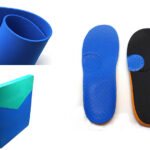
Polypropylene (PP) is commonly used for rigid and semi-rigid support shells. It can be thermoformed into specified shapes, making it suitable for molded structural components.
TPU and selected copolymer materials offer different combinations of flexibility, impact resistance, and mechanical strength. Material grade, sheet thickness, and forming conditions should be confirmed during development.
EVA Foam
EVA is widely used in cushioning layers, padding, and structural inserts. Its density, hardness, and thickness can be adjusted to meet different product specifications.
For bulk production, consistent foam properties help control component dimensions, compression behavior, and product weight.
PU and Other Cushioning Materials
Polyurethane (PU) and PORON are used in cushioning and padding components. Their density, thickness, and compression recovery influence their suitability for different product structures.
Material combinations should be evaluated through sample testing, particularly when multiple foam layers are bonded together.
Textiles and Elastic Fabrics
Nylon, polyester, mesh, and elastic fabrics are common in soft orthopedic supports. Fabric weight, stretch, abrasion resistance, and surface finish affect the construction and durability of the finished product.
Color, material composition, and fabric specifications should be approved before bulk purchasing.
Metal and Composite Components
Aluminum and stainless steel are used in selected stays, hinges, brackets, and connecting components. Carbon fiber composites are suitable for designs requiring lightweight reinforcement and controlled stiffness.
Component dimensions, mechanical properties, and compatibility with surrounding materials should be checked during assembly.
3. Branding and Private-Label Customization
Branding requirements should be confirmed during product development to avoid changes after samples have been approved.
Logo Application
Common logo application methods include:
- Screen printing: Suitable for logos and product information on compatible surfaces.
- Heat transfer: Used for graphics on suitable textile or film materials.
- Embroidery: Suitable for selected fabric components.
- Embossing or debossing: Creates raised or recessed branding on compatible materials.
- Woven labels: Provide a practical option for brand identification and product details.
The method should match the surface material, logo design, order quantity, and required durability.
Color and Material Selection
Custom colors can be specified through fabric selection, dyed materials, printed graphics, or colored plastic components.
For multi-material products, color references should be checked across fabrics, foam, plastic parts, and accessories. Material differences may affect the final appearance, even when the same color reference is used.
Private-Label Packaging
Packaging can be developed according to the buyer’s distribution requirements. Common options include:
- Printed product boxes and cartons
- Polybags with custom labels
- Product information cards
- Barcode and SKU labels
- Size and specification labels
- Brand-specific packaging inserts
Packaging artwork, dimensions, barcode information, and label content should be approved before production.
4. Manufacturing Processes
Manufacturing methods depend on the product structure, selected materials, and production volume. Several processes may be required for one finished support.
Thermoforming and Molding
Thermoforming is used to shape suitable thermoplastic sheets into rigid or semi-rigid components. Mold accuracy, sheet thickness, heating conditions, and forming pressure affect the finished geometry.
Compression molding is suitable for selected foam materials and molded components. Temperature, pressure, and molding time must be controlled to maintain consistent dimensions and material properties.
Cutting and Machining
Die cutting prepares foam, fabric, and sheet materials to specified dimensions. CNC machining is used for selected structural components that require accurate contours and dimensions.
Cutting tolerances and edge quality are important for parts that require precise assembly.
Sewing and Fabric Assembly
Soft orthopedic supports may require stitching, panel assembly, and fastening operations. Seam position, stitching strength, and component alignment should follow approved patterns and specifications.
Lamination and Bonding
Foam, fabric, and structural layers can be joined using suitable adhesives or lamination methods. Surface preparation, adhesive compatibility, bonding pressure, and curing conditions influence assembly quality.
Material combinations should be tested before production approval.
Final Assembly
Final assembly may involve installing hinges, stays, straps, fasteners, padding, and molded components. Component dimensions and connection points should match the approved drawings and samples.

5. Specifications to Confirm Before Production
Clear specifications reduce repeated sample revisions and help manufacturers prepare accurate quotations.
| Specification | Details to Confirm |
|---|---|
| Product Type | Ankle, knee, wrist, foot support, or other category |
| Product Structure | Soft, semi-rigid, rigid, or multi-component construction |
| Materials | PP, TPU, EVA, PU, fabric, metal, or composite materials |
| Dimensions | Length, width, thickness, and size range |
| Mechanical Properties | Hardness, flexibility, stiffness, or compression requirements |
| Color | Standard color or custom reference |
| Branding | Logo position, application method, and artwork |
| Packaging | Box, polybag, labels, and product inserts |
| Order Quantity | Sample quantity, MOQ, and expected bulk volume |
| Quality Requirements | Inspection criteria and applicable testing standards |
CAD drawings, material specifications, logo files, and packaging artwork should be supplied wherever available. For new designs, physical samples help confirm construction details before production approval.
6. Quality Control for Bulk Production
Quality control should cover incoming materials, individual components, assembly, branding, and finished packaging.
Key inspection points include:
- Material inspection: Verify material type, thickness, dimensions, and relevant technical properties.
- Component inspection: Check molded parts, cut materials, fabric panels, and hardware against approved specifications.
- Assembly inspection: Review stitching, bonding, fastening, and component positioning.
- Dimensional inspection: Confirm product measurements and size consistency.
- Branding inspection: Check logo position, color, printing quality, and label accuracy.
- Functional inspection: Test relevant mechanical features against the product specifications.
- Packaging inspection: Verify product identification, quantity, barcodes, and packaging details.
Inspection methods and acceptance criteria should be agreed upon before mass production. Approved samples and documented specifications provide the basis for repeat-order control.
7. Managing OEM/ODM and Private-Label Projects
A defined development process helps coordinate product design, branding, sampling, and bulk production.
- Confirm product requirements: Define product category, structure, dimensions, materials, and order quantity.
- Review materials and construction: Check material combinations, component specifications, and manufacturing processes.
- Finalize branding: Approve logo artwork, colors, labels, and packaging details.
- Develop samples: Evaluate dimensions, materials, construction, and branding against the project specifications.
- Approve production: Confirm pricing, MOQ, lead time, inspection requirements, and packaging.
- Maintain production records: Use approved samples and specifications as references for repeat orders.
Resolving these details before mass production helps reduce revisions and improves coordination between buyers and manufacturers.
Conclusion
A custom orthopedic support project is defined by more than its appearance. Material compatibility, construction details, branding methods, and manufacturing tolerances all affect whether the approved design can be reproduced at scale.
For private-label and OEM/ODM buyers, the most important step is to finalize technical and branding specifications before production begins. This provides a clearer basis for sampling, cost evaluation, and repeat orders.
Ideastep focuses on orthotic insole materials, EVA foam, and custom insole components. For projects involving molded shells, cushioning layers, or private-label insole production, contact our team to discuss material specifications and bulk supply requirements.