Hard orthotics use rigid or semi-rigid shells to maintain structural shape and control deformation under load. Their mechanical properties depend on material selection, shell thickness, geometry, and reinforcement design.
For orthotic manufacturers, these factors must be considered together to achieve consistent specifications, reliable production, and repeatable product quality.
1. Materials Used in Hard Orthotics
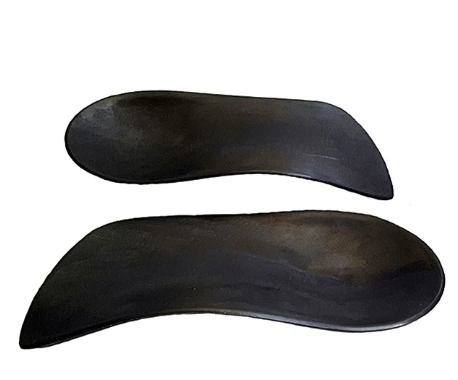
Material selection affects shell stiffness, weight, durability, and processing requirements. Common materials include polypropylene, copolymer plastics, carbon fiber composites, and other engineering thermoplastics.
Polypropylene (PP)
Polypropylene is widely used for rigid and semi-rigid orthotic shells. It offers a balance of stiffness, formability, and production cost.
PP sheets can be thermoformed over a mold or positive model. Sheet thickness, forming temperature, and processing conditions influence the finished shell’s geometry and mechanical properties.
Copolymer Plastics
Copolymer materials offer different combinations of flexibility, impact resistance, and durability. Their properties vary by formulation, so manufacturers should evaluate specific grades against the required shell specifications.
Carbon Fiber Composites
Carbon fiber composites provide a high stiffness-to-weight ratio. Their structural properties depend on fiber orientation, laminate thickness, resin system, and forming conditions.
They are suitable for designs requiring lightweight structural components or localized reinforcement.
Other Engineering Thermoplastics
Nylon and other engineering thermoplastics may be used in selected components. Material suitability depends on stiffness, moisture resistance, dimensional stability, and processing requirements.
2. Factors Affecting Shell Rigidity
Shell rigidity is not determined by material hardness alone. Several design variables influence how the finished structure responds to bending and applied loads.
- Material properties: Elastic modulus, yield behavior, and impact resistance affect deformation and structural performance.
- Shell thickness: Greater thickness generally increases bending stiffness, although the result also depends on material properties and geometry.
- Shell geometry: Curvature, contours, raised sections, and edge profiles influence stiffness and load distribution.
- Reinforcement: Local reinforcement can increase stiffness in selected areas without making the entire shell thicker.
These factors should be specified together during product development rather than adjusted independently.
3. Structural Design Features
Shell geometry determines the structural characteristics of a hard orthotic. Key design areas include the arch, heel cup, flanges, and forefoot section.
Arch Contour
Arch height, length, curvature, and transition geometry affect the shell profile and stiffness. CAD drawings should define these dimensions to maintain consistency across production batches.
Deep Heel Cup
Heel cup depth, width, wall angle, and edge transition determine the rearfoot shell geometry. Accurate forming is necessary to reproduce the approved dimensions.
Medial and Lateral Flanges
Flange height, thickness, and contour influence the structure along the sides of the shell. Their transitions into the main body should be clearly defined in the design.
Forefoot Extension
Shell configurations may include full-length or three-quarter-length designs. Forefoot thickness and flexibility should be coordinated with the stiffness of the arch and rearfoot sections.
Posting and Additional Components
Medial or lateral posting may be integrated into the shell or produced as separate components. Metatarsal features, cushioning pads, and top covers can also be incorporated according to the product specification.
4. Manufacturing Processes
The manufacturing method depends on the shell material, geometry, and required production volume.
Thermoforming
Thermoforming is commonly used for PP and other suitable thermoplastics. Heated sheets are formed over a mold or positive model.
Temperature, forming time, pressure, and sheet thickness require consistent control to maintain shell dimensions and reduce forming defects.
CNC Milling
CNC milling produces shell contours from suitable blocks or blanks using CAD-based machining paths. It supports accurate shaping of arch profiles, heel cups, and edge details.
Tool selection, machining parameters, and material stability affect dimensional accuracy and surface finish.
Composite Layup and Forming
Carbon fiber components are produced through material preparation, fiber layup, forming, and curing. Trimming and finishing follow the forming process.
Fiber orientation, laminate thickness, and resin distribution must be controlled to maintain consistent structural properties.
3D Printing
3D printing supports the production of complex shell geometries and customized structural components. Material type, print orientation, wall thickness, and infill settings influence the finished part.
Production parameters should be validated before moving from prototypes to repeat manufacturing.
5. Combining Rigid Shells with Other Materials
Hard orthotics may combine rigid shells with foam and textile layers to complete the product structure.
| Material Combination | Typical Application | Key Considerations |
|---|---|---|
| PP + EVA | Rigid shell with cushioning layer | Foam density, thickness, and bonding |
| PP + PU | Shell with resilient cushioning | Compression behavior and adhesive compatibility |
| Carbon Fiber + EVA | Composite shell with cushioning | Laminate stiffness and layer integration |
| Carbon Fiber + PU | Composite structure with padding | Bonding strength and material compatibility |
| Rigid Shell + Fabric | Finished top cover | Lamination quality and surface durability |
Material compatibility should be checked before assembly. Differences in flexibility, surface properties, and compression behavior can affect bonding and finished-product consistency.

6. OEM/ODM Specifications for Hard Orthotics
Clear specifications reduce sampling adjustments and help maintain consistency during bulk production.
| Specification | Details to Confirm |
|---|---|
| Shell Material | PP, copolymer, carbon fiber composite, or other material |
| Shell Thickness | Nominal thickness and tolerance |
| Rigidity | Required stiffness or flex characteristics |
| Shell Geometry | Arch profile, heel cup, flanges, and forefoot shape |
| Shell Length | Full-length, three-quarter length, or other configuration |
| Reinforcement | Location, dimensions, and material |
| Top Cover | Fabric, EVA, PU, or other material |
| Production Method | Thermoforming, CNC milling, composite forming, or 3D printing |
| Order Quantity | Sample quantity and expected bulk volume |
CAD drawings, material samples, and prototype evaluation should be used to confirm the design before mass production.
7. Quality Control and Production Consistency
Quality control should cover material properties, shell dimensions, structural rigidity, and component assembly.
Key inspection points include:
- Material inspection: Verify material grade, thickness, and relevant technical specifications.
- Dimensional inspection: Check arch geometry, heel cup dimensions, shell length, and edge profiles.
- Rigidity testing: Compare shell stiffness using an agreed test method.
- Surface inspection: Check for cracks, forming defects, machining marks, and uneven edges.
- Bonding inspection: Verify the attachment of foam layers and top covers.
- Batch consistency: Maintain approved specifications and production records for repeat orders.
Inspection methods and acceptance limits should be established for each product design and material combination.
Conclusion
Hard orthotic manufacturing depends on the relationship between material properties, shell thickness, structural geometry, and processing methods. PP remains a practical choice for many rigid and semi-rigid shells, while carbon fiber composites offer additional options for lightweight structural designs.
For manufacturers and wholesale buyers, well-defined specifications and controlled production processes are essential for consistent quality and repeatable OEM/ODM production.
Ideastep supports orthotic material sourcing and custom insole development for OEM/ODM projects. Contact our team to discuss shell materials, structural requirements, and bulk production.
Related Articles: Orthotic Shell Design: Material Selection, Structural Details and Manufacturing.