
Knee ankle foot orthotics (KAFOs) are external orthotic devices that integrate knee, ankle, and foot support into one structure. Unlike ankle-foot orthoses, KAFOs extend above the knee and incorporate mechanical joints or locking systems to control movement across multiple joints.
For orthotic manufacturers, KAFO development involves more than assembling individual components. Joint alignment, upright configuration, shell geometry, and material selection must work together to meet the required mechanical specifications.
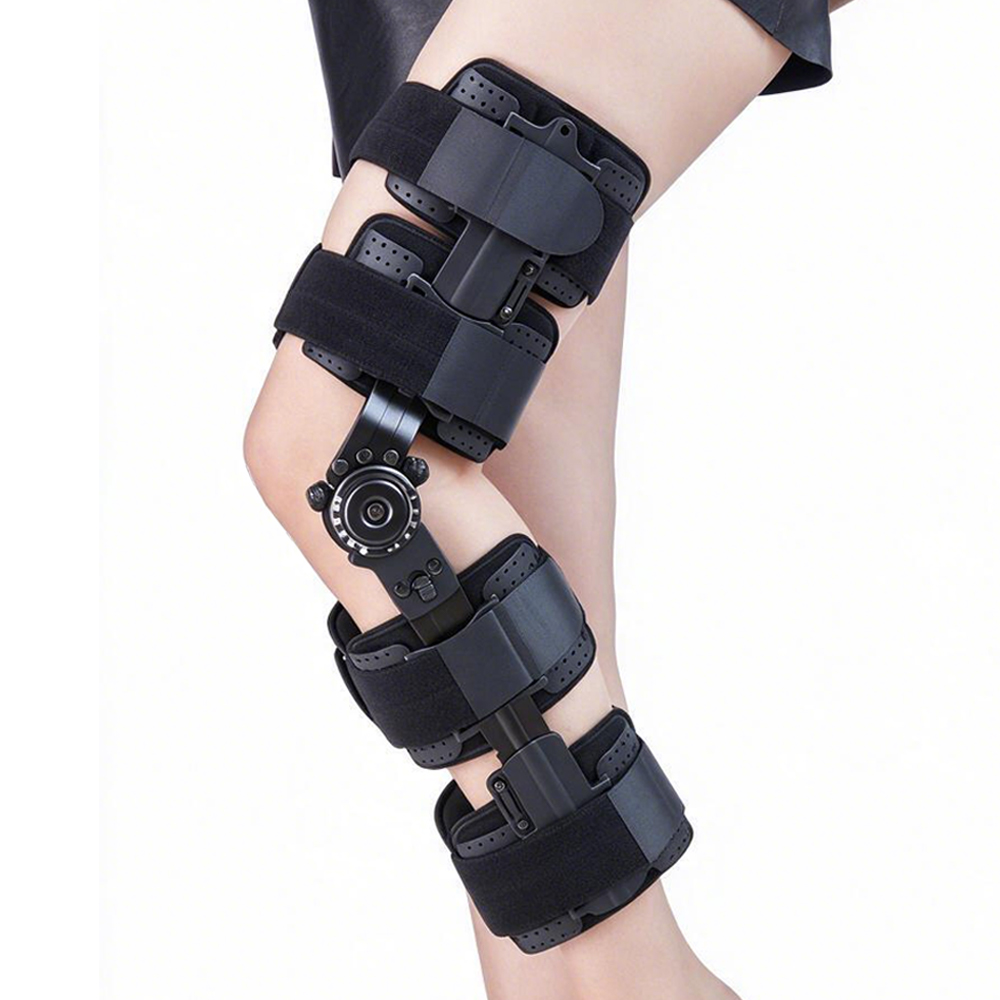
1. Main Structural Components of KAFOs
A typical KAFO consists of thigh and calf supports, knee joints, uprights, ankle components, and a foot section. The configuration varies according to the required level of movement control and structural support.
Thigh and Calf Supports
Thigh and calf sections form the main structural contact areas. Their dimensions, contours, and connection points affect load transfer and overall device stability.
Manufacturers commonly use molded thermoplastic shells or contoured support components. Accurate shaping and consistent wall thickness are important for maintaining the specified geometry.
Knee Joint Assembly
The knee joint connects the upper and lower sections of the orthosis. Its mechanical configuration determines the available range of motion and locking function.
Common options include free-motion joints, manual locking joints, and stance-control mechanisms. Joint selection should consider alignment, loading requirements, adjustment range, and compatibility with the uprights.
Ankle and Foot Components
The ankle assembly connects the calf section to the foot structure. Depending on the design, it may use a fixed or articulated configuration.
The foot section typically incorporates a footplate or molded base. Its dimensions and stiffness must match the ankle mechanism and overall structural requirements.
2. Knee Joint Mechanisms and Support Design
Knee joint selection is one of the main engineering decisions in KAFO development. Different mechanisms provide different levels of movement control and mechanical complexity.
Free-Motion Knee Joints
Free-motion joints allow flexion and extension within the mechanical limits of the design. They are used when the orthotic structure does not require a locking mechanism.
Key design considerations include joint alignment, range of motion, mechanical clearance, and upright compatibility.
Locking Knee Joints
Locking joints restrict knee movement when engaged. Common designs include manual locking mechanisms and other mechanically controlled systems.
Manufacturers should verify locking engagement, release operation, component strength, and resistance to wear. The joint assembly must also maintain consistent alignment throughout its operating range.
Stance-Control Mechanisms
Stance-control systems are designed to provide knee stability during stance while allowing movement during swing, depending on the mechanism.
Compared with conventional locking joints, these systems involve more complex mechanical components. Alignment, adjustment, and functional validation therefore require particular attention.
3. Materials Used in KAFO Manufacturing
KAFO construction typically combines metals, thermoplastics, composite materials, and cushioning layers. Each material serves a different structural or manufacturing purpose.
| Material | Typical Application | Main Characteristics |
|---|---|---|
| Aluminum Alloy | Uprights, brackets, and structural connections | Lightweight and machinable |
| Stainless Steel | Joint hardware and fasteners | Strength and corrosion resistance |
| Polypropylene (PP) | Thigh, calf, and foot shells | Thermoformability and structural support |
| Carbon Fiber Composite | Reinforcement and structural components | High stiffness-to-weight ratio |
| Other Thermoplastics | Molded shells and support components | Adjustable forming and mechanical properties |
| EVA and PU Foam | Padding and interface layers | Cushioning and compressibility |
Metal Components
Aluminum alloys are commonly used for uprights and structural connections because of their balance of weight and strength. Stainless steel is suitable for selected joint parts, fasteners, and hardware requiring higher strength or wear resistance.
Material grade and component dimensions should be specified according to mechanical loading and assembly requirements.
Thermoplastic Materials
Polypropylene is widely used for molded KAFO shells. It can be heated and formed into specified thigh, calf, and foot contours.
Other thermoplastics may be selected when different stiffness, impact resistance, or forming characteristics are required. Material selection should account for sheet thickness, forming temperature, and dimensional stability.
Carbon Fiber Composites
Carbon fiber composites offer high stiffness relative to weight. They can be incorporated into reinforcement sections or structural shells where weight and rigidity are key design considerations.
Fiber orientation, laminate thickness, resin system, and forming conditions all influence the final component properties.
Foam and Padding Materials
EVA and PU foams are used in padding and interface components. Density, hardness, thickness, and compression properties determine their suitability for different areas of the device.
Bonding compatibility with the shell material should also be considered during component development.
4. Structural Design and Joint Alignment
KAFO components function as an interconnected mechanical system. The knee joint, uprights, calf and thigh sections, ankle assembly, and footplate must follow the approved design geometry.
Important design factors include:
- Joint alignment: Position the mechanical knee joint according to the specified alignment requirements.
- Upright configuration: Define the number, position, dimensions, and connection method of the uprights.
- Shell geometry: Control thigh and calf contours, wall thickness, and component attachment points.
- Ankle configuration: Specify fixed or articulated mechanisms according to the required movement control.
- Footplate design: Confirm length, thickness, and stiffness.
- Mechanical clearance: Ensure sufficient clearance around moving joints throughout the designed range of motion.
CAD drawings and dimensional verification help coordinate these components before fabrication. For custom projects, prototype assembly can identify interference and alignment issues before production approval.
5. Manufacturing Processes for Custom KAFOs
Manufacturing methods depend on the selected materials and component geometry. Common processes include:
Thermoforming
PP and other suitable thermoplastic sheets are heated and formed over molds to produce thigh, calf, and foot shells. Temperature, forming pressure, and material thickness must be controlled to maintain the required geometry.
CNC Machining and Cutting
CNC machining supports accurate fabrication of selected components, while cutting processes prepare plastic sheets, foam materials, and reinforcement parts.
Dimensional accuracy is particularly important for components that connect directly to mechanical joints.
Metal Fabrication
Metal uprights, brackets, and joint components may require cutting, drilling, bending, machining, and surface finishing. Manufacturing tolerances must account for joint positioning and assembly requirements.
Assembly and Integration
Final assembly involves connecting the structural sections, installing knee and ankle mechanisms, and fitting padding and fastening components.
Component compatibility should be checked before assembly. Incorrect dimensions or positioning can cause interference and additional adjustment work.
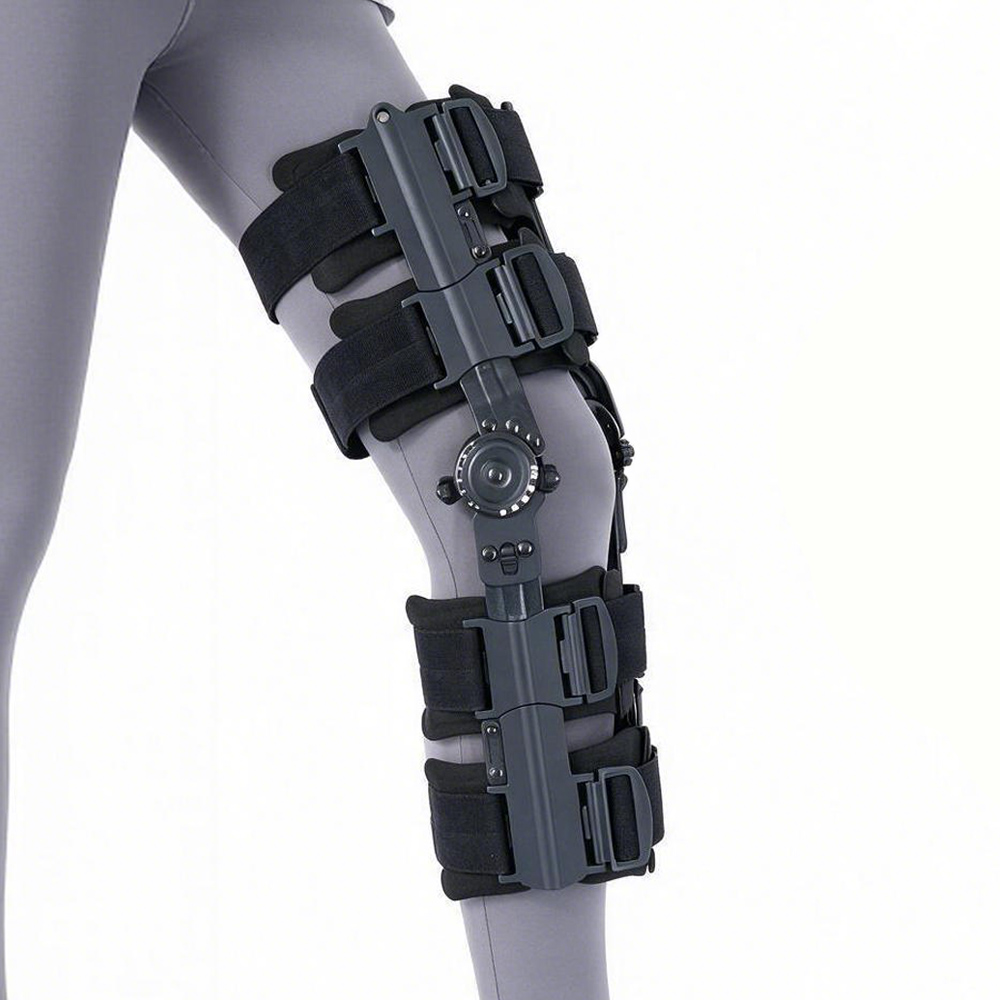
6. Customization Requirements for OEM/ODM Projects
KAFO development projects often involve different joint systems, structural configurations, and material combinations. Manufacturers should establish the main specifications before prototype production.
| Customization Area | Specifications to Confirm |
|---|---|
| Knee Joint | Free-motion, locking, or stance-control mechanism |
| Ankle Structure | Fixed or articulated configuration |
| Uprights | Material, dimensions, and connection method |
| Shell Components | PP, composite, or other suitable thermoplastics |
| Padding | EVA, PU, density, and thickness |
| Foot Section | Footplate dimensions and structural design |
| Fastening System | Strap, buckle, and adjustment configuration |
| Product Dimensions | Thigh, calf, and overall device measurements |
CAD drawings, material specifications, and physical samples provide a reference for prototype evaluation. Before mass production, manufacturers should approve the joint configuration, component dimensions, assembly details, and relevant mechanical requirements.
7. Quality Control and Functional Testing
KAFO quality control should cover individual components and the assembled device. Particular attention is required for mechanical joints, structural connections, and dimensional consistency.
Key inspection areas include:
- Material inspection: Verify material type, thickness, and relevant mechanical specifications.
- Dimensional inspection: Check shell geometry, upright positions, and component tolerances.
- Joint inspection: Verify alignment, locking engagement, movement, and mechanical clearance.
- Connection inspection: Check fasteners, brackets, and structural attachment points.
- Surface inspection: Identify cracks, sharp edges, forming defects, and finishing issues.
- Functional testing: Evaluate joint operation and structural performance against approved specifications.
Test methods and acceptance criteria should be defined for each KAFO configuration. Different joint systems and structural designs may require different validation procedures.
Conclusion
KAFO manufacturing requires coordinated design of joint mechanisms, structural supports, and material combinations. Joint alignment, shell geometry, material properties, and component tolerances all influence the final assembly.
For orthotic manufacturers and medical device suppliers, clear engineering specifications and consistent component production provide the foundation for reliable OEM/ODM development.
Ideastep supports orthotic material sourcing and custom component development for OEM/ODM projects. Contact our team to discuss material requirements, structural components, and manufacturing cooperation.
Recommended Reading:
Large Knee Support Brace for Sports and Orthopedic Supply
Knee Joint Support Brace for Medical Supply Distributors