Introduction
In footwear manufacturing, material selection is rarely about choosing the “best” material in absolute terms. It is about balancing performance, processing efficiency, and production cost under real industrial conditions.
EVA (Ethylene Vinyl Acetate) has remained one of the most widely used shoe sole materials for decades—not because it is the most durable or advanced polymer foam, but because it offers a stable and predictable balance between lightweight structure, cushioning behavior, and manufacturing efficiency.
This is also why EVA continues to dominate in large-scale footwear production, especially in sports shoes, casual footwear, and orthotic cushioning systems.
1. What EVA Shoe Sole Material Actually Is
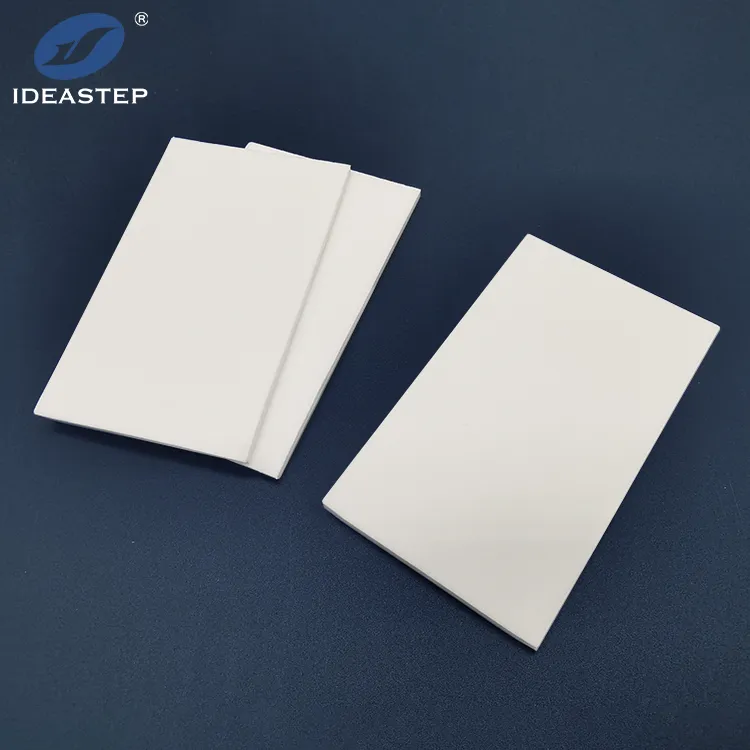
EVA is a closed-cell copolymer foam made from ethylene and vinyl acetate. Its internal structure traps gas bubbles inside a flexible polymer matrix, creating a material that is lightweight, compressible, flexible under load, and easy to mold and process.
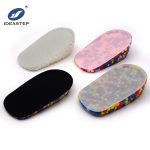
In footwear, EVA is not typically used as a high-wear outer sole. Instead, it is primarily used in midsole cushioning layers, lightweight outsole structures (low-abrasion environments), orthotic and comfort foam bases, and shock-absorbing support layers.
From a material engineering perspective, EVA functions more as a cushioning and energy absorption medium than a structural wear-resistant material.
2. Performance Characteristics of EVA in Real Manufacturing Use
Lightweight Efficiency (Primary Reason for Adoption)
EVA’s low density is one of its strongest commercial advantages. In mass footwear production, reducing weight directly improves wearing comfort and reduces shipping cost—both critical factors in global supply chains.
However, this lightweight nature also means EVA sacrifices some structural durability compared to PU or rubber compounds.
Cushioning Behavior and Energy Absorption
EVA performs well under moderate impact conditions. When compressed, it disperses pressure across its foam structure, reducing localized stress on the foot.
This makes it suitable for walking shoes, running shoes (mid-tier performance), comfort footwear, and orthotic base layers. However, EVA tends to lose cushioning consistency under long-term high-load compression, which is why density selection is critical.
Flexibility and Rebound Balance
EVA provides a soft initial feel with moderate rebound. The rebound performance is highly dependent on formulation:
- Lower density EVA → softer, faster compression
- Higher density EVA → more stable support, slower deformation
This tunability is one reason manufacturers prefer EVA in multi-density designs.
Environmental Resistance (Practical View)
EVA is resistant to moisture and does not easily absorb water due to its closed-cell structure. It performs well in humid environments.
However, it has moderate resistance to abrasion, high heat deformation, and long-term compression set. These are known limitations in engineering applications.
3. How EVA Is Actually Used in Footwear Structures
Midsole Cushioning Systems
EVA is commonly used as the main cushioning layer between insole and outsole systems. Its role is to absorb impact and reduce fatigue during repetitive walking or running cycles.
Outsole-Light Applications
In lightweight casual footwear, EVA may be used directly as an outsole material. However, this is usually limited to low-abrasion environments such as indoor or lifestyle shoes.
For high-wear conditions, EVA is often combined with rubber or TPU.
Orthotic and Foot Support Systems
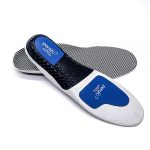
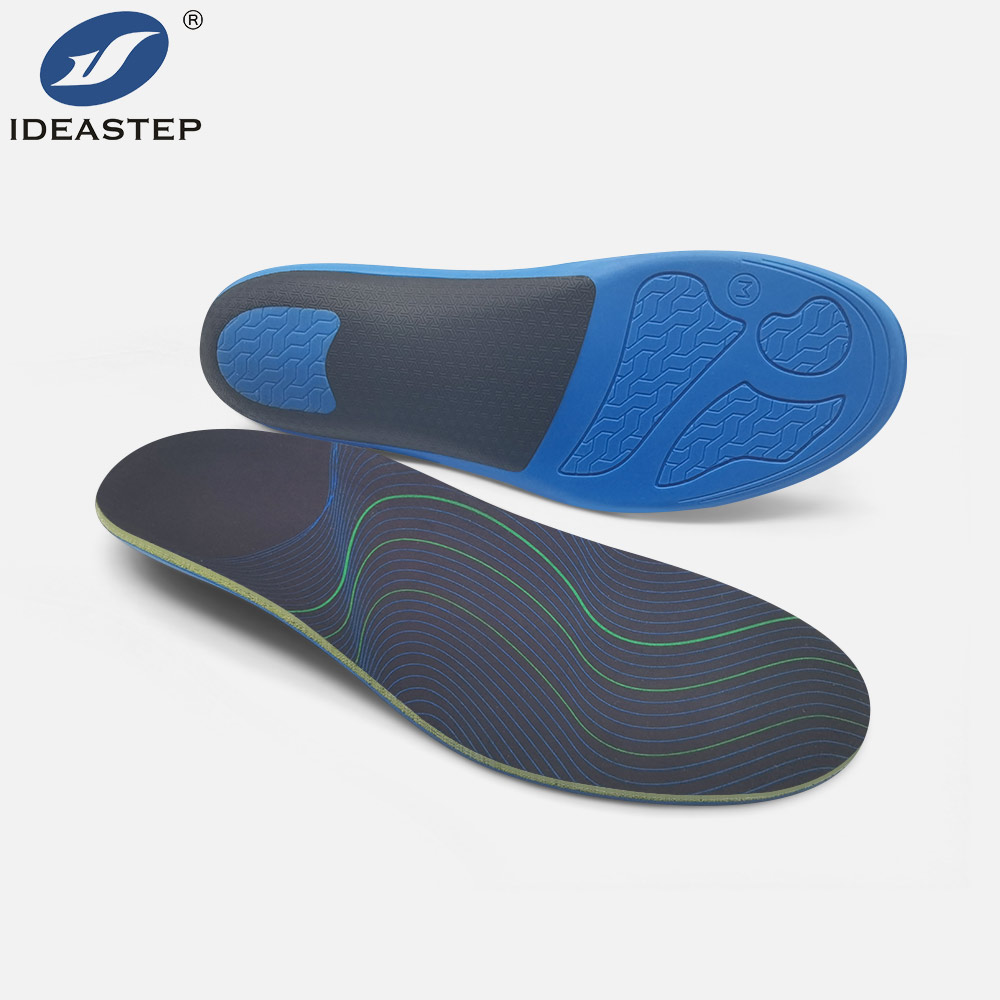
In orthotic insoles, EVA is more than just cushioning—it is a structural base material for pressure distribution systems.
- Multi-density zoning for heel/arch/forefoot support
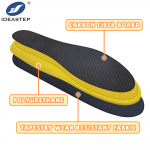
- Shock absorption base layer under structural components
- Stability layer for maintaining foot alignment
In these systems, EVA selection is based on density behavior rather than softness alone.
4. Why EVA Remains the Standard in Mass Production
Manufacturing Efficiency
EVA is highly compatible with compression molding, injection foaming, and die cutting processes, enabling scalable production with consistent output quality.
Cost Stability
Compared to PU and TPU systems, EVA provides a more predictable cost structure, which is critical for large OEM/ODM footwear programs.
Process Consistency
EVA formulations offer relatively stable batch-to-batch performance, reducing quality variation in mass production environments.
Design Flexibility
EVA can be easily modified in density, hardness, color, and rebound performance, making it suitable for both standard and customized footwear projects.
5. EVA vs PU vs Rubber vs TPU (Engineering Decision View)
EVA is preferred when:
- Lightweight performance is the top priority
- Cost efficiency is critical in scaling production
- Medium durability is acceptable
- Cushioning comfort is the primary requirement
PU or Rubber becomes necessary when:
- High abrasion resistance is required
- Long-term structural durability is critical
- Heavy-duty industrial or outdoor usage is expected
TPU is selected when:
- Higher elasticity and mechanical strength are required
- Premium performance footwear design is needed
- Budget allows higher material cost and processing complexity
In practice, many modern footwear systems combine these materials rather than relying on a single one.
6. EVA in Orthotic and Foot Care Engineering
Base Layer in Multi-Density Systems
EVA is commonly used as the foundation layer in orthotic insoles, providing controlled cushioning while supporting higher-density structural elements above it.
Density-Based Pressure Control
EVA allows manufacturers to fine-tune density zones to achieve targeted load redistribution, which is critical in foot biomechanics applications.
Compression Set Behavior in Long-Term Use
EVA’s compression set over time is managed by selecting higher-density materials for load-bearing zones and combining EVA with reinforcement layers to ensure functional stability.
7. Material Selection Logic for EVA Footwear Design
Density Requirements
- Low density → comfort-focused footwear
- Medium density → balanced sports and casual use
- High density → structural or orthotic applications
Load and Usage Conditions
EVA is most suitable for moderate-load, repetitive motion environments rather than high-impact industrial wear.
Product Lifecycle Expectations
If long-term abrasion resistance is required, EVA alone is not sufficient and must be combined with rubber or TPU components.
System Integration
Modern footwear design increasingly uses EVA as part of a hybrid system rather than a standalone solution.
8. Future Development Trends of EVA Materials
Advanced Foam Blends
New EVA formulations improve energy return, thermal stability, and compression resistance.
Sustainable Material Development
Recycled EVA and bio-based additives are being introduced to reduce environmental impact in footwear manufacturing.
Structural Foam Engineering
3D molding and zoned density foaming enable more precise control of EVA behavior in footwear systems.
Growth in Orthotic Demand
The expansion of customized orthotic solutions continues to drive innovation in EVA-based foot support systems.
Conclusion
EVA shoe sole material remains a core component of modern footwear manufacturing because it solves a very specific industrial problem: how to achieve a stable balance between comfort, weight, and production efficiency at scale.
It is not the strongest or most durable polymer foam available—but in real manufacturing environments, it is often the most practical and economically efficient choice.
This is why EVA continues to play a central role in sports footwear, casual shoes, and orthotic insole systems, especially in OEM and large-scale production programs.
Related product links: https://www.aideastep.com/product/a13-eva-sheet-for-shoe-soles-midsoles-lightweight-durable-footwear-material/.