In B2B sourcing for custom orthotics, buyers rarely struggle with design first. The real decision blockers are usually three practical factors:
MOQ (Minimum Order Quantity), lead time, and pricing structure.
These three elements define whether a supplier is operationally suitable, not just whether the product looks good on paper.
For brands, distributors, and orthopedic product companies, understanding how these three factors interact is essential for building a stable and cost-efficient supply chain.
1. What MOQ Really Means in Custom Orthotics Manufacturing
1.1 MOQ is not just a “restriction”
In orthotics manufacturing, MOQ (Minimum Order Quantity) is often misunderstood as a barrier. In reality, it is the minimum production scale required for a factory to run efficiently.
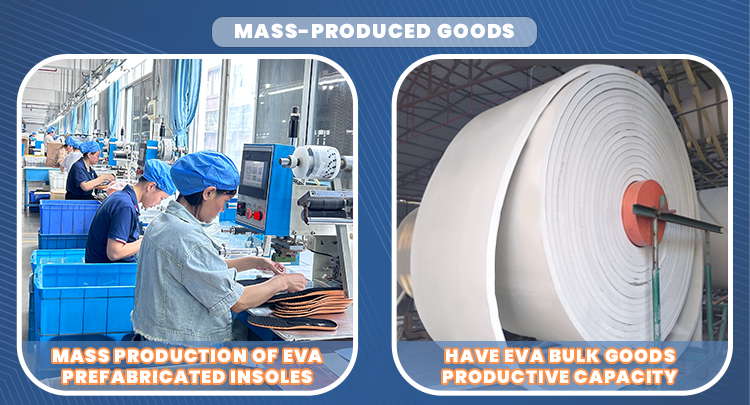
For OEM/ODM custom orthotics, MOQ exists because production involves material preparation, tooling setup, and production line allocation. Without a certain volume, the unit cost becomes unsustainable for both sides.
1.2 Typical MOQ ranges in the industry
- Standard EVA insoles: relatively low MOQ, suitable for market testing
- Semi-custom orthotics: medium MOQ with limited customization
- Fully custom orthotics (OEM/ODM): higher MOQ due to tooling and structure complexity
1.3 What affects MOQ the most
- Material system (EVA, TPU, multi-layer composites)
- Structural complexity (arch support design, correction geometry)
- Level of customization (branding, molding, medical-grade requirements)
In most real cases, lower MOQ often comes with a trade-off in unit cost or limited customization flexibility.
2. Lead Time in Custom Orthotics Production
2.1 Lead time is not a fixed number
In practice, lead time in orthotics manufacturing is highly variable. Even for the same product, delivery time can differ significantly depending on order type, season, and production scheduling.
2.2 Standard production workflow
Most custom orthotics orders follow a multi-stage process:
- Technical confirmation and design finalization
- Sample development and approval
- Tooling or mold preparation (if required)
- Mass production scheduling
- Quality control and inspection
- Packing and shipment
2.3 What actually affects lead time
- Material availability: EVA density grades, TPU compounds, specialty foams
- Order complexity: multi-layer structure or biomechanical correction design
- Production load: peak seasons or factory scheduling backlog
- Compliance requirements: medical testing or certification processes
A key reality in the industry is that lead time is often extended not by production itself, but by sampling revisions and approval cycles.
3. Pricing Structure of Custom Orthotics Explained
3.1 Pricing is a layered system, not a single number
The price of custom orthotics is not determined by one factor. It is a combination of material, engineering, production process, and customization level.
3.2 Core cost components
Raw material cost
EVA density, rebound performance, multi-layer construction, and functional additives (such as antibacterial or shock-absorbing materials) directly impact cost.
Tooling and development cost
OEM/ODM projects often include mold development or structural engineering. This cost is typically amortized across order volume.
Manufacturing process cost
- Compression molding (hot press)
- Injection molding systems
- 3D printing or digital orthotics production
Branding and packaging cost
Logo printing, packaging design, and private label customization are common requirements for brand owners and distributors.
4. Why Supplier Prices Vary So Much
On the surface, two orthotics products may look similar, but pricing differences usually come from structural supply chain differences rather than appearance.
- Direct manufacturer vs trading company pricing models
- Level of automation in production lines
- Material grade differences (standard EVA vs high-resilience EVA systems)
- Medical-grade compliance vs general consumer products
- Tooling ownership and in-house development capability
In most cases, the lowest price is not necessarily the most stable option for long-term supply.
5. Relationship Between MOQ, Lead Time, and Pricing
These three factors are structurally linked and cannot be optimized independently.
In practical terms, it is rarely possible to achieve:
low MOQ + fast lead time + low price at the same time.
- Higher MOQ usually reduces unit cost
- Higher customization increases lead time and price
- Smaller orders offer flexibility but higher per-unit cost
This is not a pricing issue alone—it is a reflection of production efficiency and scale economics.
6. How to Optimize MOQ and Reduce Procurement Costs
- Start with semi-custom solutions: ideal for market testing and early-stage product validation
- Consolidate orders: combining SKUs improves production efficiency
- Optimize material structure: balancing performance and cost through EVA density selection
- Build long-term partnerships: stable buyers usually receive better MOQ and pricing conditions
7. B2B Buying Considerations for Custom Orthotics
When evaluating suppliers, buyers should focus less on unit price and more on production stability and OEM capability.
- Can the supplier support consistent MOQ over time?
- Do they have in-house development and tooling capability?
- Is sampling and iteration process efficient?
- Do they have export experience for EU and US markets?
In most long-term partnerships, supply chain stability matters more than marginal price differences.
8. FAQ
What is the typical MOQ for custom orthotics?
MOQ varies depending on product structure. Standard models usually allow lower MOQ, while fully custom OEM orthotics require higher production volume.
How long does production usually take?
Lead time depends on design complexity, sampling approval, and production scheduling. Custom projects generally require longer timelines than standard products.
Do suppliers support trial orders?
Many manufacturers support sample or trial production, although unit cost may be higher for small batches.
Is sample development available?
Yes, most OEM orthotics manufacturers support sample development before mass production.
9. Conclusion
MOQ, lead time, and pricing are not independent variables in custom orthotics manufacturing—they are part of a connected production system.
For B2B buyers, the key is not finding the lowest number in each category, but identifying a supplier capable of delivering consistent quality under realistic production conditions.
A reliable OEM/ODM partner ultimately determines product competitiveness more than any single cost factor.
If you are evaluating a custom orthotics supply chain, it is worth reviewing not only pricing, but also production scalability, tooling capability, and long-term consistency.
Related Post: Custom Orthopedic Insole Bulk Supplier for Podiatry Clinics Offers Flexible MOQ & 24/7 Clinical Support.