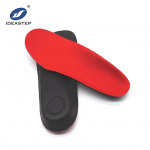
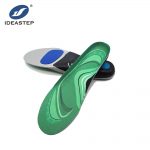
Adding orthotic arch support inserts to your footwear lineup isn’t just about sourcing another component. When designed properly, these inserts become a tangible selling point that helps your shoes stand out in a competitive market. Many footwear teams run into avoidable headaches: inserts that crowd the shoe cavity, arch support that flattens quickly after limited wear, or poor biomechanical matching that pushes product returns higher. For product designers and procurement managers, the right selection balances end-user comfort, manufacturability, regulatory compliance and your brand’s market positioning.
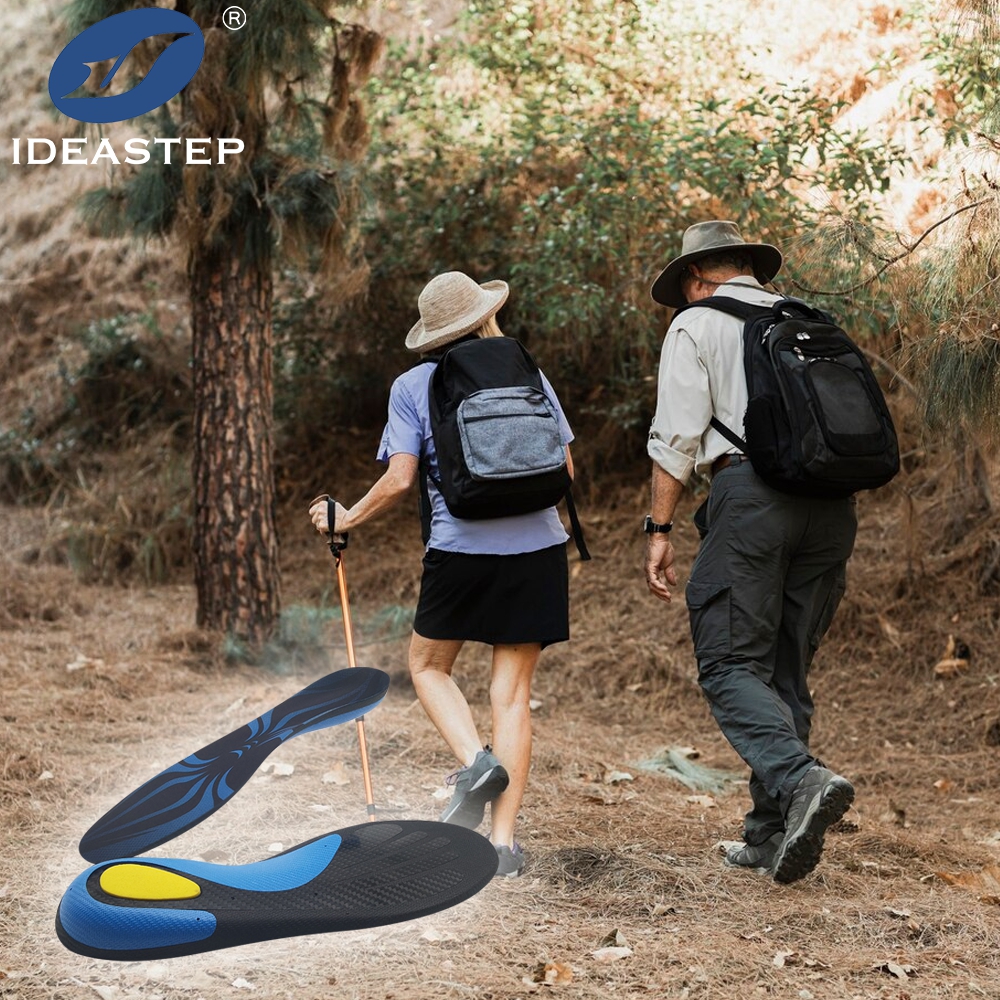
Start With Your Footwear Line and Target End Users to Define Arch Specs
Before comparing materials or reaching out to suppliers, anchor your design choices to your shoe styles and the customers you serve. An arch insert built for work boots won’t work inside slim casual footwear. Buyers with flat feet have entirely different support needs compared to those with high arches.
- Athletic and safety footwear can accommodate thicker, firmer arch supports, ideal for users standing or moving for hours each day.
- Casual shoes, dress footwear and low-profile sneakers need thin, low-volume inserts that won’t pinch toes or lift the heel awkwardly inside the shoe.
- Flat-foot applications rely on semi-rigid or rigid arch structures to limit over-pronation and slow arch collapse.
- High arch profiles use softer, shock-absorbing supports to spread pressure rather than lock the foot into a stiff position.
- General everyday footwear works best with moderate arch support, easing fatigue without heavy corrective features for a wider consumer base.
Your brand tier also shapes decisions. Mass-market collections often prioritize stable unit pricing and lightweight EVA structures. Premium therapeutic shoe lines may incorporate multi-layer builds with medical-grade support characteristics.
Select Materials That Balance Arch Rigidity, Durability and Shoe Fit
Material choice dictates insert performance, service life and how well it fits within your shoe last. Every substrate comes with tradeoffs for OEM footwear integration.
EVA Foam
EVA remains the go-to material for high-volume footwear OEM orders. Manufacturers adjust density to tune arch firmness, and it thermoforms cleanly to custom contours. It holds costs consistent for mass production and suits general comfort arch supports well.
Fiberglass Reinforced Composite
Composite sheets deliver strong, rigid arch support for therapeutic footwear. This material retains its shape under repeated load, making it suitable for flat-foot correction. It adds thickness and cost, so it only fits shoe styles with enough internal volume.
PU Foam
PU foam is most commonly used as a top layer. It offers soft, responsive cushioning, solid wear resistance and a premium foot feel. Most high-end orthotic inserts pair a rigid base shell with a PU top cover for balanced comfort.
TPE Gel Top Layer
TPE gel brings slip resistance and targeted pressure relief. It works nicely for footwear aimed at users with sensitive heel or forefoot tissue, though gel tops raise material costs versus standard fabric or foam covers.
Compliance for North American and European Markets
All skin-contact materials must meet safety requirements. Confirm your supplier can provide REACH and RoHS documentation for export shipments. Ask for compression rebound and fatigue test reports to avoid inserts that lose arch height quickly. If you market inserts as therapeutic or medical grade, plan for extra testing and paperwork from the start.
Explore OEM Customisation Options Aligned With Your Brand Differentiation
Generic off-the-shelf inserts rarely fit your shoe lasts perfectly. A capable manufacturer can tailor multiple features so the insert feels like an original, built-in part of your shoe.
Structural and Shape Customisation
Adjust arch height and arch position to match your shoe geometry. You can add or remove metatarsal pads, deepen heel cups, taper edges and trim the outer outline to fit your last. Perforations for airflow and anti-slip base textures are popular add-ons. Standard shapes use die cutting for fast mass production, while complex custom profiles use 3D scanning and thermoforming.
Branding and Packaging Customisation
Logo embossing, silk printing, adhesive backing and custom retail packaging are standard OEM options. Keep in mind branding tooling often has separate setup fees and minimum order thresholds, so account for these costs early in your budget.
Key Procurement Metrics for Wholesale and OEM Arch Insert Orders
MOQ and Sampling Process
Stock insert options usually carry lower minimums. Fully custom tooled arch supports need higher MOQs due to mould setup work. Clarify sample lead times and sample fees, and check if sample charges can be credited back once bulk production starts. Physical samples are non-negotiable to test fit inside your actual shoe prototypes before committing to large orders.
Quality Control and Performance Testing
Your supplier should run checks on dimensional tolerances, arch height consistency and compression set performance. Batch sampling before shipment helps catch defects before goods leave the factory. Reliable factories support third-party lab testing when you need independent validation for compliance and marketing.
Capacity and Lead Time Planning
Talk through monthly production limits and peak-season scheduling early in discussions. Flexible suppliers can arrange staggered shipments and scheduled replenishment to keep your inventory steady. Put lead time expectations in writing to avoid delays ahead of product launch windows.
Common Pitfalls When Specifying Orthotic Arch Inserts for Footwear
Many footwear brands uncover problems only after production begins. These frequent missteps are avoidable at the specification phase.
- Overly rigid arch support shrinks internal shoe volume, creating tight-fit complaints and higher return rates.
- Support that feels soft out of the box compresses quickly and loses corrective function over time.
- Universal inserts used without matching your shoe last deliver poor foot contact and unstable positioning.
- Skipping material compliance documentation creates customs hold risks for EU and US shipments.
How to Vet Your Orthotic Insert OEM Manufacturing Partner
The right supplier is more than a foam cutter. They should understand footwear lasts and foot biomechanics, not just produce parts from drawings. Look for proven export experience with footwear brand insert projects and relevant material certifications. Ask whether their technical team can suggest biomechanical tweaks instead of simply following your submitted specs. Lock in clear terms for defect resolution, design revisions and communication cadence during production runs.
Start Your Orthotic Arch Support Insert Project
Well-specified orthotic arch inserts turn ordinary footwear into a feature-rich product for your brand. Always validate samples and material performance before scaling to full production.
Get in touch with our team to share your shoe last details, request samples and receive a custom quotation for your OEM orthotic arch support inserts.
Frequently Asked Questions
Can we fit orthotic arch support inserts into low-volume casual or dress shoes?
Yes. We design slim, low-profile arch supports built specifically for shallow shoe cavities. The key is reducing shell thickness while retaining targeted arch support, so the insert does not crowd the toe box or lift the heel too high.
What is the typical MOQ for custom orthotic arch support inserts?
MOQ varies widely. Ready-made stock inserts have lower minimums. New custom tooling for unique contours or custom branding requires higher minimums. We work with brands on flexible sampling and low-volume pilot runs for new footwear lines.
Do you supply test reports for materials sold into EU and US markets?
We provide REACH and RoHS documentation for all export-grade materials. Additional performance testing such as compression fatigue and dimensional checks can be arranged on request for product certification and marketing.
Can we adjust arch height for different shoe models within one brand?
Absolutely. Many footwear brands use multiple arch profiles across their lineup. We adjust arch height, cup depth and edge trimming separately for each shoe last to maintain proper fit and biomechanical function.
What’s the difference between consumer-grade orthotic inserts and medical-grade arch supports?
Consumer-grade inserts focus mostly on comfort and fatigue relief. Medical-grade arch supports require stricter testing and documentation, built for clinical correction of over-pronation, flat feet and other diagnosed foot conditions. Classification rules differ between EU and US markets, so we help brands understand labeling limits before production.
How long does sampling take for custom orthotic arch support inserts?
Standard sample turnaround runs 7–14 working days, depending on design complexity. Simple die-cut profiles are faster, while 3D scanned custom geometries take extra time for prototyping.
Related Articles: Orthotic Arch Support Inserts A Complete Guide for Wholesale Buyers.