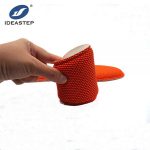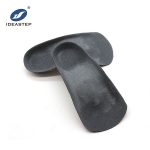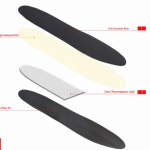
For foot care distributors, footwear brands and medical supply wholesalers, sourcing premium corrective shoe inserts in bulk is essential for stable product reputation and sustainable sales growth. Unlike standard comfort insoles, these functional foot‑support products focus on foot correction and gait optimization, requiring strict standards for structural design, material performance and batch uniformity. Many wholesale procurement issues stem from overlooked technical and manufacturing details, leading to inconsistent quality, poor end‑user feedback and excess inventory risks. This article covers the critical factors B2B buyers should evaluate when sourcing bulk corrective shoe inserts.

1. Correction Accuracy and Ergonomic Design
The core value of well‑designed corrective shoe inserts lies in reliable orthotic performance, not basic cushioning. When vetting suppliers, prioritize products built with professional foot ergonomics to target common issues such as flat feet, overpronation, high arches and irregular plantar pressure distribution.
High‑quality bulk orthotic supports feature scientifically calibrated arch support, standardized deep heel cup structure and balanced pressure dispersion zones. Products with unregulated softness, flawed support geometry or simplistic flat design fail to deliver consistent correction and may worsen foot fatigue and gait abnormalities. Uniform, ergonomic design is the foundation of reliable end‑user experience for wholesale product lines.
2. Medical‑Grade Material Quality and Durability
Material grade directly determines the comfort, safety and service life of orthotic foot supports, making it a vital sourcing benchmark. Low‑grade materials easily deform, compress flat, generate odor and irritate skin after short‑term use, triggering frequent after‑sales issues for wholesalers.
Trusted bulk corrective solutions adopt high‑density, slow‑rebound and deformation‑resistant materials with excellent elasticity and breathability. Skin‑friendly, sweat‑wicking properties ensure safe long‑term wear for standing workers, athletes and daily users. Buyers should verify stable material formulas to avoid batch discrepancies in hardness, texture and supportive performance.
3. Batch Consistency and Standardized Production
Batch consistency is one of the most critical indicators for B2B bulk procurement. Many small‑scale manufacturers rely on semi‑manual production, causing noticeable deviations in insole thickness, arch radian, support strength and overall dimensions across batches. Such inconsistencies damage brand credibility and reduce customer repurchase rates.
Professional suppliers produce corrective shoe inserts with standardized molds and unified process parameters. Every production batch undergoes strict sampling tests for size accuracy, structural symmetry and functional stability, ensuring uniform appearance and correction performance for all wholesale inventory.
4. Customization Compatibility for Diversified Markets
Regional markets and customer groups have distinct demands for orthotic supports in terms of thickness, firmness, application scenarios and brand presentation. Single‑specification products struggle to meet segmented market competition needs.
Reliable wholesale suppliers offer flexible customization options, including multi‑density material selection, diversified sizing, tailored thickness design and comprehensive private label services. These customizable features help wholesalers build differentiated product lines and cater to diverse consumer demands without excessive procurement thresholds.
5. Flexible Wholesale Terms and Stable Supply Capacity
Inventory control and stable lead times are core priorities for bulk buyers. Unreasonable MOQ requirements and unstable production capacity often hinder market promotion and cause stockout losses for wholesale partners.
Established manufacturers provide flexible MOQ policies to support small‑batch trial orders and large‑scale bulk restocks, adapting to different business development stages. Sufficient raw material reserves and automated production lines guarantee stable output and on‑time delivery, even during peak procurement seasons.
6. Complete Quality Control and After‑Sales Mechanisms
Systematic quality inspection systems distinguish professional manufacturers from informal workshops. Qualified orthotic inserts undergo rigorous testing for elasticity, compression resistance, pressure distribution and wearing safety before shipment.
Suppliers with standardized quality management systems effectively control defective product rates and provide targeted after‑sales solutions for batch quality issues. For long‑term B2B operations, sound quality assurance systems greatly reduce procurement risks and operational costs.
Final Summary
Successful bulk sourcing of corrective shoe inserts requires comprehensive evaluation of ergonomic design, material grade, batch consistency, customization capability, supply stability and quality control. Overemphasizing low prices leads to product homogenization and negative terminal feedback. Partnering with professional, quality‑focused manufacturers helps wholesalers build competitive corrective insole product lines and achieve stable profit growth.
Related Reading: Ideastep High-quality corrective shoe inserts supply for high heel shoes making.