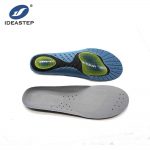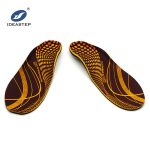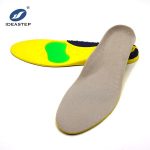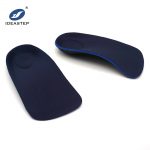
In custom orthotic insole manufacturing, quality control is not just a final inspection step. In practice, it runs through the entire process—from raw material selection to final packaging.
Because orthotic insoles are directly related to foot pressure distribution and long-term comfort, even small inconsistencies in material or structure can lead to noticeable differences in real use.
This is why most experienced manufacturers treat QC as a continuous process rather than a single checkpoint.
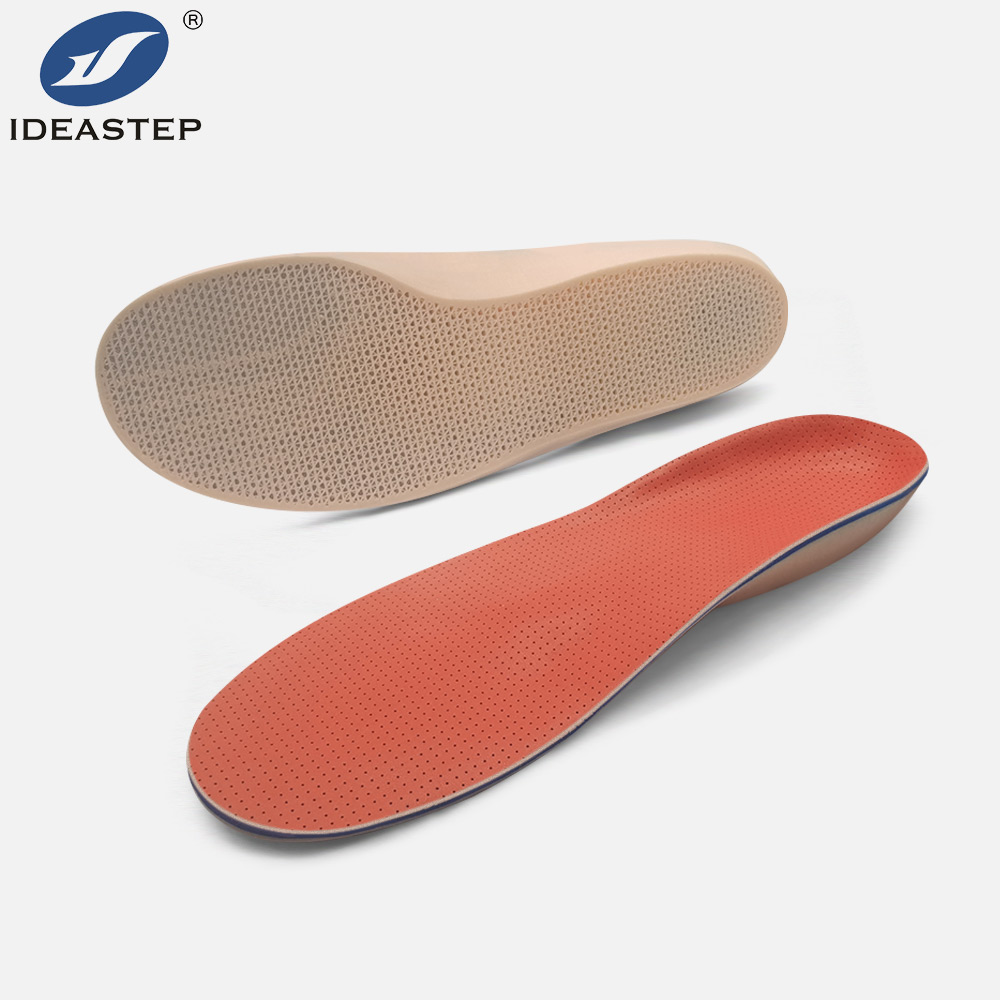
What Quality Control Means in Orthotic Insole Production
Quality control in this field is mainly about consistency—making sure every pair of insoles performs the same way as the approved sample.
Unlike general foam products, orthotic insoles require more attention to structure, density, and biomechanical behavior, not just appearance.
In real production environments, QC is less about theory and more about preventing variation across batches.
1. Raw Material Inspection
Everything starts with materials. EVA, TPU, and PU foams may look similar on paper, but small differences in density or rebound can significantly affect the final product.
What is typically checked
- Density consistency between batches
- Hardness (Shore A) stability
- Rebound performance under compression
In practice, most issues in final products can often be traced back to material variation at this early stage.
Supplier consistency matters
Over time, stable suppliers are more important than switching materials frequently. Even slight formulation changes can affect long-term product behavior.
2. Foot Scanning and Data Validation
For custom orthotic insoles, digital foot scanning is the starting point of the design process.
However, scanning accuracy is only useful if the data is clean and usable. In real production, not every scan is perfect, and some require adjustment before entering CAD design.
Key checks at this stage
- Completeness of foot geometry data
- Consistency between left and right scans
- Gait data stability (when available)
This step is often underestimated, but it directly affects downstream design accuracy.
3. CAD Design Review Process
Once the data is confirmed, the design enters the CAD stage using tools like Rhino or SolidWorks.
At this point, the focus shifts from data collection to biomechanical interpretation.
What engineers actually review
- Whether arch support matches foot structure
- Heel cup depth and stability
- Pressure distribution balance across zones
In most professional workflows, design is reviewed by more than one engineer before moving forward. This helps reduce interpretation errors.
4. Manufacturing Quality Control
Depending on production method—such as molding, CNC processing, or 3D printing (SLS/MJF)—the control points are slightly different.
But the goal remains the same: keeping structure and density consistent with the approved design.
What is monitored during production
- Dimensional accuracy
- Density distribution
- Structural stability during forming
For foam-based materials, even small variations in pressure or temperature during production can affect rebound and softness.
5. Post-Processing and Assembly
After forming, insoles go through trimming, surface finishing, and top cover application.
This stage may look simple, but in practice it has a strong impact on final comfort.
Common focus points
- Edge smoothness and symmetry
- Bonding quality between layers
- Alignment of top cover materials
A poorly aligned top layer can affect both comfort and long-term durability.
6. Final Inspection
Before packaging, finished insoles are checked again to ensure they match the approved sample.
This includes both visual inspection and basic functional checks.
Typical checks
- Shock absorption consistency (sample testing)
- Pressure response under load simulation
In some cases, sample units are also used for short wear testing to validate comfort in real conditions.
7. Batch Consistency Control in Mass Production
In OEM production, consistency across batches is often more important than individual performance.
Manufacturers usually apply sampling inspections (AQL standards) and batch tracking systems to ensure traceability.
If variation is found, adjustments are made before shipment rather than after delivery.
8. OEM and Custom Project Control
For OEM projects, quality control starts before production—not after.
Once a sample is approved, it becomes the reference standard for the entire order.
Any change in materials, density, or structure must be re-validated to avoid deviation from the agreed specification.
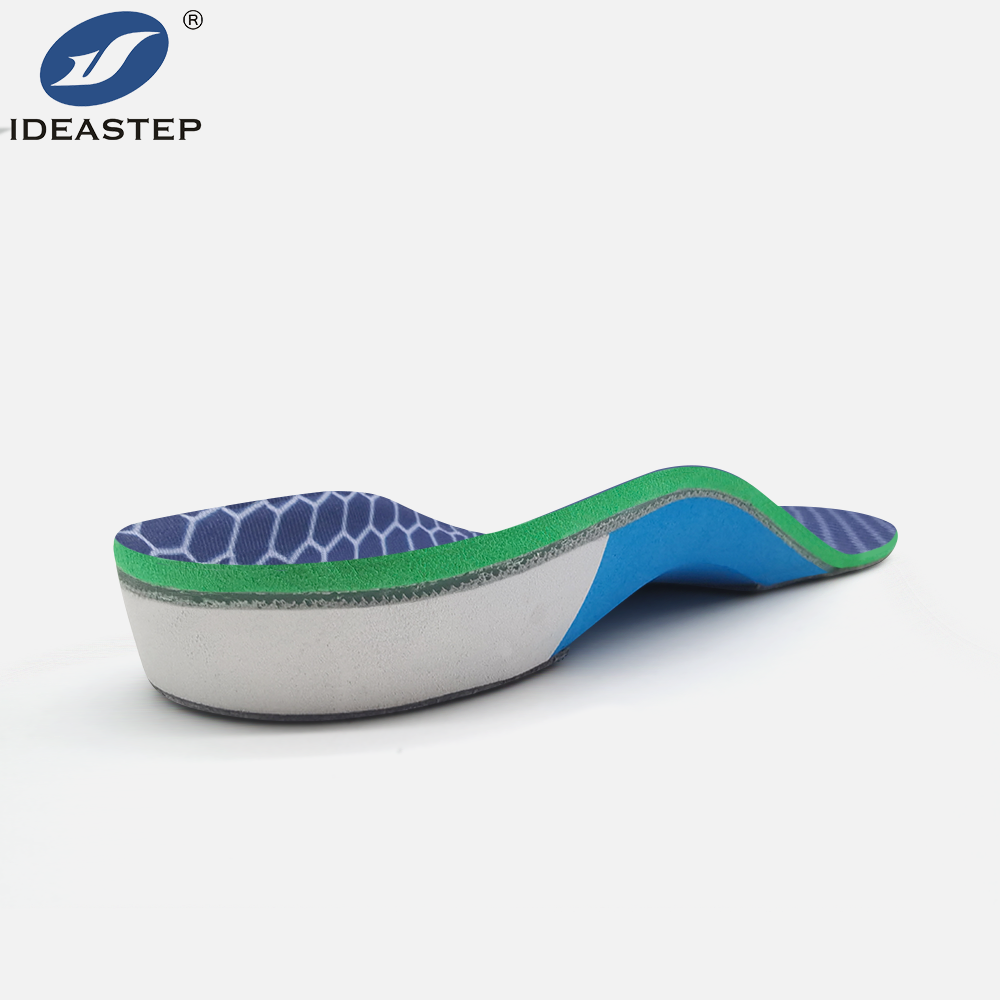
Why Quality Control Is Critical in Orthotic Insoles
Unlike standard foam products, orthotic insoles directly affect how pressure is distributed under the foot.
That means small inconsistencies are not just cosmetic—they can change how the product feels during walking or standing.
A stable QC system is what allows manufacturers to deliver predictable, repeatable performance across large volumes.
Conclusion
Quality control for custom orthotic insoles is not a single step, but a connected system that runs from material selection to final inspection.
In real manufacturing environments, the focus is less on perfect theory and more on controlling variation at every stage of production.
When each step is properly managed, the final result is not just a product that looks correct, but one that performs consistently in real use.