Clinic operators, medical distributors and orthotic brands regularly weigh semi-rigid and flexible orthotic insoles when building out catalogs. Many buyers mix these two styles up, yet their layered builds, raw material choices and biomechanical performance separate them sharply. Misclassification can lead to improper patient fitting, higher return volumes and weak product positioning. This breakdown focuses on construction details, intended clinical applications and practical sourcing guidance for B2B partners.

Construction of Semi-Rigid Orthotic Insoles
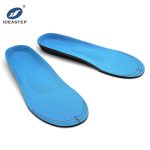
Semi-rigid orthotics use a hybrid layered design, engineered to balance controlled foot motion and natural movement:
- Core support shell – Usually polypropylene, thermoplastic or thin composite sheet. This layer locks in arch contour and delivers moderate control over pronation or supination, without fully restricting foot movement.
- Cushion laminate – Poron, EVA or PU foam bonded to the shell’s top surface to soften contact and spread peak pressure.
- Heel post and stabilising geometry – Molded or bonded rearfoot posts for subtalar alignment, widely used in prefabricated and custom clinical versions.
- Thin topsheet – Microfibre or perforated fabric for moisture management, with sealed edges to stop layer delamination.
This structure holds its shape under load for alignment support, while flexing at the forefoot during toe-off. It remains one of the most versatile prescription orthotics for active patients requiring biomechanical support.
Construction of Flexible Orthotic Insoles
Flexible orthotic insoles rely on resilient foam or soft composite structures, with no firm supportive shell at their core:
- Single or multi-density foam base – High-resilience EVA, cork blend or soft PU, shaped with an arch contour but fully bendable along its entire length.
- Integrated relief zones – Molded metatarsal pads or heel recesses formed directly into the foam, rather than added rigid posts.
- Breathable topsheet bonded to the foam substrate – The whole unit bends uniformly, letting the foot move through its complete natural range of motion.
Flexible variants provide accommodative support instead of corrective control. They redistribute pressure but cannot limit abnormal foot motion.
Core Functional and Sourcing Comparison
- Motion control: Semi-rigid styles limit excessive foot rotation; flexible options allow full natural foot flexion.
- Best clinical fit: Semi-rigid works well for moderate overpronation, plantar fasciitis and active patients. Flexible designs suit sensitive feet, diabetic care, mild fatigue relief and low-demand daily use.
- Shoe compatibility: Flexible insoles adapt more easily to varied shoe shapes; semi-rigid shells need sufficient shoe depth to avoid discomfort.
- Durability profile: Semi-rigid shells retain their form longer, while foam-only flexible models gradually compress under heavy use.
- Compliance positioning: Both can be medical-grade, but semi-rigid models support clearer correction-focused claims and require full documentation for clinical markets.
How to Structure These Two SKUs in Your Catalog
Distributors and clinics can separate them clearly for clinical and sales teams:
- Position semi-rigid orthotics as your core clinical offering for podiatrists and physical therapy clinics, available in prefabricated and scan-molded custom options.
- Offer flexible orthotics as an entry-level, fast-turn accommodative line, suitable for pharmacy channels, footwear bundles and patients unable to tolerate firm shell support.
- Supply distinct specification sheets that list material layers, bend test data and intended indications, so downstream clinicians can select correctly.
QC Checks During Sampling and Bulk Production
- Semi-rigid: Complete shell flex testing, verify bond strength between foam laminate and thermoplastic core, check heel post adhesion and heat deformation resistance.
- Flexible: Run compression set tests, confirm consistent arch height across batches, validate foam rebound and edge durability after repeated bending cycles.
- Labelling: Keep corrective semi-rigid orthotics and accommodative flexible insoles clearly distinguished, to avoid risky medical claims.
FAQ
Can flexible orthotics correct overpronation?
No. Flexible designs deliver gentle arch support and pressure redistribution. They lack the structural shell required to control abnormal pronation for biomechanical correction.
Which option fits bulk private label orders better?
Flexible foam orthotics support lower MOQs and faster sampling cycles. Semi-rigid custom shell runs need tooling validation and longer lead times, suited for partners with steady clinical order volume.
Do semi-rigid orthotics feel stiff while walking?
Well-calibrated semi-rigid shells flex at the metatarsal break point. Quality builds stay stable under the arch while preserving natural forefoot movement.
Can these two styles be sold as a bundle?
Yes. Many clinics use them for patient progression: flexible insoles for initial comfort adaptation, then semi-rigid orthotics once patients adjust to structured support.
What documentation is needed for EU medical distribution?
If marketed as therapeutic orthotic devices, both styles require risk assessment, material test reports and CE marking. Comfort-focused flexible lines may fall under general consumer goods, depending on product messaging.
Conclusion
The divide between semi-rigid and flexible orthotic insoles starts with construction, not just surface feel. Semi-rigid layered shells deliver targeted motion control for clinical correction, while flexible foam builds offer gentle accommodation and unrestricted foot movement. Understanding these structural differences helps your partners match the right product to each patient, reduce fitting errors and build a logically organised orthotic portfolio.
We are happy to share sample test data, material spec sheets and custom fabrication options tailored to your clinic or distribution needs. Tell us more about your target channels and patient groups, and we will work out a product mix aligned with your goals.
Related Reading:
What are the advantages of semi-rigid insoles?
What are the benefits of semi-rigid sports insoles?