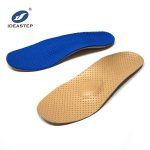
Designing flat foot arch support insoles involves more than adding an elevated arch to a standard insole. The arch profile, material firmness, heel cup geometry and cushioning layers all influence how the finished product performs.
For orthotic manufacturers, footwear brands and wholesale buyers, these details determine whether an insole meets its intended support requirements and can be produced consistently. Different applications may call for different constructions, making material selection and structural design important parts of product development.
1. Different Levels of Arch Support
Not all flat foot insoles require the same construction. The intended application, footwear design and required level of structural support influence the choice of arch profile and base material.
From a product development perspective, designs generally fall into three broad categories:
- Mild support: Uses a relatively low arch profile and flexible materials. This construction prioritizes flexibility and cushioning.
- Moderate support: Combines a defined arch contour with balanced material firmness, offering a middle ground between flexibility and structural stability.
- Firm support: Uses a more structured base or semi-rigid shell to help maintain the designed arch shape under loading.
These categories are useful when planning different product models, but they are not fixed clinical classifications. The appropriate design depends on the intended application and should be evaluated through product testing and, where necessary, professional assessment.
2. Material Selection for Flat Foot Insoles
The choice of material affects compression, flexibility, structural stability and durability. Hardness is only one consideration; density, thickness and material structure also influence performance.
| Material | Main Properties | Typical Application |
|---|---|---|
| EVA | Lightweight, flexible and available in different hardness levels | Arch support bases and cushioning |
| PU | Elastic with good cushioning properties | Heel and forefoot cushioning |
| PP | Relatively rigid and thermoformable | Semi-rigid support shells |
| TPU | Flexible, durable and mechanically strong | Reinforcement and support structures |
| Poron | Soft cushioning and compression recovery | Localized cushioning layers |
| Cork | Firm structure and suitable for shaping | Anatomical support bases |
EVA is widely used in flat foot arch support insoles because its hardness and density can be adjusted for different constructions. Softer grades provide more compression, while firmer grades help retain the shape of the support base.
PP and TPU are suitable for designs requiring additional structural support. They can be combined with EVA or PU to balance firmness and cushioning. The complete material combination should be evaluated rather than judging each layer separately.
3. Arch Profile and Heel Cup Design
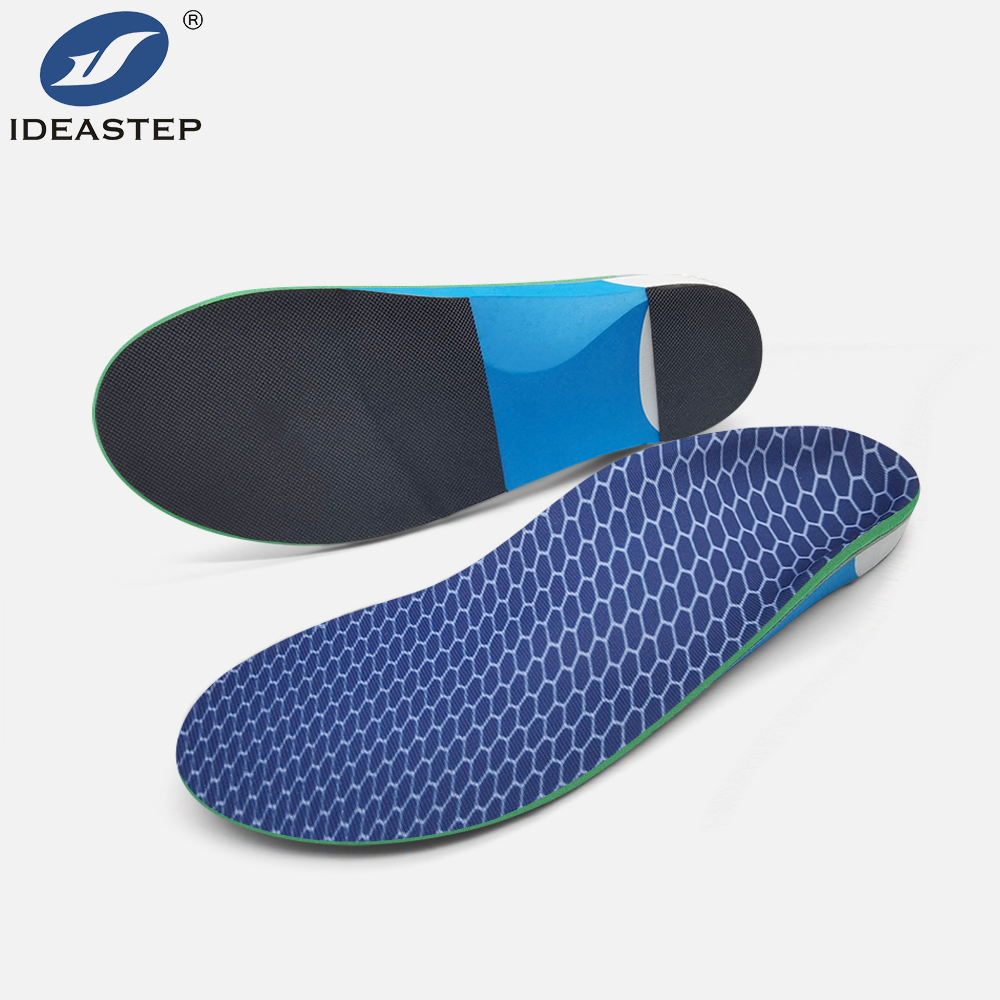
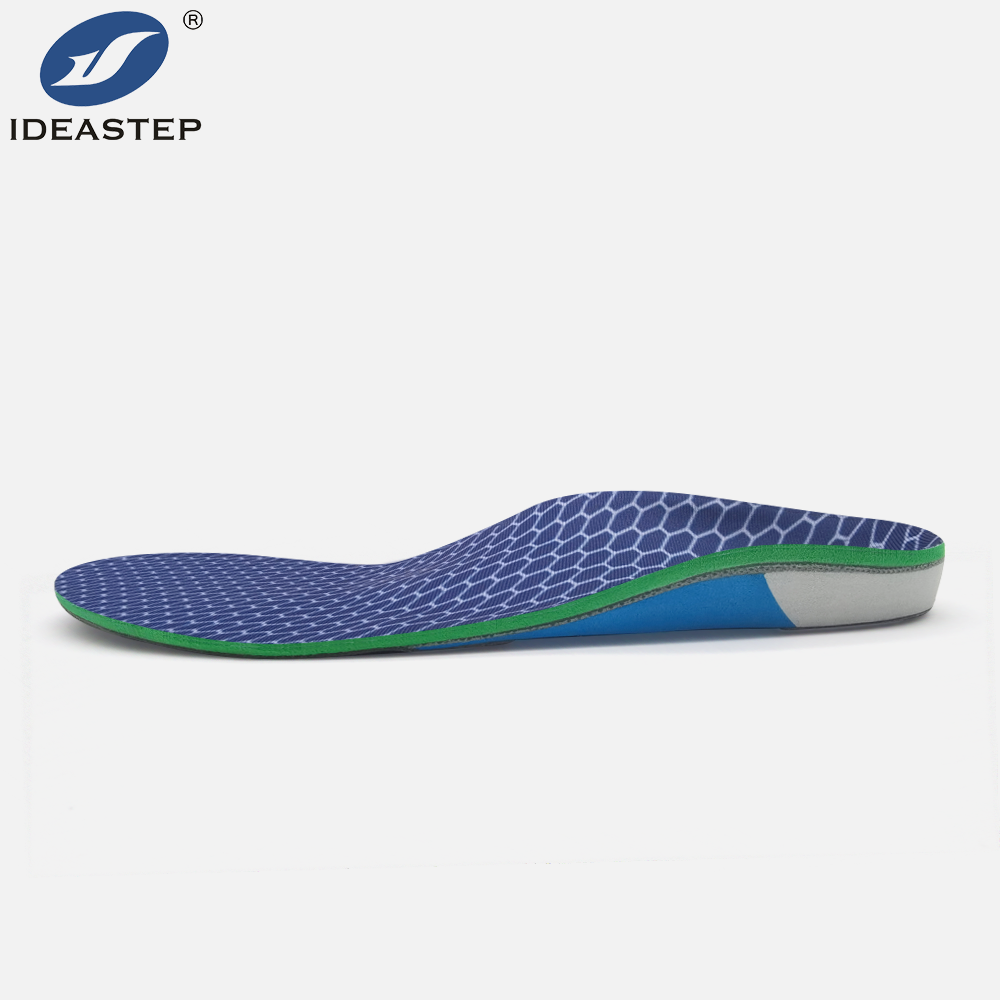
The arch profile is a defining feature of flat foot support insoles. Its height, length and contour influence how the structure responds to pressure and movement.
Several dimensions need to be considered during development:
- Arch height: Determines the height of the supporting contour.
- Arch length: Defines how far the support extends along the midfoot.
- Arch contour: Affects the transition between the arch and surrounding areas.
- Heel cup depth: Influences the shape and stability of the rearfoot section.
- Heel cup width: Must correspond with the intended size range and product geometry.
A higher arch does not necessarily provide better support. An unsuitable height or contour may create concentrated pressure. Prototype evaluation across the intended size range helps identify these issues before the design is finalized.
4. Balancing Structural Support and Cushioning
A well-designed flat foot insole needs to retain its intended structure without becoming unnecessarily rigid. Excessive flexibility may weaken the support profile, while an overly firm construction can limit flexibility and affect product suitability.
Multi-layer construction gives manufacturers greater control over these characteristics.
| Component | Possible Material | Main Function |
|---|---|---|
| Top cover | Polyester, nylon or microfiber | Surface finish and durability |
| Cushioning layer | EVA, PU or Poron | Cushioning and compression |
| Support layer | Firm EVA, PP or TPU | Maintaining the designed structure |
| Bottom layer | EVA or rubber | Base stability and wear resistance |
For example, a firm support base can be combined with a softer top cushioning layer to create a more balanced construction. Layer thickness and material hardness need to be considered together, as changing one can affect the overall flexibility of the insole.
Bonding is another important factor. Inadequate adhesion between layers can reduce durability and cause separation during repeated use.
5. Footwear Compatibility
The performance of arch support insoles also depends on the footwear they are designed for. Internal shoe space, heel height and available volume can limit the thickness and shape of the finished product.
| Footwear Type | Design Considerations |
|---|---|
| Casual shoes | Balanced cushioning and moderate thickness |
| Sports shoes | Flexibility, lightweight materials and secure fit |
| Work shoes | Durability and cushioning under repeated loading |
| Dress shoes | Slim profile and limited internal space |
| Orthopedic footwear | Compatibility with existing shoe volume and construction |
Defining the target footwear category early helps manufacturers avoid unnecessary design changes. In particular, length, width, heel height and overall thickness should be checked against the intended shoe dimensions.
6. Manufacturing Processes and Quality Control
Production methods depend on the materials and structure of the insole. Common processes include:
| Process | Application | Key Control Point |
|---|---|---|
| Die cutting | EVA, PU and fabric components | Cutting accuracy |
| Compression molding | Molded foam components | Temperature and pressure |
| Thermoforming | PP support shells | Heating and forming accuracy |
| Injection molding | TPU components | Mold precision |
| Laminating | Multi-layer insoles | Bonding strength |
| CNC processing | Shaping and trimming components | Dimensional consistency |
Quality inspection should cover material hardness, thickness, arch dimensions, heel cup geometry and layer adhesion. Compression recovery and repeated flexing can also be tested according to the product’s intended use.
For product ranges with multiple sizes or support profiles, approved samples and documented specifications help maintain consistency between production batches.
7. Development Considerations for Wholesale Buyers
When developing flat foot arch support insoles for wholesale or private label markets, product performance needs to be considered alongside manufacturing costs and production feasibility.
Before requesting samples or quotations, buyers should establish:
- Support level: Mild, moderate or firm construction.
- Material combination: EVA, PU, PP, TPU or multi-layer designs.
- Structural specifications: Arch profile, heel cup and overall thickness.
- Size range: Available sizes and dimensional tolerances.
- Surface finish: Top cover material, color and branding.
- Production requirements: MOQ, sample availability and lead time.
- Packaging: Bulk packaging or private label options.
Clear specifications make it easier to compare manufacturing options and estimate production costs. Where an existing design is close to the required construction, adjusting its materials or dimensions may also shorten development time.
Conclusion
Developing flat foot arch support insoles requires careful consideration of arch geometry, material firmness, cushioning and footwear compatibility. The right construction depends on the intended support characteristics and the requirements of the finished product.
For manufacturers and wholesale buyers, material selection, prototype evaluation and consistent quality control are central to developing a reliable product range. A clearly defined structure also makes repeat production and future design adjustments easier to manage.
Related Reading: Arch Support Insoles for Flat Feet Running: Lightweight Solutions for Sports Footwear.