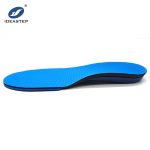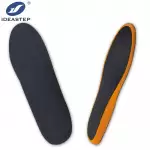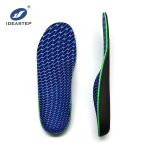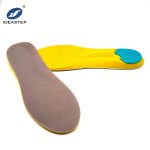
TPU (thermoplastic polyurethane) is widely used in insole manufacturing for its elasticity, mechanical strength, and abrasion resistance. Its properties can be adjusted through material formulation and structural design, making it suitable for different support components and multilayer insole constructions.
Selecting the right TPU grade requires more than comparing hardness. Density, tensile strength, tear resistance, elastic recovery, and processing conditions also affect the performance of the finished component.
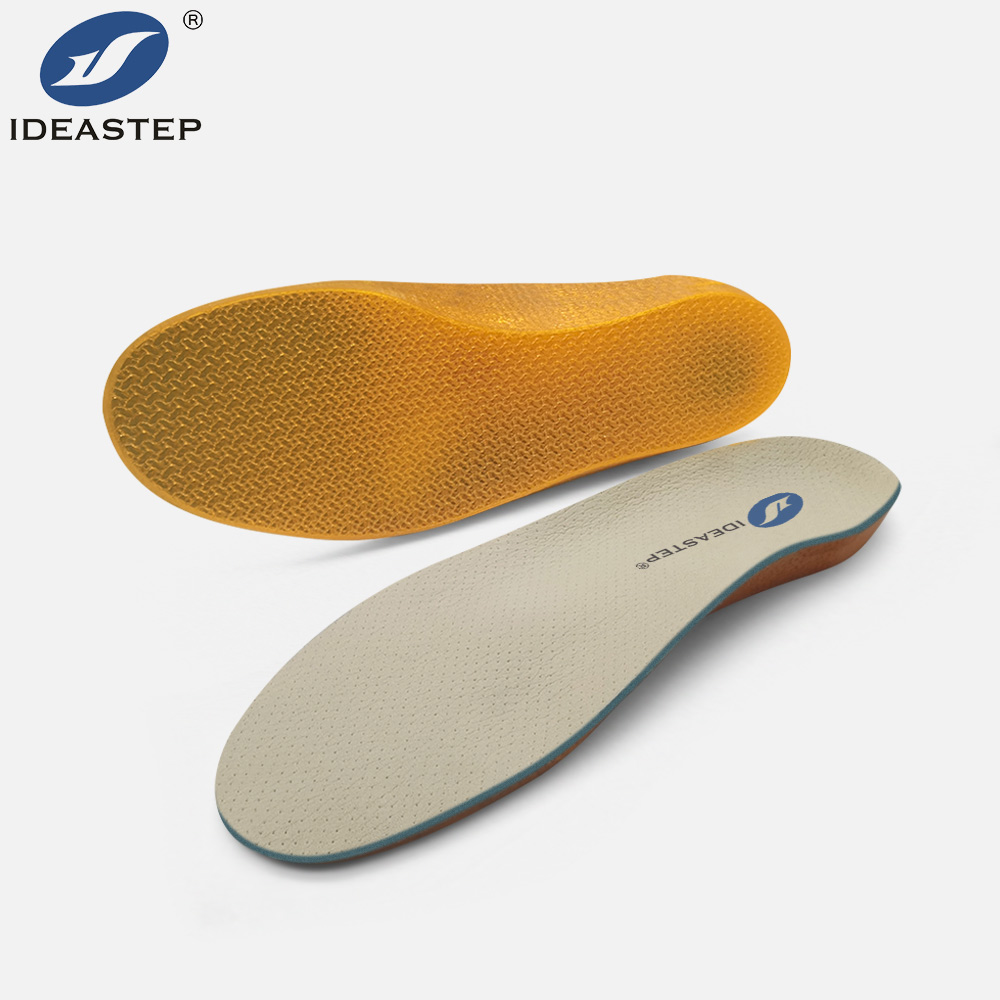
1. Key Properties of TPU Insole Materials
TPU is a thermoplastic elastomer that combines elastic behavior with thermoplastic processing characteristics. Different formulations offer varying mechanical properties.
The main specifications for insole development include:
- Hardness: Measures resistance to indentation and affects how much the material deforms under load.
- Density: Determines mass per unit volume and influences component weight and material consumption.
- Elasticity: Describes the material’s ability to deform and recover after loading.
- Tensile strength: Measures resistance to breaking under tension.
- Tear resistance: Indicates the material’s ability to resist the growth of cuts or tears.
- Abrasion resistance: Measures resistance to surface wear caused by friction.
These properties should be assessed together. Higher hardness, for example, does not necessarily mean better elasticity or tear resistance.
2. TPU Hardness and Structural Support
Hardness influences how TPU responds to pressure and resists deformation. Softer grades generally allow greater deformation, while harder grades provide more resistance and can help maintain component geometry.
Manufacturers can select different hardness levels according to the structural requirements of each insole zone:
- Heel: Firmer TPU can help maintain shape and resist deformation.
- Arch: Controlled hardness helps preserve the designed support profile.
- Forefoot: More flexible grades can accommodate the bending requirements of the shoe.
Hardness should not be considered independently. Component thickness, geometry, and material combinations also determine the support characteristics of the finished insole.
3. TPU Density and Component Weight
Density affects the weight of TPU components and the amount of material required for production. Lower-density grades may help reduce component weight, but density alone cannot predict mechanical performance.
Two TPU grades with different densities may also differ in hardness, elasticity, and tensile strength. Manufacturers should compare their technical specifications rather than assume that lower density means better overall performance.
For lightweight insole development, density should be evaluated alongside:
- Material hardness
- Component thickness
- Tensile and tear resistance
- Elastic recovery
- Finished component weight
The objective is to reduce unnecessary material weight without compromising the required structural properties.
4. Elastic Recovery and Compression Resistance
TPU elasticity affects how well a component recovers after repeated deformation. This is particularly relevant to insole structures exposed to continuous bending and compression.
Two properties are useful during material evaluation:
Elastic Recovery
Measures the material’s ability to return toward its original shape after deformation. It helps assess whether a TPU component can maintain its designed profile.
Compression Set
Measures permanent deformation after compression and subsequent recovery under specified test conditions. A lower compression set generally indicates better resistance to permanent deformation in that test.
Both properties depend on material formulation and testing conditions, including temperature, compression level, and duration. Consistent test methods are necessary for meaningful comparisons between TPU grades.
5. Abrasion Resistance and Material Durability
TPU is commonly selected for components that require resistance to friction and surface wear. However, actual abrasion performance varies with formulation, surface finish, and operating conditions.
For multilayer insoles, durability also depends on the interaction between TPU and adjacent materials. A TPU support component may retain its shape, but poor bonding with EVA foam or a top cover can still cause layer separation.
Material evaluation should therefore cover:
- Abrasion and tear resistance
- Repeated bending performance
- Dimensional stability
- Surface condition
- Bonding strength between layers
Testing the complete insole construction provides a more reliable assessment than evaluating TPU in isolation.
6. Combining TPU with Other Insole Materials
TPU is often combined with foam and textile materials to achieve specific structural and surface requirements.
| Material Combination | Main Function |
|---|---|
| TPU + EVA foam | Combines structural reinforcement with lightweight cushioning |
| TPU + PU foam | Combines support components with cushioning and resilience |
| TPU + Mesh fabric | Combines a supporting structure with a textile surface |
| TPU + Microfiber | Provides different surface finishes and product specifications |
| TPU + Other thermoplastic components | Allows different stiffness levels within one construction |
Layer arrangement, thickness, and bonding compatibility influence the finished product’s mechanical behavior. Manufacturers should evaluate these factors during prototype development rather than relying solely on individual material specifications.
7. TPU Processing and Quality Control
Consistent TPU insole production requires control over material specifications, processing conditions, and component dimensions.
Material Selection
Define the required hardness, density, elasticity, and mechanical strength before choosing a TPU grade. Supplier technical data and sample testing help verify material suitability.
Molding and Forming
Processing temperature, mold design, and cooling conditions affect dimensional accuracy and surface quality. Parameters should be adjusted according to the selected TPU formulation and production method.
Structural Design
CAD development allows manufacturers to adjust thickness distribution, curves, reinforcement areas, and support zones. These details influence deformation resistance and shape retention.
Quality Inspection
Key inspection items include:
- Hardness and density
- Thickness and dimensional accuracy
- Tensile and tear resistance
- Abrasion resistance
- Repeated bending performance
- Elastic recovery and compression set
- Bonding strength in multilayer constructions
Test methods and acceptance criteria should be established before mass production to maintain consistency across samples and production batches.
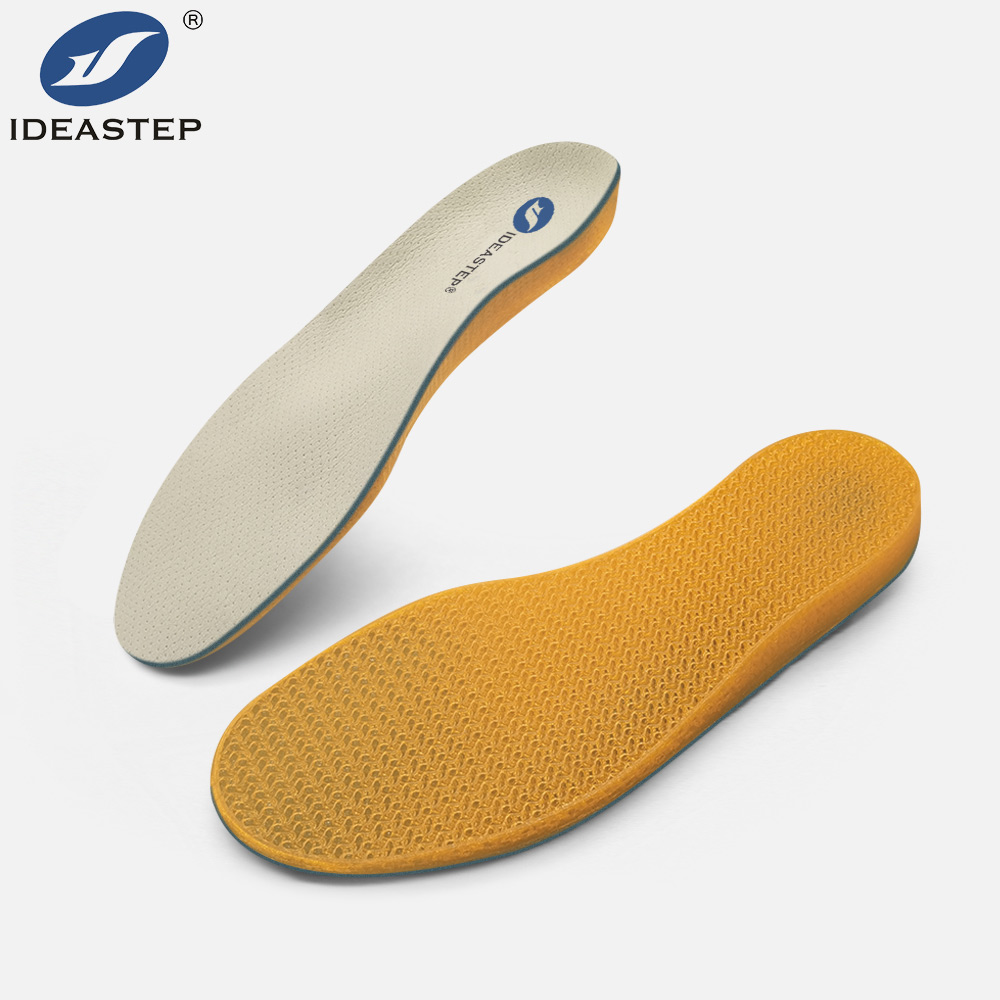
8. TPU Material Requirements by Insole Application
Different insole categories require different combinations of TPU properties.
- Sports Insoles: Require a balance of flexibility, elasticity, abrasion resistance, and structural support.
- Orthotic Insoles: Require controlled deformation and material stiffness suited to the designed support profile.
- Casual Footwear Insoles: Often prioritize lightweight construction, flexibility, and compatibility with foam and surface materials.
- Work Footwear Insoles: May require greater resistance to repeated mechanical loading and surface wear.
Material grades and component structures should be selected according to the specific product design rather than applying one standard specification across all applications.
9. TPU Material Selection for OEM Projects
For footwear brands, orthotic manufacturers, and insole wholesalers, TPU selection should begin with a clear technical specification.
A development brief should include:
- TPU grade, hardness, and density
- Tensile and tear resistance requirements
- Flexibility and recovery expectations
- Component thickness and dimensions
- Abrasion resistance requirements
- Compatibility with EVA, PU, and top-cover materials
- Target footwear application
- Sample and bulk production quantities
During sample development, manufacturers can compare different TPU grades and structural configurations. Material testing, dimensional inspection, and finished-product evaluation help confirm the specifications before mass production.
Conclusion
TPU insole performance depends on the combined effects of hardness, density, elasticity, mechanical strength, and abrasion resistance. These properties determine how the material responds to loading, maintains its structure, and performs within a multilayer construction.
For OEM insole development, manufacturers should evaluate TPU specifications alongside component geometry, processing conditions, and material compatibility. This approach supports consistent product quality and more reliable material selection.
Related Reading:
What properties are needed in tpu insole raw materials?