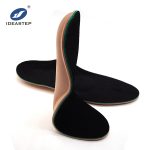
Introduction: Why OEM Factory Selection Directly Impacts Product Performance
Choosing an OEM orthotic insole factory is not a procurement decision based on price alone. In real manufacturing practice, it is a technical evaluation that directly determines product consistency, biomechanical performance, and long-term brand reliability.
In most orthotic insole programs, differences in material control, structural engineering capability, and production validation systems often have a greater impact on product quality than the original design itself.
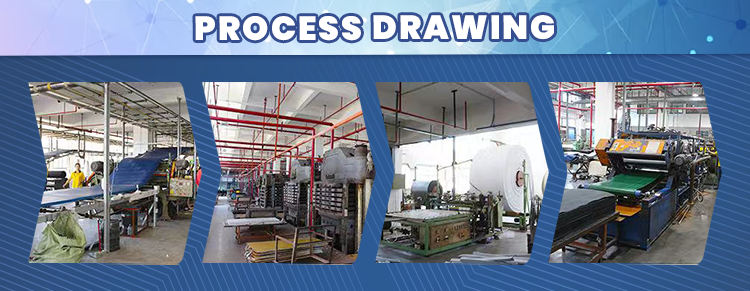
What Defines an OEM Orthotic Insole Factory?
An OEM orthotic insole factory is responsible for producing insoles according to brand specifications, technical drawings, or functional requirements. In many cases, ODM support is also involved, where the factory contributes to structural design and material selection.
In orthotic applications, this role extends beyond manufacturing. The factory must translate biomechanical requirements into stable, repeatable physical structures.
Core Capability 1: Biomechanical R&D and Structural Design
In established orthotic OEM systems, biomechanical understanding is a baseline requirement rather than an added advantage. A qualified factory should be able to interpret foot function, including arch support behavior, pressure distribution, and gait stability.
In advanced development programs, this includes prototype iteration, structural optimization, and validation for different foot types such as flat feet, high arches, and overpronation conditions.
Core Capability 2: Material Engineering and Control System
Material engineering capability is one of the most critical factors in orthotic insole manufacturing. EVA, PU, and TPU must be controlled not only at selection level but also in density, hardness, and compression behavior.
EVA Material Role
EVA is typically used in cushioning layers due to its lightweight structure and shock absorption properties. However, in long-term load environments, it is generally not used as a primary structural component.
PU Material Role
PU provides higher structural stability and resistance to deformation. It is commonly applied in arch support and heel stabilization systems where long-term load bearing is required.
Multi-Material System Logic
Most professional orthotic insoles use a layered structure combining EVA, PU, and sometimes TPU. This allows different functional zones to be optimized independently rather than relying on a single material.
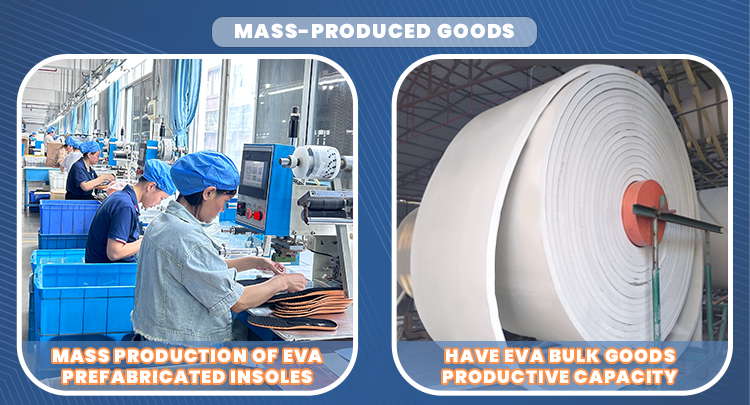
Core Capability 3: Manufacturing Stability and Process Control
Production stability is a key differentiator between basic suppliers and engineering-level OEM factories. This includes consistency in cutting precision, molding conditions, and lamination processes.
In real production environments, even small variations in density or thickness can significantly affect arch support performance and user comfort.
Quality Control System: Non-Negotiable Requirement
A professional orthotic insole factory must implement a structured quality control system across all production stages.
- Material density and hardness verification
- Compression set and rebound testing
- Arch support stability under load simulation
- Batch-to-batch consistency inspection
Without these systems, even well-designed products may fail in real-world use conditions.
Customization Capability: Real OEM Differentiation
Customization capability is one of the most important indicators of OEM maturity. In most professional programs, factories must support different user groups and application scenarios.
- Low, medium, and high arch configurations
- Sports, medical, and occupational product segmentation
- Branding and packaging customization
- Prototype sampling and design iteration support
Production Scale and Delivery Reliability
In global B2B supply chains, delivery reliability is often more important than unit cost. A qualified OEM factory should support stable MOQ structures and consistent lead times across repeated orders.
For international brands, production continuity directly affects retail planning and inventory management.
Certification and Market Compliance
Compliance capability is essential for entering regulated markets such as Europe and North America.
- ISO quality management systems
- REACH material compliance
- RoHS safety standards
- Medical-related certifications where applicable
Engineering Support and Communication Capability
Beyond manufacturing, engineering communication is a key factor in long-term OEM cooperation. A strong factory should be able to provide technical suggestions, structural improvements, and rapid feedback during development cycles.
Risks of Choosing the Wrong OEM Orthotic Factory
In real OEM projects, selecting a low-capability factory often leads to inconsistencies between prototype samples and mass production. This is usually caused by insufficient material control or lack of structural validation systems.
Another common issue is that designs that perform well in CAD models fail under real loading conditions due to weak biomechanical testing capability.
Over time, these issues can result in product instability, higher return rates, and reduced brand trust in the market.
How Professional Buyers Validate OEM Factory Capability
In most professional procurement processes, factory evaluation is not completed at quotation stage. Instead, it is validated through structured sampling and testing phases.
This typically includes prototype evaluation, compression testing, and long-term wear simulation before production approval.
For international buyers, this validation process is often more important than initial pricing, as it reflects real engineering capability.
How to Identify a High-Level OEM Orthotic Factory
A truly capable OEM factory is defined by engineering depth rather than production size.
- Ability to explain biomechanical principles clearly
- Experience across medical, sports, and occupational applications
- Capability to design multi-layer orthotic structures
- Stable long-term production consistency
Future Trends in Orthotic OEM Manufacturing
The orthotic insole industry is moving toward digital and data-driven customization systems. Technologies such as 3D foot scanning, pressure mapping, and AI-assisted design are improving precision in product development.
At the same time, material systems are shifting toward hybrid structures that combine EVA, PU, and TPU to achieve optimized performance across different functional zones.
Conclusion: Factory Selection Is Ultimately an Engineering Decision
In orthotic insole manufacturing, choosing an OEM factory is fundamentally a decision about engineering reliability, not simply production cost.
The most competitive suppliers are those that combine biomechanical understanding, material control systems, and stable manufacturing processes to ensure consistent performance across global markets.
For long-term brand success, engineering capability and validation systems are far more important than short-term pricing advantages.