Industrial workers spend thousands of hours each year standing, walking, lifting, and performing repetitive tasks in physically demanding environments. Whether on a manufacturing line, in a warehouse, at a construction site, or inside a hospital, prolonged standing places continuous stress on the feet and lower limbs.
While safety footwear is designed to protect workers from workplace hazards, protection alone does not address the biomechanical challenges caused by hard surfaces, repetitive movement, and long shifts. As occupational health becomes a growing priority for employers worldwide, orthotic insoles are increasingly being integrated into work boots and safety shoes to improve comfort, reduce fatigue, and support long-term foot health.
For safety footwear brands, distributors, and OEM manufacturers, industrial orthotic insoles represent an important opportunity to enhance product value while addressing the growing demand for workplace wellness solutions.
The Daily Foot Stress Faced by Industrial Workers
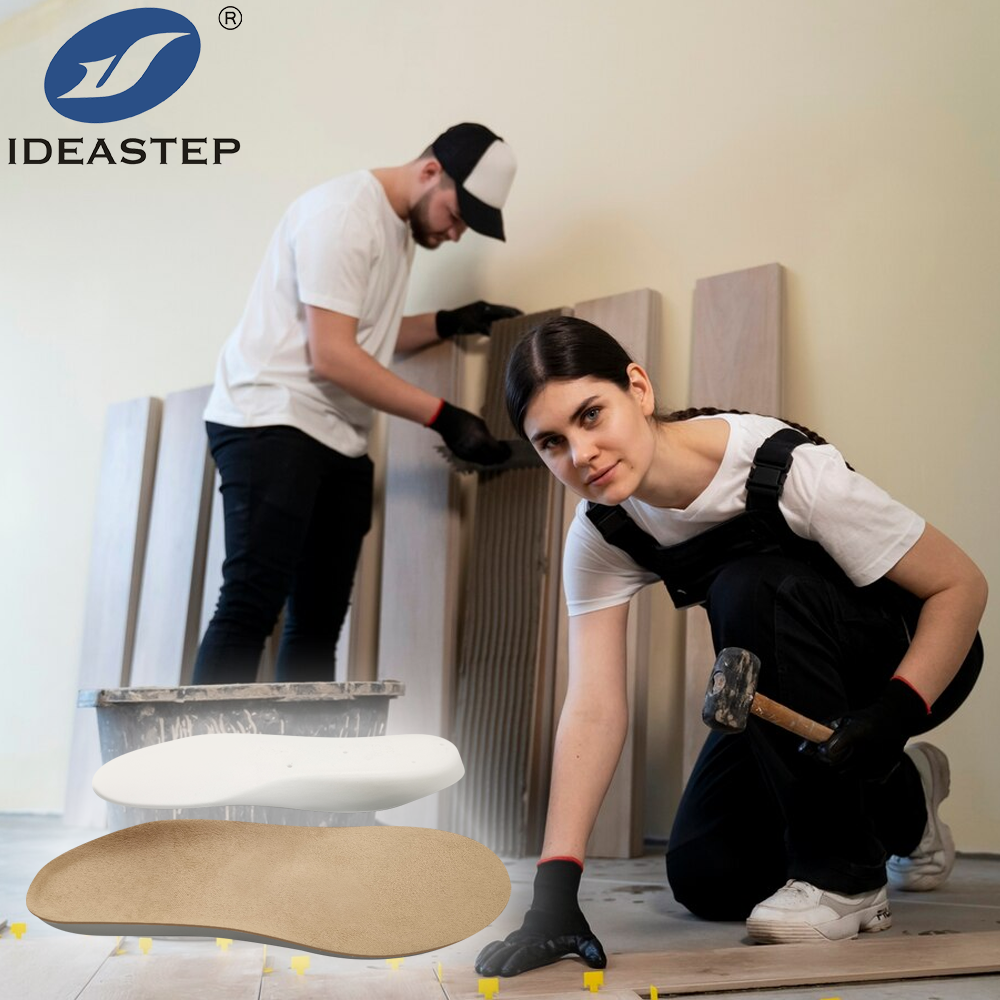
Unlike office environments, industrial workplaces expose employees to continuous physical loading throughout the day. Workers often spend eight to twelve hours standing or walking on surfaces that provide little to no shock absorption.
Long Hours on Hard Surfaces
Many industrial facilities use concrete flooring, steel platforms, and warehouse aisles designed for durability rather than comfort. These hard surfaces create repeated ground reaction forces with every step, transferring impact through the feet, ankles, knees, hips, and lower back.
Over time, cumulative loading can contribute to foot fatigue, muscle soreness, and discomfort that affects both productivity and overall well-being.
Prolonged Standing Increases Biomechanical Stress
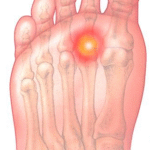
When workers remain standing for extended periods, the muscles supporting the foot arch must continuously work to maintain stability. As fatigue develops, the arch may begin to collapse, increasing strain on soft tissues and altering lower-limb alignment.
Common symptoms include:
- Foot soreness at the end of the day
- Arch fatigue
- Heel discomfort
- Swollen feet and ankles
- Lower back tightness
- Leg fatigue
The Added Weight of Safety Footwear
Modern work boots often include steel toes, composite toe caps, puncture-resistant midsoles, and other protective features. While essential for workplace safety, these components add weight to the footwear and increase the energy required during walking.
Without adequate foot support, workers may experience faster fatigue accumulation throughout a shift.
What Are Industrial Orthotic Insoles?
Industrial orthotic insoles are specialized foot support systems designed to improve comfort, stability, and biomechanical efficiency inside safety footwear and work boots.
Unlike standard comfort insoles that focus primarily on cushioning, orthotic insoles are engineered to support foot alignment, manage plantar pressure, and help control excessive foot motion during prolonged standing and walking.
Industrial Orthotics vs Standard Comfort Insoles
| Feature | Standard Insoles | Industrial Orthotic Insoles |
|---|---|---|
| Arch Support | Minimal | Structured Support |
| Shock Absorption | Moderate | Enhanced |
| Pressure Distribution | Basic | Optimized |
| Long-Term Standing Comfort | Average | Excellent |
| Biomechanical Support | Limited | Advanced |
| Durability | Moderate | High |
Typical Structure of an Industrial Orthotic Insole
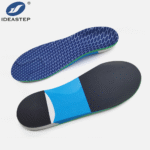
A professional-grade industrial orthotic typically includes:
- Deep heel cup for rearfoot stability
- Arch support structure for alignment control
- EVA cushioning layer for impact absorption
- PU support layer for durability
- Breathable top cover for moisture management
- Optional TPU reinforcement for additional motion control
Each component is designed to address specific workplace demands while maintaining comfort during extended wear.
How Orthotic Insoles Improve All-Day Comfort
Reducing Foot Fatigue Through Better Pressure Distribution
One of the primary functions of industrial orthotics is improving plantar load distribution. Rather than allowing pressure to concentrate in specific areas of the foot, orthotics help spread forces more evenly across the plantar surface.
This reduces localized pressure hotspots and helps workers remain comfortable during long shifts.
Providing Continuous Arch Support
When the arch loses support during prolonged standing, foot muscles must work harder to maintain stability. Over time, this increased workload contributes to fatigue and discomfort.
A properly designed orthotic helps support the foot’s natural structure throughout the day, reducing strain on the plantar fascia and surrounding soft tissues.
This is particularly beneficial for workers with flat feet, overpronation, or high arches.
Improving Shock Absorption
Repeated heel strikes and continuous walking generate impact forces that can accumulate throughout the workday.
Advanced cushioning materials such as EVA, PU, and PORON help absorb peak impact forces before they travel through the kinetic chain.
Improved shock absorption can help reduce stress on:
- Heel structures
- Ankles
- Knees
- Hips
- Lower back
Enhancing Workplace Stability
Industrial workers frequently climb stairs, operate machinery, carry loads, and navigate uneven surfaces. Stable foot positioning is critical for maintaining balance and confidence during these activities.
Orthotic insoles help secure the foot inside the boot and reduce unnecessary movement, contributing to improved workplace stability and comfort.
How Orthotic Insoles Help Reduce Common Occupational Foot Problems
Plantar Fasciitis
Plantar fasciitis is one of the most common complaints among workers who stand for long periods.
By improving foot alignment and plantar load distribution, orthotic insoles help reduce repetitive stress placed on the plantar fascia, lowering the likelihood of chronic irritation.
Heel Pain
Continuous exposure to hard surfaces can increase pressure on the heel area. Orthotic insoles with dedicated heel cushioning help absorb impact and reduce stress on the calcaneus and surrounding tissues.
Knee Discomfort
Poor foot mechanics can affect lower-limb alignment and contribute to abnormal knee loading patterns.
Supporting proper foot posture helps create a more efficient biomechanical chain and may reduce stress on the knees during daily activities.
Lower Back Fatigue
The feet serve as the foundation of the body’s kinetic chain. When foot alignment becomes unstable, compensatory movements can occur throughout the lower body.
Improved support at the foot level often contributes to better posture and reduced lower-back fatigue over time.
Industries That Benefit Most from Industrial Orthotic Insoles
Manufacturing Facilities
Assembly workers, machine operators, and production line employees often stand for most of their shifts, making supportive insoles highly beneficial.
Warehousing and Logistics
Warehouse staff and logistics personnel frequently walk several miles per day while handling inventory and materials.
Construction and Engineering
Construction workers face challenging conditions that combine uneven terrain, heavy footwear, and repetitive movement.
Healthcare Professionals
Nurses, technicians, and hospital staff spend significant time on their feet and often experience foot and leg fatigue.
Retail and Service Industries
Employees working in supermarkets, hotels, restaurants, and retail stores can also benefit from enhanced foot support during long shifts.
Key Materials Used in Industrial Orthotic Insoles
EVA Foam
EVA remains one of the most widely used materials in industrial orthotics because it provides an excellent balance between cushioning, weight, and cost.
Different density grades allow manufacturers to tailor support levels for specific occupational applications while maintaining lightweight performance.
PU Foam
PU offers superior durability and compression set resistance compared to many traditional foam materials.
This makes PU particularly suitable for workers who spend long hours standing on hard surfaces and require long-lasting support.
TPU Support Components
TPU structures are commonly used to provide additional arch support, motion control, and torsional stability while maintaining flexibility where needed.
PORON Cushioning
PORON is known for its exceptional shock absorption and resilience. It maintains cushioning performance over extended periods and is frequently used in premium occupational footwear products.
Why Safety Footwear Brands Are Investing in Orthotic Insoles
Adding Value Beyond Protection
The modern safety footwear market is no longer focused solely on protection. Buyers increasingly expect products that improve comfort, support worker well-being, and enhance daily performance.
Orthotic insoles allow brands to address these expectations while differentiating their products from standard safety footwear.
Meeting Growing Demand for Occupational Wellness
Across North America and Europe, employers are placing greater emphasis on workplace ergonomics, employee comfort, and injury prevention.
Safety footwear that incorporates orthotic support is increasingly viewed as part of broader occupational wellness initiatives designed to improve worker satisfaction and reduce fatigue-related complaints.
Creating Product Differentiation
As competition within the safety footwear market continues to increase, orthotic technology provides a meaningful opportunity for premium positioning and product innovation.
How B2B Buyers Should Evaluate an Industrial Orthotic Insole Supplier
For safety footwear brands, distributors, and procurement teams, selecting the right orthotic supplier requires evaluating both product performance and manufacturing capability.
Important considerations include:
- Biomechanical design expertise
- OEM and ODM customization capabilities
- Arch support consistency across production batches
- Material traceability and quality control systems
- Compression and fatigue testing standards
- Workplace-specific customization options
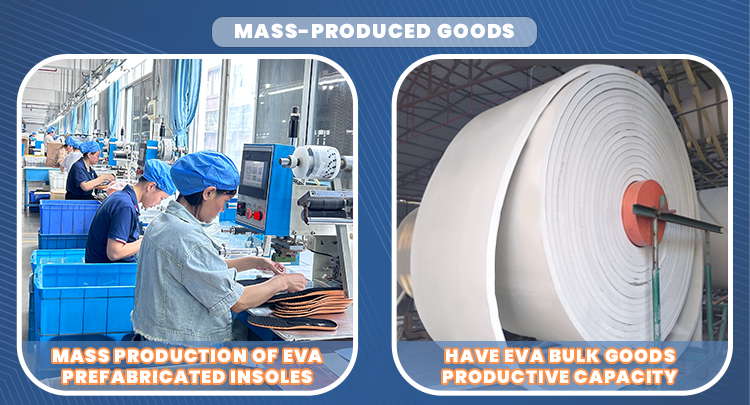
- Scalable manufacturing capacity
- Global supply chain experience
Experienced buyers often request compression and fatigue test reports to verify that an insole can maintain its support characteristics after months of daily use.
The Future of Industrial Orthotic Insoles
The industrial footwear market is increasingly moving toward health-focused product development. Technologies such as 3D foot scanning, plantar pressure mapping, and customized orthotic manufacturing are enabling more precise support solutions for occupational environments.
As worker well-being becomes a strategic priority, orthotic insoles are expected to play a growing role in the evolution of safety footwear and occupational health programs.
Frequently Asked Questions
Do orthotic insoles help workers who stand all day?
Yes. Orthotic insoles help distribute pressure more evenly across the foot, support the arch structure, and reduce fatigue associated with prolonged standing.
Can orthotic insoles fit inside safety boots?
Most industrial orthotic insoles are specifically designed to fit work boots and safety footwear while maintaining proper support and comfort.
How long do industrial orthotic insoles last?
The lifespan depends on material quality, usage intensity, and workplace conditions. High-quality industrial orthotic insoles typically last significantly longer than standard foam insoles due to their enhanced structural durability.
Conclusion
Industrial workers face substantial physical demands every day, and foot fatigue remains one of the most common occupational health challenges across multiple industries. Orthotic insoles provide a practical solution by improving support, optimizing pressure distribution, enhancing stability, and helping reduce the effects of prolonged standing and walking.
As workplace health and employee well-being become increasingly important, orthotic insoles are evolving from optional accessories into essential components of modern occupational footwear. For safety shoe brands, distributors, and OEM manufacturers, investing in high-performance orthotic solutions is no longer simply about comfort—it is about supporting worker productivity, reducing fatigue, and creating long-term product value.