When developing a new footwear collection, one of the most important decisions is choosing the right sole material. The sole affects everything from comfort and durability to production cost and customer satisfaction.
Among the most widely used materials in the footwear industry, EVA (Ethylene Vinyl Acetate) and PVC (Polyvinyl Chloride) are two of the most common options. Both materials are used in millions of pairs of shoes every year, yet they serve very different purposes.
So, which sole is better, EVA or PVC?
The answer depends on the type of footwear you are producing, your target customers, and your budget. In this guide, we’ll compare EVA and PVC soles in detail and explain which material is best for different footwear applications.
Understanding EVA and PVC Soles
Before comparing their performance, it’s important to understand what these materials are.
What Is an EVA Sole?
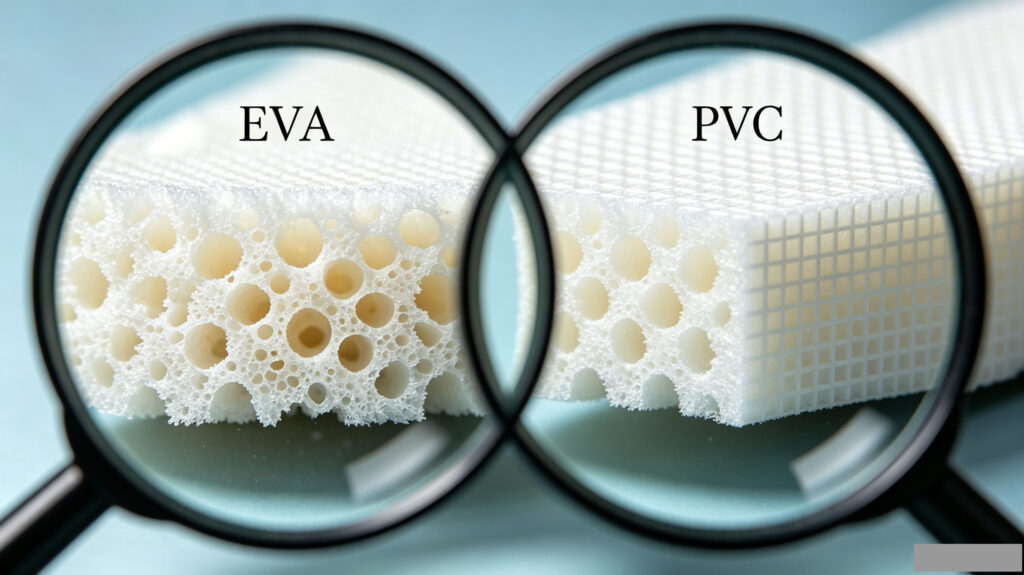
EVA (Ethylene Vinyl Acetate) is a lightweight foam material widely used in sports shoes, slippers, sandals, and casual footwear.
Its cellular structure contains thousands of tiny air pockets, making it significantly lighter than many traditional sole materials. Because of its excellent cushioning and flexibility, EVA has become the preferred choice for comfort-focused footwear.
Common applications include:
- Running shoes
- Walking shoes
- Recovery sandals
- Beach slippers
- Casual sneakers
What Is a PVC Sole?
PVC (Polyvinyl Chloride) is a durable thermoplastic material known for its toughness and water resistance.
Unlike EVA, PVC is denser and harder, making it suitable for footwear that requires greater durability and protection.
Common applications include:
- Rain boots
- Work shoes
- Fashion sandals
- Safety footwear
- Budget-friendly casual shoes
EVA vs PVC Sole: Key Differences
1. Weight: EVA Is Significantly Lighter
Weight directly affects how comfortable a shoe feels throughout the day.
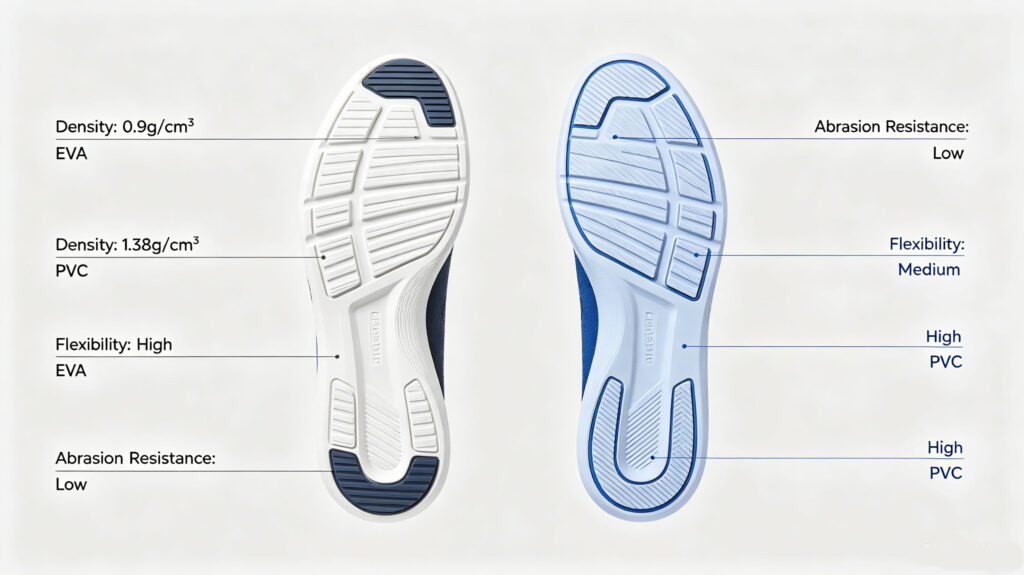
Because EVA is a foamed material, it can be 30%–50% lighter than many PVC sole constructions, depending on density and manufacturing specifications.
For consumers who spend long hours walking or standing, a lighter shoe often translates into less fatigue.
PVC soles are heavier due to their solid thermoplastic structure. While this added weight may improve durability, it can reduce overall comfort.
Winner: EVA
If lightweight footwear is a priority, EVA is the better option.
2. Comfort and Cushioning: EVA Takes the Lead
Comfort is one of the biggest reasons footwear brands choose EVA.
The material naturally absorbs impact and provides a softer underfoot feel. This cushioning effect helps reduce stress on the feet, ankles, and knees during daily activities.
This is why most athletic shoes use EVA in their midsoles.
PVC soles, by comparison, are firmer and offer less shock absorption. Although they can be comfortable in certain applications, they generally cannot match the cushioning performance of EVA.
Winner: EVA
For comfort-focused footwear, EVA is the clear choice.
3. Durability and Wear Resistance: PVC Performs Better
While EVA offers superior comfort, durability is where PVC has an advantage.
PVC is highly resistant to abrasion, tearing, and surface wear. In demanding environments such as construction sites, factories, or wet outdoor conditions, PVC soles often last longer than EVA soles.
EVA can gradually compress with repeated use, causing some loss of cushioning over time.
For products that prioritize longevity over softness, PVC is often the preferred solution.
Winner: PVC
4. Waterproof Performance: PVC Is More Reliable
Water resistance is especially important for rain boots, outdoor footwear, and work shoes.
PVC is naturally waterproof and maintains its structural integrity even after prolonged exposure to moisture.
Although EVA is water-resistant and dries quickly, it is generally not designed for heavy-duty waterproof applications.
This explains why many rain boots and waterproof work shoes continue to use PVC soles.
Winner: PVC
5. Flexibility: EVA Offers Better Movement
Flexibility affects how naturally a shoe moves with the foot.
EVA remains soft and flexible even after thousands of bending cycles. This makes it ideal for active footwear that requires natural movement and comfort.
PVC tends to be stiffer, especially in colder environments.
For footwear designed for walking, exercising, or all-day wear, flexibility can significantly improve the user experience.
Winner: EVA
6. Environmental Impact: Growing Demand for EVA
Sustainability has become an increasingly important purchasing factor in global footwear markets.
Many brands are actively reducing the use of materials associated with higher environmental concerns and exploring more sustainable alternatives.
EVA generally aligns better with current market trends because it does not contain chlorine and can be incorporated into recyclable or bio-based formulations.
As environmental regulations become stricter in North America and Europe, many footwear brands are increasing their use of EVA-based solutions.
Winner: EVA
7. Production Cost: PVC Is More Budget-Friendly
Cost remains a major consideration for footwear manufacturers and importers.
PVC is typically less expensive than EVA, both in terms of raw material costs and production expenses.
For large-volume projects targeting price-sensitive markets, PVC can help reduce overall manufacturing costs.
EVA usually requires higher-quality materials and more specialized processing, leading to a higher unit cost.
Winner: PVC
EVA vs PVC Sole Comparison Table
| Feature | EVA Sole | PVC Sole |
|---|---|---|
| Weight | Excellent | Moderate |
| Comfort | Excellent | Fair |
| Cushioning | Excellent | Fair |
| Flexibility | Excellent | Moderate |
| Durability | Good | Excellent |
| Waterproofing | Good | Excellent |
| Sustainability | Better | Moderate |
| Cost | Higher | Lower |
Real-World Applications of EVA and PVC Soles
Running Shoes
Most running shoes use EVA because runners demand lightweight cushioning and shock absorption.
Casual Sneakers
EVA helps create comfortable everyday footwear that can be worn for extended periods.
Bathroom and Beach Slippers
EVA is commonly chosen because it is lightweight, soft, and dries quickly.
Rain Boots
PVC remains one of the most popular materials due to its waterproof properties and durability.
Work Shoes
For industrial and outdoor environments, PVC provides better resistance to wear and harsh conditions.
Budget Sandals
PVC is often selected because it allows manufacturers to maintain competitive pricing.
EVA vs PVC Sole: Which One Should Footwear Brands Choose?
For footwear brands, the decision should be based on the target market rather than simply choosing the material with the most advantages.
Choose EVA If:
- You manufacture sports shoes
- You sell premium slippers or sandals
- Comfort is a major selling point
- You target health-conscious consumers
- Your brand emphasizes sustainability
Choose PVC If:
- You produce budget-friendly footwear
- You manufacture rain boots or work shoes
- Durability is more important than cushioning
- You need lower production costs
- Your target market prioritizes value over comfort
Frequently Asked Questions
Is EVA More Durable Than PVC?
No. PVC generally offers better abrasion resistance and durability, especially in demanding environments.
Why Do Running Shoes Use EVA Soles?
EVA provides lightweight cushioning, flexibility, and shock absorption, making it ideal for athletic footwear.
Are EVA Soles Waterproof?
EVA is water-resistant and dries quickly, but PVC provides superior waterproof protection.
Is PVC Good for Slippers?
PVC can be used for slippers, but EVA is usually preferred because it is softer, lighter, and more comfortable.
Which Sole Material Lasts Longer?
In most cases, PVC soles last longer under heavy use due to their higher wear resistance.
Final Thoughts
The better sole material depends on how the footwear will be used.
For running shoes, casual sneakers, comfort sandals, and premium slippers, EVA is often the preferred choice because it offers lightweight performance, flexibility, and superior cushioning.
For rain boots, work shoes, and cost-sensitive footwear projects, PVC remains a practical solution thanks to its durability, waterproof performance, and lower manufacturing cost.
Rather than asking which material is universally better, footwear brands should focus on which material best matches their product positioning, customer expectations, and price point. The right choice is the one that delivers the best balance of performance, comfort, and value for your specific market.
Related Post:Comparing EVA and PVC Insoles: Comfort, Durability, and Environmental Impact