Introduction: Scaling Orthotic Insoles Is an Engineering Problem, Not a Production Problem
When global brands talk about scaling orthotic insoles, they often focus on production capacity or unit cost. In real manufacturing practice, that is usually not the limiting factor.
What actually determines whether a brand can scale successfully is consistency in biomechanical performance, material stability, and structural repeatability across large-volume production.
Why Custom Orthotic Insoles Have Become a Strategic Growth Category
Orthotic insoles are no longer a simple comfort accessory. They sit at the intersection of medical support, sports performance, and occupational health.
In most markets, demand is shifting toward function-driven products. End users expect different levels of arch support, pressure relief, and long-term standing comfort depending on their lifestyle and working environment.
This shift creates a clear opportunity for brands to move from commodity footwear accessories to engineered foot health solutions with higher margin potential.
How Scaling Actually Works in OEM Orthotic Programs
In real OEM projects, scaling does not happen in a single step. It follows a controlled validation process where each stage reduces risk before moving to higher volume production.
Most stable programs follow this practical workflow:
- Prototype development based on foot biomechanics and target user profile
- Structural testing and material adjustment
- Small batch sampling for real-world feedback
- Pilot production under controlled conditions
- Full-scale manufacturing after performance confirmation
Brands that skip early validation stages usually face inconsistency issues later in mass production.
Core Engineering Capability 1: Biomechanical Design Understanding
A functional orthotic insole is defined by how it behaves under load, not how it looks in design software.
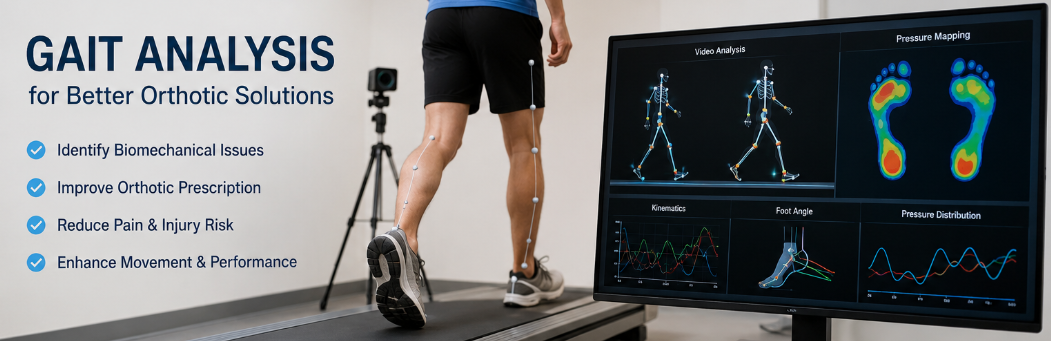
In most development cases, we evaluate three key factors: arch behavior under pressure, heel strike stability, and pressure redistribution during gait movement.
Different user groups require different structural logic. Flat feet, high arches, and overpronation conditions cannot be solved with a single universal structure.
Core Engineering Capability 2: Material System Control (EVA / PU / TPU)
EVA Foam in Real Applications
EVA is primarily used as a cushioning and comfort layer. Its main advantage is lightweight shock absorption.
However, under long-term load conditions, EVA may gradually lose thickness and rebound performance. This is why it is rarely used alone in structural orthotic designs.
PU Material in Structural Support
PU is used when long-term structural stability is required. It performs better under continuous pressure and maintains arch shape more consistently.
This makes it more suitable for occupational footwear and medical orthotic applications where users stand or walk for extended periods.
Why Multi-Layer Systems Are the Industry Standard
Most professional orthotic insoles are not made from a single material. Instead, they combine EVA, PU, and sometimes TPU in layered structures.
Each layer serves a different function:
- EVA: surface comfort and impact absorption
- PU: structural arch support
- TPU: motion control and reinforcement
Core Engineering Capability 3: Manufacturing Consistency at Scale
Scaling production is not only about increasing output. The real challenge is maintaining consistent performance across thousands or even millions of units.
Small variations in EVA density or PU hardness can create noticeable differences in comfort and support performance.
That is why process control, mold stability, and batch validation are more important than raw production speed.
Core Engineering Capability 4: Customization Based on Real Market Segments
In most successful OEM programs, customization is not limited to branding. It is defined by functional segmentation.
Typical customization includes:
- Arch height adjustment (low / medium / high)
- Different density configurations for weight and usage conditions
- Sport, medical, and occupational variants
- Brand identity integration (logo and packaging)
Real Constraints in Scaling Orthotic Production
Scaling orthotic insoles is limited less by machinery and more by material behavior and process tolerance.
For example, EVA density fluctuation beyond controlled ranges can lead to inconsistent cushioning performance. Similarly, PU hardness deviation can directly affect arch support behavior under long-term use.
This is why serious OEM programs always include multiple rounds of validation before approving mass production.
Why Some Brands Fail When Scaling Orthotic Products
In most failure cases, the issue is not design. It is lack of validation between prototype and mass production.
A common problem is that a product performs well in small samples but behaves differently when scaled due to material batch variation or structural inconsistency.
Another issue is over-simplified design assumptions that do not match real walking or standing conditions.
Why Global Brands Work with China-Based OEM Partners
China’s orthotic manufacturing ecosystem offers a combination of material supply chain integration, rapid prototyping capability, and scalable production systems.
When combined with mature EVA and PU processing systems, this allows brands to move from concept to mass production in shorter cycles while maintaining cost efficiency.
Conclusion: Scaling Requires Controlled Engineering Systems, Not Just Capacity
Scaling a global orthotic insole brand is fundamentally an engineering challenge. Production capacity alone does not guarantee success.
What actually determines long-term performance is whether the OEM partner can maintain biomechanical consistency, material stability, and validated production processes across scale.
Brands that succeed in this category are those that treat manufacturing as a controlled engineering system rather than a simple outsourcing activity.
Related Post: How Ideastep Insoles Empower NFL Players to Maximize Performance.