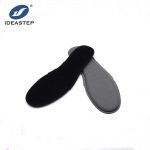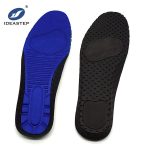
Molded EVA insoles are used in orthopedic footwear, comfort shoes, work footwear, and sports footwear. EVA offers a practical balance of weight, flexibility, cushioning, and processability, while molding allows the insole shape and support structure to be controlled.
For wholesale and OEM orders, molded EVA insoles can be produced with different hardness levels, densities, thicknesses, arch profiles, and top-cover materials.

Molded EVA Insole Construction
Molding gives EVA insoles a defined shape rather than a flat profile. The structure can incorporate:
- Contoured arch support
- Heel cup and heel support
- Different cushioning zones
- Variable thickness
- Customized overall shape
- Different EVA hardness and density
The construction can be selected according to the footwear design and required support level.
EVA Material Selection
Different EVA specifications affect the weight, firmness, cushioning, rebound, and compression resistance of the finished insole.
Hardness: Controls the firmness and support of the insole.
Density: Affects weight, cushioning, and material feel.
Rebound: Influences flexibility and energy return.
Compression resistance: Helps the molded structure maintain its shape during repeated use.
Selecting the appropriate EVA specification is important when developing products for different footwear categories and price ranges.
Custom Orthotic EVA Insoles
Custom molded EVA insoles can be developed from an existing sample, drawing, or product specification.
Common customization includes:
- Arch height and profile
- Heel cup structure
- Insole thickness
- EVA hardness and density
- Cushioning areas
- Top-cover material
- Size and shape
- Logo and surface details
- Packaging
Multi-layer constructions can also combine EVA with materials such as PU or TPU when additional cushioning or structural support is required.

OEM and ODM Production
OEM and ODM projects can start with a sample, drawing, or basic product requirements.
The development process typically covers material selection, structural design, sample production, specification confirmation, and bulk manufacturing.
Once the sample is approved, its dimensions, materials, structure, and appearance can be used as the reference for mass production.
Wholesale Molded EVA Insoles
For wholesale orders, consistent product specifications are important between production batches. Key production references may include:
- EVA hardness and density
- Product dimensions
- Mold structure
- Thickness
- Arch profile
- Top-cover material
- Packaging specifications
Standard products, custom OEM designs, private-label orders, bulk production, and repeat orders can all be arranged according to the product specification.
Applications
Molded EVA orthotic insoles can be developed for:
- Orthopedic product distributors
- Foot care suppliers
- Podiatry suppliers
- Medical footwear suppliers
- Comfort shoe brands
- Work footwear manufacturers
- Sports footwear brands
- Private-label brands
The insole structure can be matched to the footwear type, required support, material specification, and target price.
Custom Molded EVA Insoles for Wholesale Supply
For OEM or wholesale projects, provide the required size range, EVA specification, hardness, thickness, arch structure, top cover, branding, packaging, and estimated order quantity.
An existing sample or technical drawing can also be used as a reference for product development and sampling before bulk production.
Related Solutions:
The Science Behind Custom-Molded Insoles
Molded Orthotic Insoles Supplier for Podiatry Clinics & Foot Care Professionals