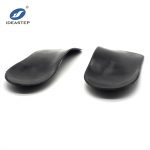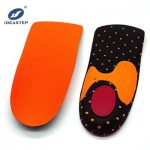
When sourcing orthotic insoles, brands generally work with either an OEM or ODM model. The main difference is who takes the lead on product design and development.
For brands, wholesalers, distributors, and healthcare product suppliers, this choice affects customization, sampling, development costs, production control, and long-term product planning.
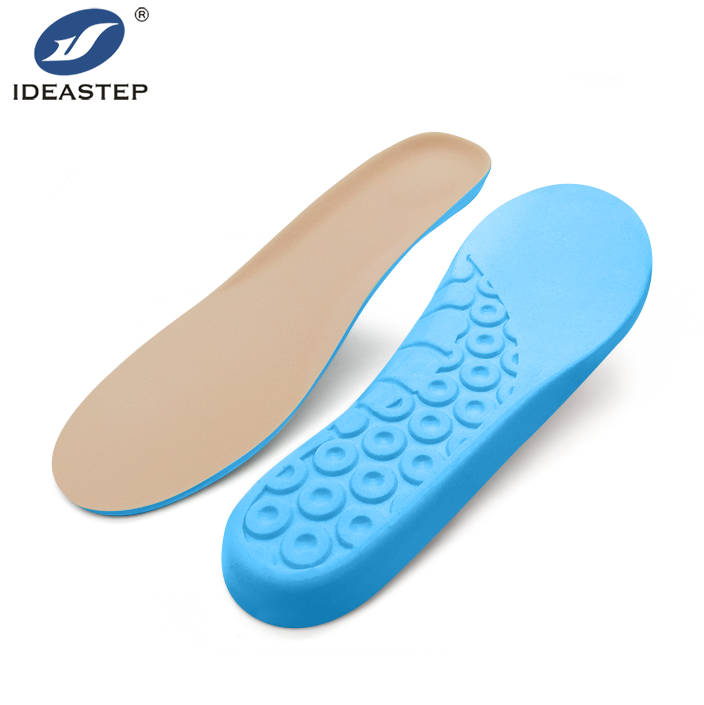
1. What Is OEM for Orthotic Insoles?
In an OEM project, the buyer usually has a defined product design or specification. The manufacturer produces the insoles according to those requirements.
Specifications may cover:
- Dimensions and size range
- Arch and heel structure
- Material combination
- Thickness and hardness
- Top-cover material
- Color and surface finish
- Logo and branding
- Packaging
OEM is a good fit when the product concept is already established and the main requirement is consistent production.
2. What Is ODM for Orthotic Insoles?
With ODM, the manufacturer takes a larger role in product development. The buyer may provide the application, target market, price range, or general product concept without having a finalized design.
The manufacturer may help develop the insole structure, material combination, support profile, appearance, and production specifications.
For example, a brand may want a lightweight walking insole for a specific footwear category without having a finalized structure. The manufacturer can develop an initial sample based on those requirements and refine it through testing.
3. OEM vs ODM: Key Differences
| Factor | OEM | ODM |
|---|---|---|
| Product design | Primarily provided by the buyer | More development input from the manufacturer |
| Customization | Based on defined specifications | May include structure and material development |
| Sampling | Based on an established design | May require several design revisions |
| Brand control | Buyer controls the product specification | Depends on the agreed development arrangement |
| Best suited to | Established product concepts | New products requiring development support |
4. When OEM Is the Better Fit
OEM works well when the product specification is already clear. You may already have:
- A drawing or CAD file
- An existing sample
- A defined material structure
- Specific support requirements
- A fixed size range
- Branding and packaging specifications
In this case, the manufacturer’s role is mainly to reproduce the approved design accurately and prepare it for consistent bulk production.
5. When ODM Is More Suitable
ODM can be useful when the product concept is defined but the technical details are not.
A brand may provide the target footwear, market, price range, cushioning requirements, appearance, and branding. The manufacturer can then develop the structure and material combination around those requirements.
This approach is particularly useful for brands that do not have an in-house product development team.
6. Clarify Design Ownership Before Development
Before sampling, agree on which elements come from the buyer, which are developed by the manufacturer, and how the resulting designs can be used.
OEM and ODM labels alone do not determine intellectual property ownership. For ODM projects especially, the contract should clearly cover ownership and usage rights for newly developed designs, tooling, drawings, and related files.
7. Material Selection in OEM and ODM Projects
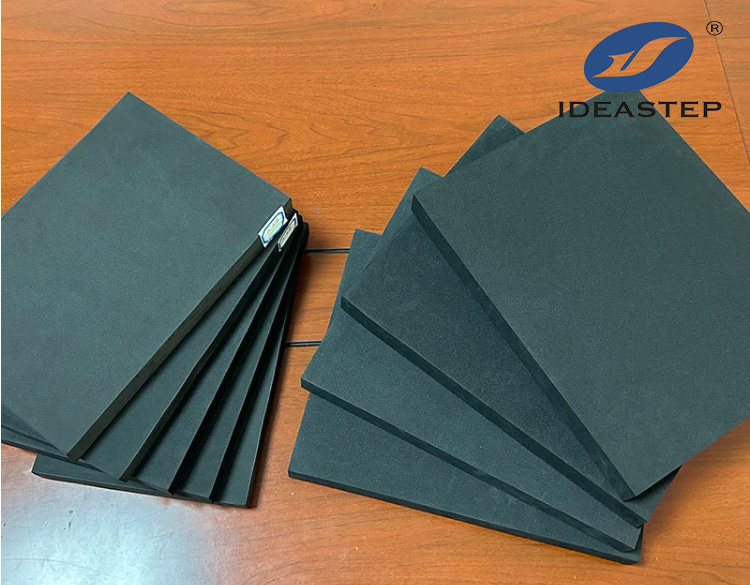
Orthotic insoles often combine several materials to achieve the required balance of support, cushioning, flexibility, and weight.
| Material | Common Role |
|---|---|
| EVA | Lightweight cushioning and base construction |
| TPU | Structural support and reinforcement |
| PU | Flexible cushioning |
| PORON | Localized cushioning |
| Fabric | Top-cover and surface finishing |
| Silicone | Soft cushioning and selected contact areas |
In OEM projects, the buyer may specify the complete material combination. In ODM projects, the manufacturer may recommend materials based on the required support profile, thickness, footwear, target cost, and production method.
8. Sampling and Product Development
OEM sampling usually starts with an established design. The review focuses on dimensions, materials, structure, appearance, and production consistency.
ODM sampling often involves more development work. The first sample may be used to evaluate the overall concept before adjusting the material combination, thickness, arch profile, heel structure, or other details.
For both models, test samples in the target footwear. This can reveal fit and construction issues that are not obvious from the sample alone.
9. Compare the Total Project Cost
Do not compare OEM and ODM projects by unit price alone. Consider the full development and production cost, including:
- Tooling or mold costs
- Sample costs
- Material costs
- Development charges
- MOQ
- Packaging requirements
- Production lead time
- Expected repeat-order volume
Projects involving extensive revisions, special materials, or new tooling may require a higher initial investment even when the final unit price is competitive.
10. What to Prepare Before Contacting a Manufacturer
For OEM projects, prepare product specifications, drawings, samples, material requirements, size ranges, branding, and packaging details.
For ODM projects, provide the target application, footwear type, market positioning, price range, preferred materials, size range, and reference products.
Clear information at the start gives the manufacturer a better basis for evaluating the project and preparing samples.
11. Choosing Between OEM and ODM
Choose OEM when you have an established product design and need manufacturing support. Consider ODM when you have a product concept but need more input on design and development.
The model can also change over time. A brand may use ODM during product development and move to an OEM-style production arrangement once the final specifications have been approved.
Conclusion
OEM and ODM offer different levels of buyer and manufacturer involvement. OEM is centered on producing an established design, while ODM gives the manufacturer a larger role in product development.
Before choosing a model, define your design resources, customization requirements, ownership terms, development budget, MOQ, and production plans. This creates a clearer path from the first sample to repeat bulk orders.
Ideastep supports custom orthotic insole development for wholesalers, distributors, private-label brands, and OEM/ODM buyers, including material selection, structural adjustments, sampling, and bulk production.
Related Reading: Ideastep Custom Orthotic Insoles for Wholesale and OEM.