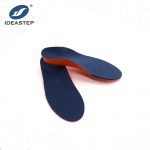
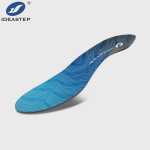
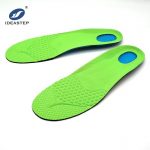
EVA Wedge Pads are used in orthotic insole manufacturing to create specific wedge profiles and localized changes in thickness. Their performance depends on more than foam hardness or density. Material properties, wedge geometry, bonding methods, and dimensional accuracy all affect the finished component.
For orthotic manufacturers, footwear brands, wholesalers, and OEM buyers, selecting the right EVA material means balancing design requirements with manufacturing consistency and cost. This guide covers the key factors to consider when specifying EVA Wedge Pads for custom insole production and bulk orders.
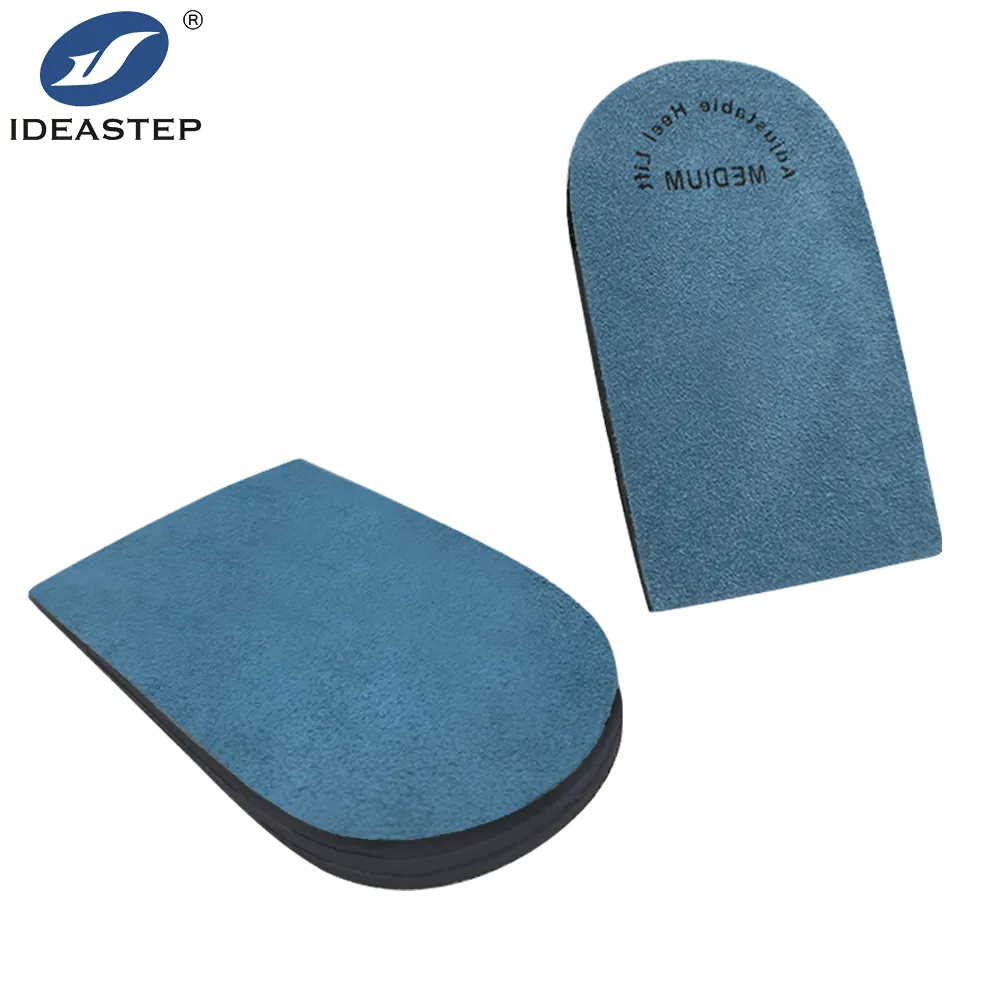
1. What Are EVA Wedge Pads?
EVA (ethylene-vinyl acetate) is a widely used foam material in footwear and insole manufacturing. Its weight, flexibility, and available material grades make it suitable for a range of component designs.
EVA Wedge Pads feature a tapered profile, with thickness varying across the component. Depending on the design, manufacturers may use them in heel or forefoot sections, custom orthotic constructions, or multilayer insole assemblies.
The required shape and material specification depend on the intended application. Before selecting a material, buyers should confirm the component’s position, dimensions, wedge direction, and relationship to the surrounding insole structure.
2. How EVA Properties Affect Wedge Pad Performance
Material specifications influence how an EVA wedge pad responds to compression, maintains its shape, and fits into the finished assembly. Density and hardness are important starting points, but they do not provide a complete picture of material performance.
Density and Hardness
Density measures mass per unit volume, while hardness measures resistance to indentation under specified test conditions. Although these properties can be related, they are not interchangeable.
A higher-density EVA foam is not necessarily harder. Material formulation, cell structure, and processing also affect its properties.
For bulk purchasing, buyers should specify density and hardness separately and confirm the relevant test methods. This makes supplier quotations easier to compare and reduces the risk of receiving material that differs from the approved specification.
Compression, Resilience, and Compression Set
EVA foam changes shape under load. The degree of compression depends on the material, applied force, loading duration, and component geometry.
Three properties are particularly relevant:
- Compression behavior: How the material deforms under a specified load.
- Resilience: How the material recovers after deformation.
- Compression set: The permanent deformation remaining after a defined compression test.
These properties describe different aspects of material performance. Where dimensional stability is important, buyers should review relevant test results and conditions rather than relying on hardness alone.
Durability and Dimensional Stability
Variations in material properties, thickness, or processing can affect the finished wedge profile. Repeated loading and the interaction between bonded layers may also influence long-term dimensional stability.
For production approval, manufacturers should check the material specification, component dimensions, and compatibility with adjacent materials. Testing should reflect the requirements of the actual product rather than relying on general material descriptions.
3. Wedge Geometry and Material Selection
The geometry of an EVA wedge pad affects its fit and behavior within an insole. Material selection should therefore follow the component design, not the other way around.
Thickness, Slope, and Profile
Key dimensions include:
- Maximum and minimum thickness.
- Length and width.
- Slope length and angle.
- Edge profile and transition shape.
Two wedge pads with the same maximum thickness may have different profiles if their slope lengths differ. Buyers should provide a dimensioned drawing or approved sample and identify the dimensions that require the tightest tolerances.
Placement and Assembly
A wedge pad designed for a heel section may require different dimensions from one used in the forefoot. Its orientation, contact area, and thickness must also match the surrounding components.
Before production, confirm the installation position, wedge direction, available space, and attachment method. These details help prevent fit and assembly issues during manufacturing.
Single-Density and Multilayer Designs
Some orthotic insoles use a single EVA component, while others combine different foam grades or additional materials.
Multilayer constructions can accommodate different design requirements, but they also introduce bonding and interface considerations. Manufacturers should evaluate the complete assembly when changing a material, adhesive, or layer thickness.
4. Selecting EVA Wedge Pads for B2B Applications
Material and dimensional requirements vary by project. A specification suitable for one insole design may not be appropriate for another.
Custom Orthotic Insole Manufacturing
Manufacturers should establish the required wedge profile, material properties, dimensions, and tolerances before sampling. The component must fit the approved design and work with the selected base material and assembly process.
When buyers provide an existing sample, suppliers may need additional information to identify the material grade and reproduce its properties accurately.
OEM and Private Label Projects
OEM projects often involve multiple product models or customized component specifications. Buyers should maintain separate records for each model, including drawings, material requirements, approved samples, and packaging instructions.
Customization options depend on the supplier’s actual manufacturing capabilities. Requirements for special profiles, colors, material combinations, or private label packaging should be confirmed during quotation.
Wholesale and Distribution Orders
For wholesalers and distributors, standardized specifications help simplify purchasing and repeat orders. A product specification sheet should identify the material grade, dimensions, available variants, and applicable quality requirements.
When ordering several models, buyers should confirm which specifications remain consistent and which change between variants.
5. Manufacturing and Quality Control
Consistent material quality does not guarantee consistent finished components. Processing accuracy and assembly control are equally important.
Cutting and Profile Accuracy
Depending on the manufacturing process, EVA Wedge Pads may require cutting, shaping, or other profile-forming operations. Inspection should focus on the dimensions that affect fit and function.
Typical checks include:
- Length and width.
- Maximum and minimum thickness.
- Wedge profile and slope.
- Edge condition and visible defects.
- Conformity to the approved drawing or sample.
Critical dimensions and acceptable tolerances should be agreed upon before bulk production.
Bonding and Material Compatibility
When a wedge pad is bonded to an insole base or another foam layer, the result depends on the materials, adhesive, surface condition, and processing method.
A material that performs well on its own may not bond reliably with another layer. For this reason, sample approval should evaluate the actual material combination and assembly process.
Any change to the foam grade, adhesive, or adjacent layer should be reviewed before production continues.
Batch Consistency
For repeat orders, manufacturers and buyers should use an approved specification as the basis for production and inspection.
A practical quality-control process includes documented material requirements, dimensional tolerances, inspection criteria, and records of relevant test results. This provides a clear reference for reviewing production variations and managing repeat orders.
6. Factors Affecting the Cost of EVA Wedge Pads
Bulk pricing depends on material specifications, component dimensions, processing requirements, order quantity, and quality expectations.
Material and Dimensions
Material grade, density, hardness, and component volume may affect material cost. Buyers should compare quotations against equivalent specifications rather than relying on density or unit price alone.
Customization and Processing
Custom profiles, tighter tolerances, additional finishing, and multilayer assembly may increase production costs. Clear drawings and complete specifications help suppliers assess these requirements accurately.
Order Volume and Packaging
Order quantity can affect material purchasing and production planning. Custom packaging, labeling, sampling, and shipping arrangements may also contribute to the total cost.
When comparing suppliers, confirm what each quotation includes and whether all quoted products meet the same requirements.
7. What Buyers Should Confirm Before Ordering
Before requesting a bulk quotation for EVA Wedge Pads, prepare the following information:
| Item | Requirements |
|---|---|
| Material | EVA grade, density, hardness, and test requirements |
| Dimensions | Length, width, thickness, and wedge profile |
| Application | Intended insole design and component position |
| Drawing or sample | Reference drawing, sample, or both |
| Tolerances | Critical dimensions and acceptable deviations |
| Assembly | Bonding method and material compatibility |
| Quantity | Estimated order volume and product variants |
| Sampling | Prototype requirements and approval process |
| Quality control | Inspection criteria and required documentation |
| Packaging | Bulk packaging, labeling, or private label requirements |
| Delivery | Required schedule and shipping arrangements |
If some specifications remain undecided, identify them during the quotation stage. This allows the supplier to clarify technical requirements before sampling or production.
8. How to Choose an EVA Wedge Pads Supplier
A suitable supplier should be able to assess the material requirements, understand the component drawing, and confirm whether the requested specifications fit its manufacturing capabilities.
Material and Customization Capabilities
Ask which EVA grades, dimensions, and wedge profiles the supplier can support. For projects with specific testing or documentation requirements, confirm what evidence is available.
Sampling and Technical Communication
The sample stage should verify material specifications, profile accuracy, and assembly compatibility. Any differences between the drawing and sample should be resolved before approval.
Quality Control and Repeat Orders
Confirm how the supplier manages approved specifications, checks critical dimensions, and records production results. For recurring orders, agree on how material or process changes will be reviewed.
Clear communication, realistic production planning, and documented requirements are important when establishing a long-term OEM or wholesale relationship.
Frequently Asked Questions About EVA Wedge Pads
What Are EVA Wedge Pads Used for in Orthotic Insoles?
EVA Wedge Pads are tapered foam components used in selected orthotic insole and footwear constructions. Their application depends on the component’s geometry, placement, and overall product design.
How Do Density and Hardness Affect EVA Wedge Pads?
Density measures mass per unit volume, while hardness measures resistance to indentation under specified conditions. Both help define material specifications, but neither alone establishes overall component performance.
Can EVA Wedge Pads Be Customized?
Custom dimensions and profiles depend on the supplier’s materials and manufacturing capabilities. Buyers should provide a drawing or sample and confirm the required tolerances before production.
What Information Is Needed for a Bulk Quotation?
Suppliers generally need the material specification, component dimensions, intended application, order quantity, customization requirements, packaging details, and target delivery schedule.
How Can Buyers Maintain Consistency Across Repeat Orders?
Use an approved drawing or sample, document material requirements and critical tolerances, and agree on inspection criteria before production. Review proposed changes before applying them to subsequent orders.
Conclusion
Selecting EVA Wedge Pads for orthotic manufacturing requires a clear understanding of material properties, wedge geometry, processing requirements, and quality standards. Density and hardness help define the material, but dimensional accuracy, compression behavior, and bonding compatibility also affect the finished component.
For bulk and OEM projects, the most reliable approach is to confirm the specification, evaluate a production-relevant sample, and establish inspection criteria before placing a repeat order.
Ideastep buyers can prepare a drawing or sample, material requirements, target dimensions, and estimated order quantity to start a discussion about EVA Wedge Pads for their orthotic insole projects.
Related Articles: Lateral Wedge Insoles in 3°, 4° and 5° for Orthotic Applications.