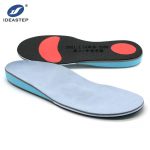
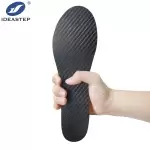
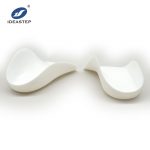
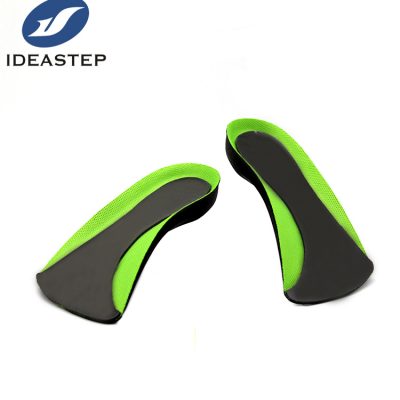
Full‑length orthotic insoles deliver reliable biomechanical support yet suffer well‑documented fit limitations across commercial footwear and clinical practice. Working closely with shoe manufacturers, wholesale distributors and foot‑care clinics, we repeatedly observe use‑cases where full‑length units cannot be deployed. 3/4 high arch support insoles address this gap by concentrating support on the heel and midfoot without occupying forefoot volume, creating viable solutions for footwear OEMs and clinical operators.
Common Fit Pain Points For B2B Partners
Reliance exclusively on full‑length orthotics creates consistent operational headaches for industry partners.
- Shoe brands: Dress shoes, slim casual footwear and safety shoes have restricted internal cavity space. Full‑length insoles crowd the toe box, alter last geometry and compromise the finished shoe’s intended fit.
- Distributors: Full‑only product ranges exclude clients with low‑volume footwear. Fit‑driven returns increase, raising after‑sales overhead and eroding margins.
- Clinics: Many cases require only heel and midfoot stabilization, with no forefoot pathology. Full‑length inserts generate metatarsal pressure points, reducing wear compliance among patients.
These constraints drive tangible market demand for targeted 3/4 high‑arch solutions.
Core Design Principles Of 3/4 High Arch Support Insoles
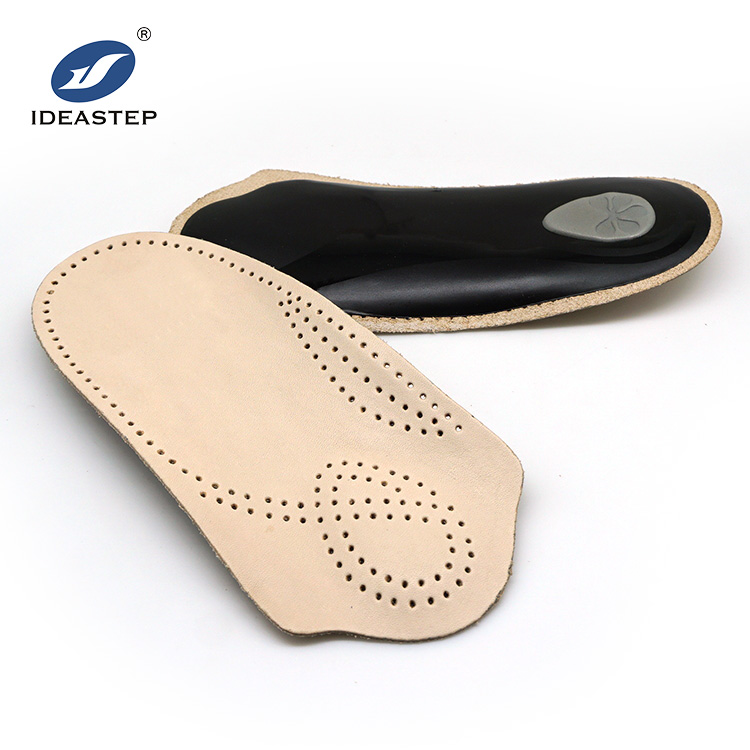
This design terminates ahead of the metatarsal heads. Structural support is concentrated within the heel cup and midfoot arch, leaving the forefoot completely unobstructed.
- Suitable for high‑arch presentations, heel pain and midfoot fatigue where forefoot pathologies are absent.
- Not indicated for conditions requiring metatarsal or full‑foot correction. Clear use‑case boundaries reduce downstream return risk for distributors.
- Primary advantage: preserves original shoe forefoot geometry for footwear incompatible with bulkier full‑length orthotics.
B2B Value Footwear OEMs vs Clinical Operations
Value for shoe manufacturers and footwear brands
3/4 insoles integrate with dress shoes, low‑profile casual styles and safety footwear without extensive last rework.
- Factory‑installable directly into finished goods to elevate product specification without degrading stock‑shoe comfort.
- Arch height, substrate firmness and thickness are adjustable to match shoe‑last parameters and brand positioning.
Value for foot‑care clinics and rehabilitation facilities
- Higher patient compliance, compatible with most everyday work and dress footwear rather than only roomy athletic shoes.
- Functions as a transitional support for patients building tolerance to rigid full‑length orthotics.
- Easily paired with standalone heel cushions for layered heel‑pain management protocols.
3/4 High Arch Insoles vs Full‑Length Orthotics B2B Comparison
Understanding these trade‑offs enables distributors to build balanced catalogs and set accurate expectations for downstream buyers.
- Shoe cavity compatibility: 3/4 units suit low‑volume footwear; full‑length orthotics require deeper internal space, mostly limited to sneakers and work boots.
- Support coverage: 3/4 delivers focused heel‑arch stabilization; full‑length products provide complete bed‑of‑foot correction including forefoot zones.
- Inventory exposure: 3/4 ranges use fewer size‑based SKUs and reduce capital tied in stock; full‑length lines carry broader sizing and higher inventory risk.
- Cost and market positioning: Lower material input makes 3/4 suitable for mid‑tier ranges; full‑length orthotics occupy higher‑priced clinical‑grade segments.
- Key return triggers: 3/4 complaints mostly relate to mismatched arch firmness; full‑length returns stem largely from toe‑box crowding.
High‑performing distributors maintain both categories rather than selecting one over the other.
B2B Customisation Options
Select the model aligned with order volume, budget and product roadmap:
- OEM footwear integration: Parameters calibrated to shoe‑last data for pre‑installation within finished footwear.
- ODM co‑development: Tune EVA density, arch contour, top fabric, logo embossing and packaging to create exclusive private‑label SKUs.
- Modified private‑label stock: Adapt proven existing moulds with branding updates, avoiding high new‑tooling investment for fast‑track market entry.
- Trim‑to‑fit blanks: Semi‑finished substrates for on‑site clinical reshaping, ideal for small‑batch orders and market validation.
- Bundled foot‑care kits: Combine 3/4 insoles with matching heel cushions to lift average order value.
Supplier Sourcing Checklist
Complete these evaluations prior to mass‑production sign‑off:
- Material performance: Validate multi‑density EVA arch‑zone rigidity and long‑term compression resistance.
- Mould library depth: Confirm multiple arch‑height profiles are available to cover varying high‑arch anatomies; avoid single‑contour tooling.
- Commercial terms: Clarify MOQs for stock modification versus new mould development; budget sampling and tooling costs accordingly.
- Customisation capacity: Verify support for thickness adjustment, fabric swap‑outs, logo embossing and full branded packaging.
- Sample and batch consistency: Complete formal sample approvals. Insist on repeatable production quality beyond prototype units and confirm realistic lead‑times.
- Export compliance: Secure third‑party test reports meeting EU REACH and North‑American restricted‑substance standards to mitigate customs detention risk.
Wholesale Risks And Mitigation
- Regulatory misclassification: Do not position consumer‑grade 3/4 inserts as medical‑grade orthotics, which introduces compliance liability.
- Undefined use‑case boundaries: Failing to communicate suitable and contra‑indicated presentations to downstream partners drives avoidable returns.
- Over‑reliance on one arch mould: A single fixed arch contour cannot accommodate the full range of high‑arch morphology and generates negative end‑user feedback.
- Uncontrolled component stacking: Pairing insoles with thick heel cushions increases in‑shoe height; advise clients to verify available shoe cavity volume for bundled assemblies.
- Full‑range replacement: 3/4 insoles act as a complementary line, not a substitute for full‑length orthotics.
Roadmap For Catalog Integration
Tailor roll‑out according to business profile:
- Mid‑size distributors: Launch with modified private‑label stock or trim‑to‑fit blanks to minimise upfront spend. Run alongside existing full‑length SKUs and validate market response before commissioning new moulds.
- Shoe brands and large wholesalers: Embed 3/4 insole specifications during early‑stage last development to prevent late‑cycle fit conflicts.
- Clinic‑oriented partners: Position 3/4 ranges as mid‑tier clinical consumables to build repeat bulk orders from physiotherapy and rehabilitation facilities.
Explore Your 3/4 Insole Project
If you are expanding your orthotic catalog or resolving fit constraints for footwear lines, we can outline technically and commercially viable paths forward. Share your target footwear types, performance requirements and order‑volume expectations to receive targeted recommendations for your operation.
Related Post:
Why 3/4 High Arch Support Insoles Drive Better Margins For Your Orthotic Product Mix
IDEASTEP’s Best 3/4 PU Insole: The Ultimate Comfort Solution for All