Introduction
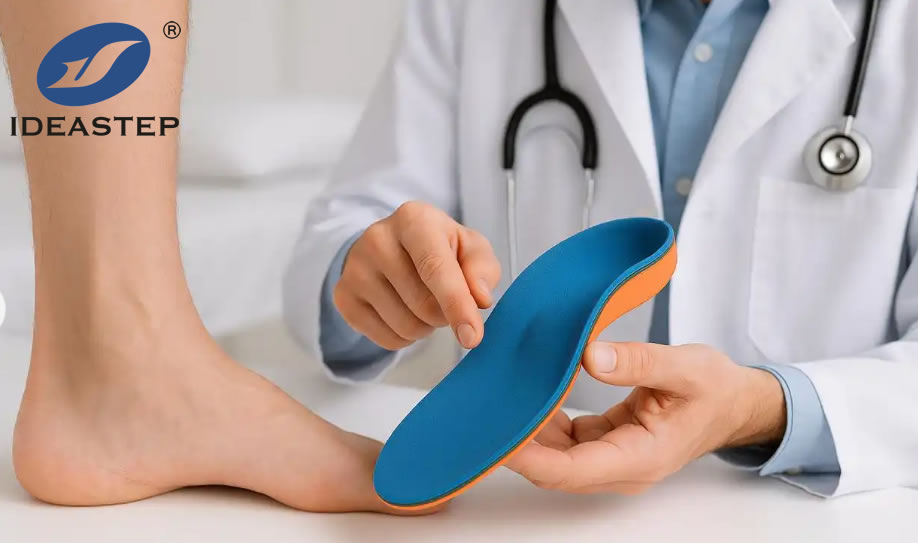
Functional orthotics combine material engineering and structural design to influence foot mechanics and plantar load distribution. Unlike standard cushioning insoles, they incorporate features such as arch contours, deep heel cups, posting elements, and forefoot modifications.
For orthotic manufacturers, wholesalers, podiatry suppliers, and footwear brands, material selection and structural configuration are essential to product development. EVA, PU, TPU, and rigid plastics offer different mechanical properties, while geometry and material combinations determine the characteristics of the finished orthotic.
1. Key Materials Used in Functional Orthotics
Material selection affects flexibility, compression resistance, cushioning, and shape retention. The right combination depends on the intended construction and product application.
1.1 EVA
Ethylene-vinyl acetate (EVA) is widely used in orthotic manufacturing because of its lightweight structure, adjustable hardness, and processing versatility. It supports cutting, CNC milling, and thermoforming.
Different EVA densities can be combined to create single-density, dual-density, or multi-density constructions. Firmer sections provide structural support, while softer layers add cushioning. Density, thickness, and compression recovery should all be considered during material selection.
1.2 PU and PORON
Polyurethane (PU) provides cushioning and resilience, depending on its formulation and cellular structure. It is commonly used in full-length insoles and layered constructions.
PORON microcellular polyurethane materials are used in selected areas, such as the heel and metatarsal region, where localized cushioning is required. Buyers should evaluate compression recovery, thickness, and bonding compatibility rather than relying on softness alone.
1.3 TPU and PP
Thermoplastic polyurethane (TPU) is suitable for support shells and reinforcement components requiring controlled flexibility and shape retention.
Polypropylene (PP) and other rigid plastics are used in orthotic shells where structural stability is important. Their performance depends on thickness, flexural stiffness, and shell geometry. Excessive stiffness may affect footwear compatibility, so material specifications should match the intended application.
2. Structural Features That Influence Foot Support
Structural geometry determines how materials interact within an orthotic. Even products made from similar materials can have different mechanical characteristics because of variations in arch contour, heel cup depth, and forefoot construction.
2.1 Arch Support
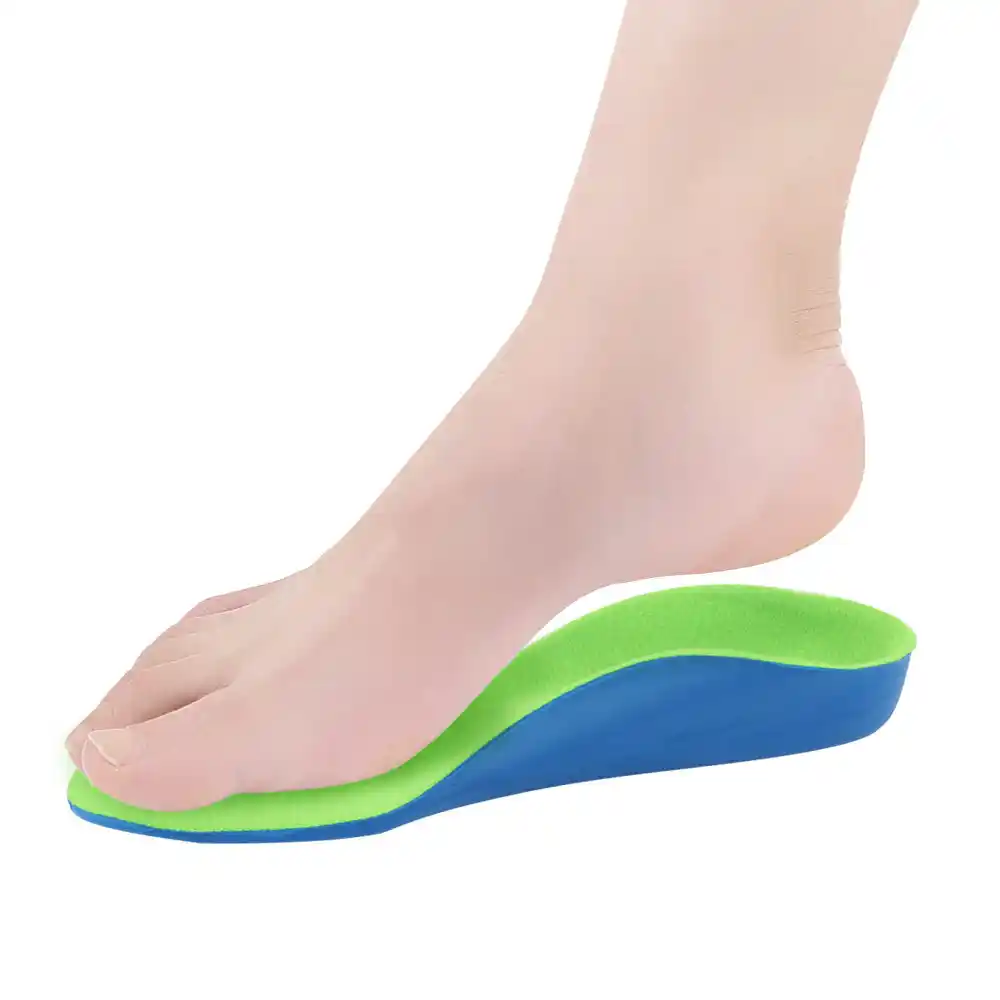
The medial longitudinal arch is a key consideration in functional orthotic design. Arch height, contour, position, and material stiffness influence contact between the orthotic and plantar surface.
Incorrect positioning or excessive arch height may create localized pressure. Manufacturers should therefore develop different arch profiles according to foot shape and product specifications.
2.2 Deep Heel Cup
A deep heel cup creates a defined seating structure around the calcaneal region. Its depth, width, contour, and stiffness influence rearfoot positioning and the overall support platform.
Heel cup dimensions should also account for footwear space and the intended product application.
2.3 Medial and Lateral Posting
Posting involves angled or modified support surfaces designed to influence foot orientation and load distribution. Key specifications include posting angle, thickness, position, and material stiffness.
Medial and lateral posting should be developed according to the intended biomechanical objective rather than treated as universal design features.
2.4 Metatarsal Pad
Metatarsal pads modify the forefoot contour and influence loading around the metatarsal region. Their position, height, shape, and material density determine how they integrate with the surrounding structure.
Incorrect placement or excessive pad height may create unwanted pressure. Therefore, forefoot modifications should be evaluated as part of the complete orthotic design.
2.5 Top Cover
The top cover provides the finished contact surface and influences friction, moisture management, and cushioning. Common options include microfiber, polyester, K fabric, PU foam, and EVA foam.
Material selection should consider surface durability, bonding quality, and the intended footwear category.
3. Combining Materials and Structural Design
Functional orthotic performance depends on how materials and structural features work together. Three common construction approaches illustrate this relationship:
- Semi-rigid construction: A structured shell with arch support and a deep heel cup, combined with cushioning layers where required.
- Cushioning and support construction: An EVA or TPU base integrated with PU or PORON components for localized cushioning.
- Multi-density construction: Different EVA densities or material combinations used across the heel, arch, and forefoot to achieve varied mechanical characteristics.
The objective is to match material properties with the required support profile, rather than relying on a single material or structural component.
4. Technical Evaluation for Wholesale Buyers
For distributors, podiatry suppliers, and footwear brands, product evaluation should cover material specifications, structural accuracy, durability, and production consistency.
4.1 Material and Structural Specifications
Request details such as EVA density and hardness, PU compression characteristics, TPU or PP shell thickness, and top-cover composition. Also inspect arch geometry, heel cup dimensions, posting angles, and forefoot modifications.
4.2 Durability and Quality Control
Check dimensional accuracy, material bonding, surface finishing, compression recovery, and shape retention. Consistent support geometry and material quality are particularly important for repeat wholesale orders.
4.3 Footwear Compatibility and Samples
Orthotic thickness, length, heel cup dimensions, and forefoot volume must suit the target footwear category. Sports shoes, safety footwear, and dress shoes have different internal space requirements.
Sample evaluation allows buyers to verify construction, materials, dimensions, and finishing before approving bulk production.
5. OEM and ODM Functional Orthotic Development
OEM and ODM manufacturing allows distributors and footwear brands to develop orthotic products around specific market requirements.
Customization can include:
- Materials: Single-density and multi-density EVA, PU, TPU, PP, and PORON.
- Structures: Arch profiles, heel cup dimensions, medial and lateral posting, and metatarsal pads.
- Product formats: Full-length and 3/4-length designs with adjusted thickness and geometry.
- Branding: Private-label logos, customized top covers, colors, and packaging.
Clear specifications and approved samples help reduce development revisions and maintain production consistency.
6. Selecting a Functional Orthotic Manufacturer
Supplier evaluation should extend beyond unit price. Buyers should consider:
- Material expertise: Experience with EVA, PU, TPU, PP, and multi-material constructions.
- Structural development: Ability to adjust arch profiles, heel cups, posting, and forefoot features.
- Manufacturing capabilities: CNC processing, molding, cutting, and other relevant production processes.
- Quality control: Material inspection, dimensional checks, bonding quality, and batch consistency.
- OEM/ODM support: Flexible sampling, private labeling, and packaging options.
These capabilities help establish a reliable manufacturing relationship and support long-term wholesale supply.
7. Functional Orthotic Manufacturing with Ideastep
Ideastep, operated by Xiamen KON Technology Co., Ltd., has been developing foot-care and orthotic products since 1989. The company works with international wholesalers, orthotic distributors, podiatry suppliers, and footwear brands.
Manufacturing and development capabilities include EVA, PU, and TPU orthotic constructions, semi-rigid support designs, customized arch and heel cup structures, CNC processing, and 3D printing.
Through OEM and ODM cooperation, buyers can discuss material combinations, structural modifications, product dimensions, private labeling, and packaging according to their project requirements.
Conclusion
Functional orthotics rely on the combination of material properties and structural geometry. EVA, PU, TPU, PORON, and rigid plastics provide different mechanical characteristics, while arch contours, heel cups, posting elements, and metatarsal modifications define the overall construction.
For wholesalers, distributors, and footwear brands, understanding these factors helps improve product selection and OEM/ODM development.
Ideastep supports functional orthotic development with flexible material combinations, structural customization, and private-label manufacturing. Contact our team to discuss your specifications and request samples for evaluation.
Related Articles:
Custom Made Insoles: Biomechanical Orthotics for Foot Care Private Label Partners
Custom Design Insoles: Material Selection, Structure and Functional Requirements