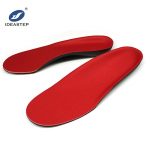
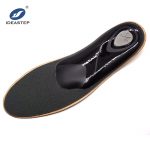
OEM orthotic insole manufacturing involves more than selecting a product and placing a bulk order. Buyers need to define technical requirements, confirm materials and construction, approve samples, and establish quality standards before production begins.
For orthotic brands, distributors, and footwear companies, a structured sourcing process helps reduce development errors, control costs, and maintain consistency across orders. The following steps outline what buyers should evaluate when working with an OEM insole manufacturer.

1. Define Product Requirements
Clear specifications give manufacturers a basis for evaluating feasibility, selecting materials, and preparing samples.
Before requesting a quotation, buyers should confirm:
- Product category: Functional orthotics, sports insoles, soft orthotics, work insoles, or other designs.
- Target market: Required size range, applicable standards, and documentation.
- Structural design: Arch profile, heel cup, forefoot thickness, posting, and additional components.
- Material requirements: EVA, PU, PORON, TPU, PP, fabric, microfiber, or other specified materials.
- Order details: Estimated volume, MOQ, packaging, and delivery requirements.
Technical drawings, reference samples, and product specifications help avoid misunderstandings. If the design is not finalized, identify which features are fixed and which remain open to development.
2. Select Materials and Construction
Material selection affects the insole’s mechanical properties, processing requirements, and production cost. Each material should have a defined function within the overall construction.
Common Materials for OEM Orthotic Insoles
EVA is widely used because of its low weight, flexibility, and range of densities and hardness levels. It can serve as a base layer, cushioning component, or part of a multi-density construction.
Polyurethane (PU) and PORON
PU offers different cushioning and resilience properties depending on its formulation. PORON is a branded microcellular polyurethane material used in selected cushioning components, including heel and forefoot sections.
TPU and Polypropylene (PP)
TPU is used in reinforcement components and flexible structural elements. PP is commonly selected for semi-rigid or rigid support shells, including thermoformed constructions.
Top Cover Materials
Fabric, microfiber, and velvet are among the options used for surface layers. Selection should account for surface requirements, durability, and bonding compatibility.
Match Materials to the Design
A multi-material insole may combine an EVA base, TPU or PP support components, and localized PU or PORON cushioning.
Before confirming the construction, evaluate material compatibility, thickness distribution, bonding methods, and processing requirements.
3. Finalize Structural Specifications
Once the materials are selected, the next step is to confirm the insole geometry and component dimensions.
Key design elements include:
- Arch support: Height, length, contour, and material stiffness.
- Heel cup: Depth, width, and rearfoot geometry.
- Posting: Position, angle, and material requirements.
- Metatarsal support: Location, shape, and component thickness.
- Forefoot structure: Flexibility, thickness, and bending characteristics.
- Layer construction: Material sequence, bonding method, and overall thickness.
These details should be recorded in technical drawings or product specifications, with clear dimensions and tolerances.
For custom designs, CAD modeling, CNC milling, and 3D printing can support structural development and prototype production.
4. Develop and Approve Samples
Sampling allows buyers to verify the proposed construction before mass production.
The sample should be checked against the agreed specifications:
- Overall dimensions and thickness
- Material type, density, and hardness
- Arch profile and heel cup geometry
- Component positioning
- Layer bonding and edge finishing
- Top cover and surface quality
Feedback should identify specific adjustments, such as arch height, foam hardness, heel cup depth, or material thickness.
Once approved, the sample and final technical specifications should be retained as production references. Any subsequent changes should be documented and confirmed by both parties.
5. Evaluate Manufacturing Capabilities
Buyers should confirm that the OEM manufacturer has the equipment, technical knowledge, and production capacity required for the project.
Manufacturing Processes
Depending on the material and design, relevant processes may include:
- Compression molding
- Thermoforming
- CNC milling
- Die cutting
- Lamination and component assembly
- 3D printing for selected custom structures
The manufacturer should be able to explain which processes suit the specified materials and construction.
Customization Capabilities
OEM projects may require:
- Custom materials and hardness levels
- Structural modifications
- Custom colors and surface materials
- Logo application
- Private-label packaging
- Size range adjustments
Confirm these requirements during quotation and sampling rather than after production starts.
Production Capacity
Clarify MOQ, production lead time, monthly capacity, and repeat-order arrangements. These factors are important when planning regular wholesale supply.
6. Establish Quality Control Standards
Quality requirements should be agreed upon before mass production. A documented inspection process provides a consistent basis for evaluating finished products.
| Inspection Item | Key Points |
|---|---|
| Material properties | Density, hardness, and material consistency |
| Dimensions | Length, width, thickness, and tolerances |
| Structural features | Arch profile, heel cup, and component positioning |
| Bonding quality | Adhesion between layers and components |
| Surface quality | Color, texture, finishing, and visible defects |
| Mechanical properties | Flexibility, compression recovery, and structural stability |
Testing methods and acceptance criteria should reflect the product specifications. For critical properties, buyers should define the test method and allowable variation.
Manufacturers should conduct inspections at appropriate production stages and compare finished products with the approved sample.
7. Confirm Pricing and Commercial Terms
Commercial terms should be reviewed alongside technical specifications. Buyers need to understand exactly what is included in the quotation.
Confirm the following:
- MOQ: Minimum order quantity by model, size range, or customization option.
- Unit price: Materials, components, and finishing included in the quotation.
- Sample cost: Development charges and any credit toward bulk orders.
- Packaging: Polybags, color boxes, labels, or private-label packaging.
- Lead time: Sample development and mass production schedules.
- Shipping terms: FOB, CIF, DDP, or other agreed arrangements.
Compare quotations based on equivalent material specifications, construction, packaging, and delivery terms. This provides a more accurate basis for supplier evaluation.
8. Manage the Transition to Mass Production
After sample approval and confirmation of commercial terms, the project can move into bulk production.
The production process should include:
- Confirmation of the approved sample and technical documents.
- Incoming material inspection.
- Production according to the agreed specifications.
- In-process checks on dimensions, bonding, and component placement.
- Final inspection against established quality standards.
- Packaging, labeling, and shipment preparation.
Changes to materials, dimensions, or construction must be documented and approved before implementation. This is particularly important for repeat orders.
9. Choosing an OEM Orthotic Insole Manufacturer
Price alone is not a reliable measure of supplier suitability. Buyers should assess the manufacturer’s ability to manage technical development and maintain production consistency.
Key evaluation criteria include:
- Product development: Experience with technical drawings, samples, and structural requirements.
- Material expertise: Knowledge of EVA, PU, TPU, PP, PORON, and other orthotic materials.
- Manufacturing capabilities: Equipment and processes suited to the required construction.
- Quality management: Documented specifications, inspection procedures, and batch traceability.
- Customization support: Private labeling, structural adjustments, and packaging.
- Supply reliability: Production capacity, communication, and delivery management.
A manufacturer that supports both product development and repeat production can simplify sourcing and improve coordination throughout the supply chain.
Conclusion
OEM orthotic insole manufacturing requires clear specifications, suitable material selection, controlled sampling, and consistent quality management. Buyers should establish these requirements before production and maintain them throughout the order process.
At Ideastep, we support OEM and ODM orthotic insole projects through material selection, structural customization, sample development, and bulk manufacturing.
Contact our sales team to discuss your project requirements. Free samples are available upon request for evaluation before bulk orders.
Related Articles: Medical Orthotic Insoles: A Wholesale Buyer’s Checklist.