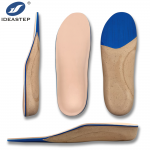
For podiatry clinics, footwear manufacturers, sports brands and medical distributors, lightweight orthotic insoles offer strong market potential. The main challenge is balancing support, cushioning and overall weight.
A good orthotic must provide reliable biomechanical support. It should also retain cushioning performance without adding unnecessary bulk. These requirements are not always easy to achieve.
Rigid substrates often add weight and thickness. They can limit compatibility with slim footwear. Low-density foams reduce weight but may lack structural strength. Repeated loading can weaken arch support and pressure distribution.
This balance affects more than product appearance. It influences footwear compatibility, product performance and commercial value. Clinics and sourcing teams need orthotics that maintain their shape and support. They also need designs that fit running shoes, casual footwear, safety boots and dress shoes.

The Biomechanical Tradeoff: Why Weight Matters for Orthotic Performance
Orthotic insoles help redistribute plantar pressure and support foot alignment. They can also improve subtalar joint stability during walking and running. Their performance depends on both material stiffness and cushioning properties.
Dense plastic substrates provide strong arch control. However, they increase footwear weight and overall thickness. They may also reduce available space inside the shoe. This creates problems for women’s footwear, cycling shoes and low-profile athletic designs.
Low-density foam offers a lighter alternative. However, some foam structures lack sufficient stiffness. Under repeated walking or running loads, the arch area may compress. The insole can then lose its original shape and support.
Composite construction offers a practical solution. A thin structural core provides arch and rearfoot stability. Lightweight cushioning layers absorb impact and improve comfort. This design separates structural support from cushioning performance.
For B2B buyers, this approach offers greater flexibility. Different material combinations can serve flat-foot, high-arch and metatarsal support products. They can also support selected plantar fasciitis and sports-related product lines. The final specification should match the intended application and professional requirements.
Key Materials Used in Lightweight Orthotic Insole Construction
Material selection determines much of an orthotic’s weight, stiffness and durability. Each material offers different advantages. Manufacturers can combine them to meet specific product requirements.
Low-Density EVA Foam
Low-density closed-cell EVA remains a popular choice for lightweight orthotics. It offers a favourable balance between weight and stiffness. Manufacturers can also adjust its hardness to meet different support requirements.
Dual-density EVA is another practical option. Firmer EVA supports the arch and heel. Softer EVA or cushioning foam can cover the forefoot. This combination provides targeted support without making the entire insole rigid.
EVA also supports efficient cutting, shaping and bulk production. It works well for prefabricated orthotics and custom-milled products.
TPU and Carbon Fiber
Thin TPU sheets and carbon fiber inserts provide additional structural support. Both materials help reduce the need for bulky solid substrates.
Carbon fiber offers high stiffness at a relatively low weight. It suits performance-focused orthotics and designs requiring firm support.
TPU provides controlled flexibility and good fatigue resistance. It also supports practical cutting and forming processes. This makes it suitable for different OEM and ODM product requirements.
Cork
Cork is a useful semi-rigid material for selected orthotic applications. It offers a natural material option with moderate weight and support. Its structure also provides a degree of breathability.
Cork can be shaped to match specific foot contours. It works well for everyday orthotics and selected premium product lines. However, high-impact sports applications may require more specialised cushioning materials.
Lightweight Cushioning Materials
Open-cell foam, memory foam and high-resilience cushioning materials can improve local comfort. Manufacturers often use them as top covers or targeted padding layers.
These materials absorb impact without adding excessive thickness. Their rebound properties also help maintain cushioning performance.
Gel inserts can provide additional cushioning under the heel or metatarsal area. However, full-length gel constructions are less common in lightweight orthotics. Their density can increase total product weight.
Design Strategies for Balancing Weight, Support and Cushioning
Material selection alone cannot determine the final product performance. Insole geometry, thickness distribution and edge design also matter.
Variable Thickness and Support Zones
Variable thickness helps reduce unnecessary material. The arch and rearfoot retain enough thickness for structural support. The forefoot and outer edges can be trimmed to reduce weight.
A contoured heel cup helps stabilise the heel. It provides rearfoot support without requiring excessive material. Bevelled edges also improve the transition between the insole and footwear.
Layered Composite Construction
Layered construction is widely used in lightweight orthotic designs. A thin structural core carries the main support load. One or two cushioning layers improve impact absorption. A breathable textile cover completes the structure.
Different combinations serve different markets. Carbon fiber with PORON-style cushioning suits selected sports applications. Dual-density EVA works well for general orthotic ranges. Cork composites offer another option for natural-material collections.
The final structure depends on the required stiffness, cushioning and target price.
3D Printed Lightweight Orthotics
3D printing offers another approach to lightweight orthotic manufacturing. Internal lattice structures allow different support levels across the insole.
Denser structures can reinforce the arch. More open structures can reduce weight in selected areas. This approach also reduces unnecessary material compared with some solid constructions.
For clinic partners, 3D printing supports scan-based custom production. It allows manufacturers to develop products around individual foot geometry. This makes it useful for clinics offering custom orthotic services.
B2B Applications: Which Wholesale Partners Benefit from Lightweight Orthotics?
Lightweight orthotics offer practical advantages across several footwear and healthcare markets.
Podiatry and Physical Therapy Clinics
Clinics can expand their product ranges with lighter orthotic options. These designs may suit cases where bulky insoles create footwear fit problems.
A wider choice of materials and support levels also helps clinics match products to different requirements.
Athletic Brands and Sportswear Wholesalers
Sports brands need orthotics that preserve the original footwear feel. Excessive weight or rigidity can affect shoe performance.
Lightweight composite designs provide another option. They combine targeted support with cushioning while limiting additional bulk.
Safety Footwear and Workwear Suppliers
Safety footwear manufacturers can use lightweight orthotics as upgraded insole components. Workers who stand or walk for long periods need suitable cushioning and support.
Reducing unnecessary insole weight can also help maintain overall footwear comfort during extended shifts.
Footwear Manufacturers
Women’s shoes, low-profile trainers and lifestyle footwear often have limited internal space. Thick orthotics may not fit these designs.
Slimmer constructions offer more flexibility. Manufacturers can develop them as replacement insoles or integrate them into finished footwear.

OEM and ODM Solutions for Lightweight Orthotic Insoles
We provide material and structural options for wholesale orthotic projects. Buyers can specify material combinations, hardness, colours and top cover fabrics. Branding and packaging options are also available.
Our product range covers several manufacturing requirements:
- Prefabricated orthotic insoles: Suitable for distributors and wholesale catalogues.
- Custom-milled orthotics: Suitable for projects requiring specific foot shapes and support profiles.
- 3D printed orthotics: Suitable for scan-based custom production.
- Semi-finished orthotic blanks: Suitable for clinics that perform additional in-house modifications.
We support private-label projects and bulk production. Material selection and construction can be adjusted to match the target market. Sample requests are also available for product evaluation.
For new orthotic ranges, the right material structure matters as much as the product design. A balanced construction can improve footwear compatibility while maintaining the required support.
If you are developing a lightweight orthotic range or replacing heavier products, our team can help review suitable material combinations. Contact Ideastep to discuss product specifications, request samples or explore OEM and ODM production options.
We can work with your team on material selection, structural design and product requirements for different footwear applications.
Related Post: Carbon Fiber Orthotic Insoles for Bulk Supply: Lightweight Support and Shock Absorption Solution.