Sourcing bulk custom insoles requires a manufacturing partner that can handle more than large production quantities. Sports brands, wholesale distributors, and sports medicine suppliers need consistent product specifications, suitable material combinations, reliable quality control, and the flexibility to serve different sports footwear categories.
Running shoes, basketball shoes, cycling footwear, and training shoes all have different structural requirements. An insole designed for one application may not be suitable for another. Material selection, thickness, arch geometry, cushioning, and reinforcement must therefore match the intended footwear.
For wholesale buyers, the challenge is to balance product performance requirements with manufacturing efficiency, order costs, and long-term supply consistency. A well-managed bulk custom insole program addresses these requirements from product specification through repeat production.
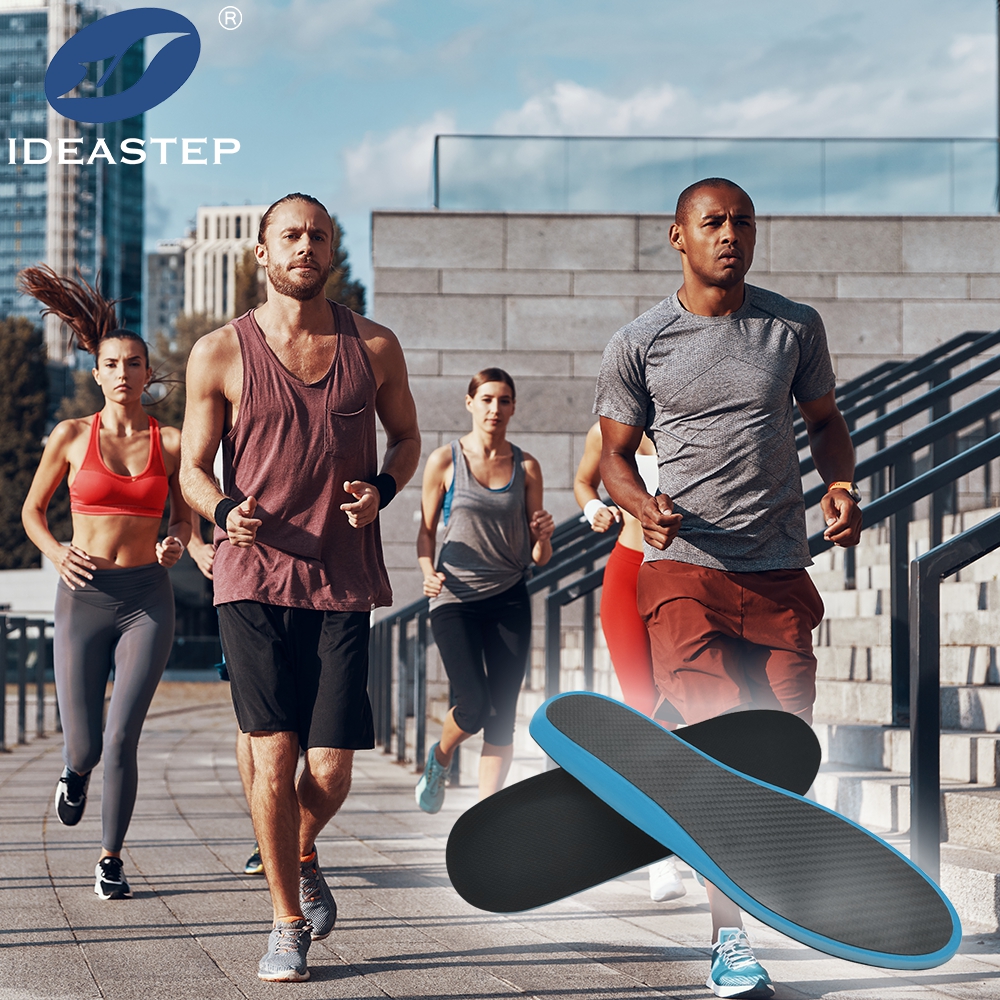
1. Custom Sports Insoles for Different Market Segments
Sports insole manufacturers need to consider the footwear category and its construction before recommending a material or design. Different applications require different combinations of cushioning, flexibility, stability, and structural support.
| Sports Application | Main Design Requirements | Common Construction Options |
|---|---|---|
| Running footwear | Lightweight construction, cushioning, and forefoot flexibility | EVA or PU foam, multilayer structures |
| Basketball and court shoes | Heel stability, controlled cushioning, and lateral support considerations | Molded EVA, TPU reinforcement, structured heel cups |
| Cycling footwear | Low-profile construction and compatibility with stiff shoe soles | Thin EVA layers, molded support components |
| Training footwear | A balance of cushioning, flexibility, and stability | EVA foam, PU foam, reinforced components |
| Outdoor sports footwear | Material durability and dimensional stability | Durable foam bases, reinforced structures, abrasion-resistant covers |
These categories provide a starting point for product development. Final specifications should account for the shoe last, internal volume, outsole construction, and intended use.
For distributors, this application-based approach also makes it easier to organize product catalogs and source different insole configurations from a consistent manufacturing partner.
2. Material Selection for Bulk Custom Insole Manufacturing
Material selection directly affects product weight, flexibility, cushioning, durability, and production cost. For bulk orders, buyers should also consider material availability, processing requirements, and consistency between batches.
EVA Foam
EVA is widely used in custom sports insoles because manufacturers can adjust its hardness, density, and thickness to suit different constructions. It supports several manufacturing methods, including foam cutting, CNC machining, and molding.
Depending on the specification, EVA can serve as a lightweight base, cushioning layer, or part of a multilayer insole structure.
PU Foam
PU foam offers another option for cushioning layers and multilayer constructions. Its formulation and density influence compression behavior and resilience. Manufacturers should select the appropriate grade according to the intended application and finished-product requirements.
TPU and Thermoplastic Components
TPU can provide flexible reinforcement and structural support in selected areas. Other thermoplastic materials can form semi-rigid or rigid components where the design requires greater stiffness.
Their performance depends on material grade, thickness, geometry, and integration with the surrounding foam layers.
Top-Cover Materials
Mesh, technical fabrics, microfiber, and leather are common options for insole surface construction. Selection should consider surface durability, bonding compatibility, finishing requirements, and the characteristics of the target footwear.
For wholesale sports insoles, material approval should cover the complete construction rather than individual raw materials. Adhesives, layer thickness, and bonding conditions can all influence the properties of the finished product.
3. Insole Construction Options for Sports Brands
Material selection alone does not determine the final product. The arrangement of components and the geometry of the insole are equally important.
Common custom sports insole constructions include:
Single-Layer EVA Insoles
A straightforward construction for lightweight sports insole ranges. Thickness and material grade can be adjusted to meet different product specifications.
Multilayer EVA and PU Insoles
Different foam layers can be combined to create specific cushioning and structural characteristics. Manufacturers can adjust layer thickness, density, and positioning according to the product design.
EVA Insoles with TPU Reinforcement
An EVA base can be combined with selected TPU components to create a construction with different flexibility and support characteristics across specific areas.
Molded Sports Orthotic Insoles
Molded designs can incorporate defined arch contours, heel cup geometry, and customized thickness distribution. These products require careful control of geometry and size grading.
Thermoplastic Support Insoles
Semi-rigid or rigid thermoplastic components can be integrated when the product specification calls for additional structural stiffness.
For sports brands and wholesale buyers, the most suitable construction depends on the target shoe models, required specifications, cost target, and production quantity. A supplier should be able to explain the material and structural options before sample approval.
4. Technical Specifications Wholesale Buyers Should Confirm
Incomplete specifications are a common source of delays during custom insole sourcing. Before requesting a quotation, buyers should provide as much technical information as possible.
The following details help manufacturers evaluate production feasibility and prepare accurate samples.
| Specification | Details to Confirm |
|---|---|
| Product application | Running, basketball, cycling, training, outdoor sports, or other categories |
| Dimensions | Length, width, thickness, and overall profile |
| Size range | Required sizes, grading system, and size labels |
| Material | EVA, PU, TPU, thermoplastics, and top-cover materials |
| Structural design | Arch profile, heel cup, forefoot construction, and reinforcement |
| Surface finish | Fabric type, color, texture, and logo requirements |
| Branding | Logo placement, printing, labels, and packaging |
| Order quantity | Total volume and quantity by size or model |
Reference samples, technical drawings, and shoe specifications are especially useful for projects involving complex geometry or limited internal footwear space.
If buyers do not have complete technical drawings, an experienced manufacturer can review the available information and discuss suitable construction options before sample production.
5. Sample Development and Approval Before Mass Production
Sample evaluation is a critical step in bulk custom insole manufacturing. It confirms whether the proposed design, materials, and dimensions meet the agreed requirements before a larger production commitment.
A typical development process includes:
- Project review: Confirm the application, footwear model, dimensions, materials, and expected order quantity.
- Design confirmation: Establish the insole profile, layer arrangement, support components, and manufacturing method.
- Sample production: Manufacture samples using the proposed materials and construction.
- Technical inspection: Check dimensions, thickness, bonding, surface finish, and structural geometry.
- Footwear compatibility review: Evaluate the sample in the intended shoe model.
- Final approval: Confirm the reference sample and production specifications.
The approved sample should serve as the benchmark for bulk manufacturing. Changes to material grades, thickness, component positioning, or construction should be reviewed and approved before production.
This process helps reduce specification disputes and unnecessary adjustments during large-volume orders.
6. Quality Control for Wholesale Sports Insoles
For wholesale distributors and sports brands, product consistency is essential. Variations in dimensions, material properties, or bonding can affect finished-product quality and create difficulties when managing repeat orders.
A reliable sports insole manufacturer should establish inspection procedures for raw materials, production stages, and finished products.
| Quality Control Area | Inspection Focus |
|---|---|
| Raw materials | Material grade, hardness, density, and batch consistency |
| Dimensions | Length, width, thickness, and size grading |
| Structural geometry | Arch profile, heel cup, and reinforcement position |
| Bonding | Adhesion between foam layers and support components |
| Surface finish | Top-cover alignment, wrinkles, and edge finishing |
| Mechanical properties | Flexibility, compression behavior, and durability |
| Finished products | Appearance and compliance with approved samples |
| Production records | Batch identification and specification traceability |
Mechanical performance should be evaluated using agreed test methods and product-specific acceptance criteria. Material descriptions alone cannot establish the performance of a finished multilayer insole.
Buyers should also request clear inspection standards and confirm how the manufacturer handles nonconforming products and specification changes.
7. Choosing a Sports Insole Manufacturer for Bulk Orders
Unit price is only one factor when evaluating a wholesale insole supplier. Manufacturing capability, technical communication, quality management, and delivery planning also affect the total sourcing cost.
Before placing a bulk order, buyers should assess the following areas.
Material and Product Range
Can the supplier work with EVA, PU, TPU, thermoplastics, and different top-cover materials? A broader material range can simplify sourcing when several sports insole configurations are required.
Manufacturing Capabilities
Review the processes available for the project, such as foam cutting, CNC machining, molding, thermoforming, lamination, and bonding. The supplier should explain which processes suit the proposed construction.
Customization and OEM/ODM Support
Confirm whether the manufacturer can work from technical drawings, reference samples, or an initial product concept. Branding, size grading, material combinations, and packaging requirements should also be discussed.
Quality Management
Ask how incoming materials, dimensions, bonding, finished products, and production batches are inspected. Approved samples and documented specifications should guide repeat orders.
Production and Delivery Planning
Confirm minimum order quantities, sample schedules, tooling requirements, production lead times, packaging, and shipping terms before order placement.
A supplier that can coordinate these areas is better positioned to support long-term wholesale purchasing than one evaluated on price alone.
8. OEM, ODM, and Private-Label Options for Sports Insole Buyers
Different wholesale projects require different levels of manufacturing support.
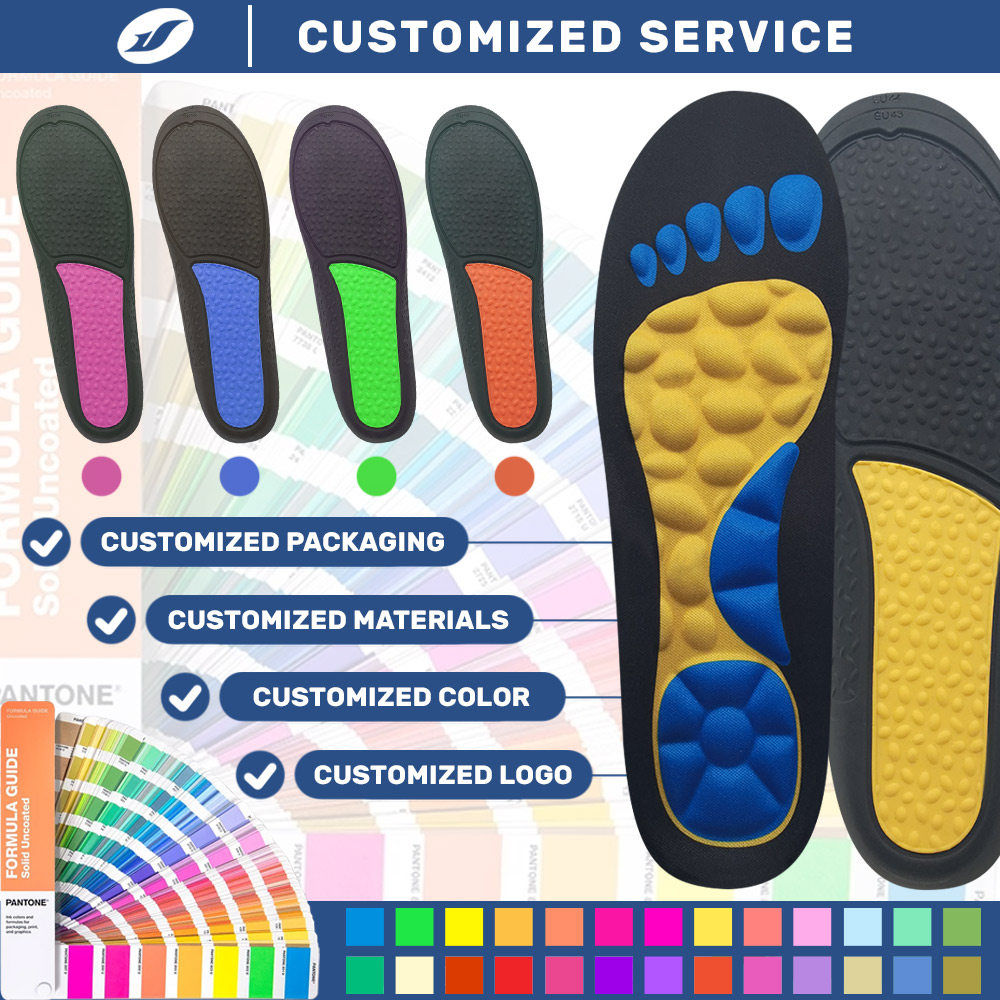
- OEM manufacturing: The buyer provides product specifications, drawings, or reference samples, and the manufacturer produces according to the approved requirements.
- ODM development: The manufacturer assists with product structure, material selection, and sample development based on the buyer’s target application.
- Private-label production: Products are manufactured with the buyer’s branding, subject to agreed logo, labeling, and packaging specifications.
These models can be combined depending on the project. For example, a distributor may select an existing insole construction and request private-label packaging, while a sports brand may require a new multilayer design developed through ODM cooperation.
Clear agreements on specifications, branding, samples, and quality standards help keep the project organized from development to bulk delivery.
9. Build a Reliable Wholesale Supply Program
Bulk custom insole sourcing should support repeat purchasing, not just a single production order.
For distributors and sports brands managing multiple models, an established supply program should include:
- Approved product specifications and reference samples
- Standardized material grades and construction details
- Confirmed size ranges and grading rules
- Agreed quality inspection procedures
- Branding and packaging standards
- Order forecasts and reorder arrangements
- Procedures for reviewing material or design changes
Once these standards are established, buyers can manage repeat orders more efficiently and introduce additional product configurations without restarting the entire sourcing process.
Conclusion
Bulk custom insoles for athletes require a combination of application-specific design, suitable materials, controlled manufacturing, and consistent quality management.
For sports brands, wholesale distributors, and sports medicine suppliers, choosing the right manufacturing partner means looking beyond production volume and unit price. Material expertise, customization capabilities, sample approval, and repeat-order consistency all contribute to a dependable supply program.
A manufacturer with established insole production processes and the ability to manage different constructions can help buyers build a broader sports insole range while maintaining clear specifications across bulk orders.
Related Reading: Custom Insoles for Athletes: Enhance Performance.