How Custom EVA Insoles Help Footwear Brands Build More Competitive Products
In today’s highly competitive footwear industry, consumers expect more than attractive designs. Comfort, support, and foot health have become key purchasing factors across many footwear categories. For brands looking to stand out in crowded markets, innovation is no longer limited to uppers, outsoles, or aesthetics. Increasingly, attention is shifting to what happens inside the shoe.
As a critical component that directly affects comfort and performance, insoles play an important role in the overall user experience. As a result, more footwear brands, wholesalers, and product development teams are investing in custom EVA insoles to enhance product value, differentiate their offerings, and support long-term brand growth.
Whether for athletic footwear, casual shoes, work boots, safety footwear, or medical footwear, custom EVA insoles have become an effective way to improve product performance while creating new opportunities for OEM and private-label projects.

Why More Footwear Brands Are Choosing Custom EVA Insoles
Traditionally, insoles were often treated as standard components with little attention paid to customization. Today, however, consumer expectations have changed significantly.
Modern footwear buyers increasingly seek better cushioning, arch support, shock absorption, and overall comfort. These expectations have encouraged footwear brands to rethink the role of insoles as a strategic product feature rather than a basic accessory.
For footwear companies, custom EVA insoles offer several important advantages:
- Increase product value and perceived quality
- Create meaningful product differentiation
- Address the needs of specific target markets
- Improve customer satisfaction and retention
- Strengthen brand positioning in functional footwear categories
In North American and European markets, consumers are increasingly willing to pay premium prices for footwear that delivers enhanced comfort and foot support. This trend continues to drive demand for customized insole solutions.
What Are Custom EVA Insoles?
EVA (Ethylene Vinyl Acetate) is one of the most widely used materials in the footwear industry. Known for its lightweight properties, cushioning performance, and manufacturing versatility, EVA has become a preferred material for insole production across multiple footwear categories.
Unlike standard insoles, custom EVA insoles are specifically developed to match a brand’s product goals, target users, and performance requirements.
Customized Structural Design
Different footwear applications require different support structures. Common customization options include:
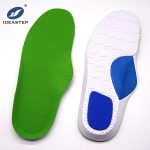
- Arch support systems
- Deep heel cup designs
- Forefoot cushioning zones
- Heel stabilization structures
These features can be optimized for running shoes, work boots, outdoor footwear, medical footwear, and everyday casual shoes.
Material Performance Customization
EVA materials can be tailored to meet specific product requirements through adjustments in:
- Hardness levels
- Density specifications
- Rebound performance
- Single-density or dual-density constructions
This flexibility allows brands to create products that better serve their intended market segments.
Branding and Visual Customization
For OEM and private-label projects, branding is just as important as performance.
Custom options may include:
- Logo printing
- Custom color schemes
- Retail packaging design
- Size systems and labeling solutions
These elements help strengthen brand identity and improve market recognition.
Key Advantages of EVA Insoles in OEM Footwear Projects
Lightweight Comfort
One of EVA’s biggest advantages is its low density. Lightweight insoles can reduce overall shoe weight while maintaining comfort, making them particularly suitable for athletic and casual footwear.
As consumers increasingly prioritize lightweight products, EVA continues to be a preferred material for footwear brands worldwide.
Excellent Cushioning Performance
EVA effectively absorbs impact forces generated during walking, running, and standing.
This cushioning capability helps reduce foot fatigue and improve comfort, especially for workers, healthcare professionals, retail employees, and other individuals who spend long hours on their feet.
Flexible Product Development Options
EVA supports a variety of manufacturing processes, including:
- Compression molding
- Heat molding
- CNC machining
- Multi-layer lamination
This manufacturing flexibility allows brands to develop products that align closely with their performance and pricing goals.
Strong Balance Between Cost and Performance
For footwear brands and sourcing teams, EVA offers an attractive balance between functionality, durability, and cost efficiency.
This combination makes EVA insoles suitable for both premium and mass-market footwear collections.
Critical Factors for Successful OEM EVA Insole Development
Designing for the Target Market
Effective insole design goes beyond simply adding cushioning. The structure should be developed based on the specific needs of the end user.
For example:
- Sports footwear focuses on cushioning and energy return
- Work footwear emphasizes support and durability
- Medical footwear prioritizes pressure redistribution and stability
Choosing the Right Material Combination
Many high-performance insoles incorporate multiple materials to achieve specific performance goals.
Popular combinations include:
- EVA + PU
- EVA + Ortholite
- EVA + TPU support components
- Dual-density EVA constructions
Proper material selection can significantly improve comfort, durability, and functionality.
Maintaining Consistent Quality Control
For large-volume OEM projects, consistency is often more important than the performance of a single prototype.
Reliable manufacturers typically implement comprehensive quality management systems covering:
- Raw material inspection
- Production process monitoring
- Finished product testing
- Pre-shipment quality verification
These processes help ensure consistent performance across every production batch.
How to Choose the Right EVA Insole OEM Manufacturer
When evaluating potential suppliers, price should never be the only consideration. Long-term success depends on choosing a manufacturing partner with the right capabilities and experience.
Research and Development Capabilities
A strong supplier should be able to contribute to product development, material selection, and performance optimization rather than simply manufacturing existing designs.
Production Capacity and Stability
Reliable production systems help ensure consistent quality, on-time delivery, and scalable growth as business needs expand.
International Market Experience
Manufacturers with experience serving North American and European markets are often better equipped to understand international quality expectations and communication requirements.
Long-Term Supply Chain Support
The best suppliers act as strategic partners, supporting product development, production planning, and ongoing innovation.
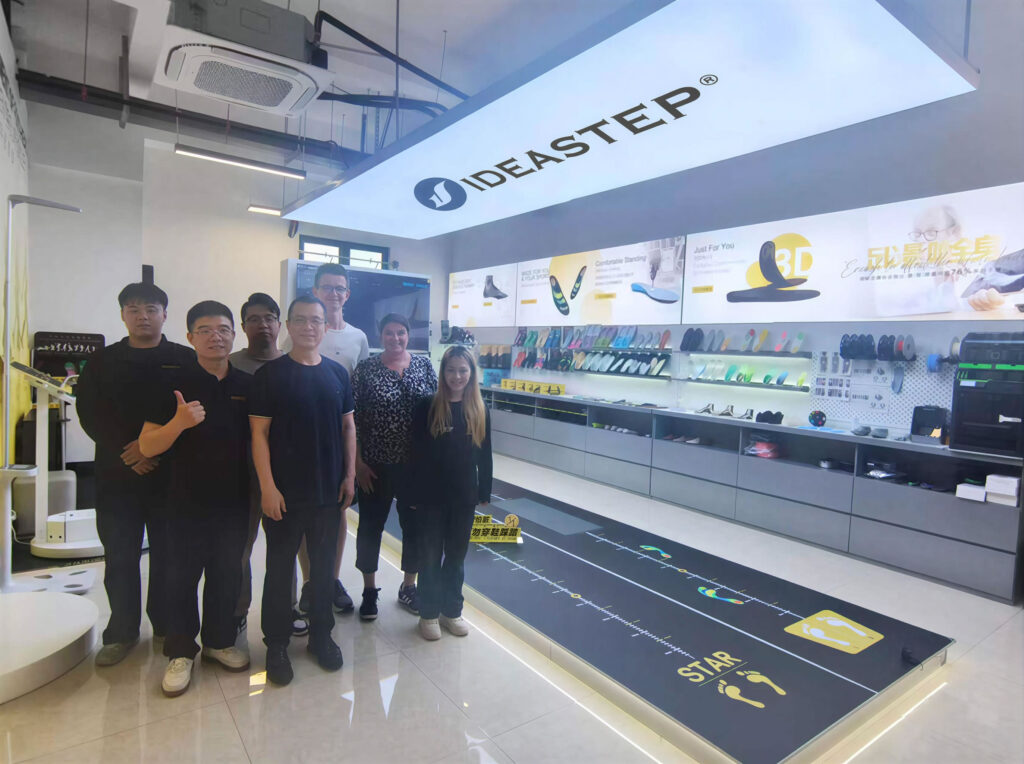
How Ideastep Supports Global Footwear Brands with Custom EVA Insole Solutions
As a specialized OEM and ODM manufacturer of functional and orthotic insoles, Ideastep has worked with footwear brands, foot care companies, medical organizations, and distributors across international markets.
Through years of industry experience, Ideastep provides:
- Custom EVA insole development
- Multi-density EVA material solutions
- Sports and medical insole design support
- Rapid prototyping services
- Mass production management
- Private label and custom packaging solutions
From concept development to large-scale manufacturing, Ideastep helps customers accelerate product launches and improve market competitiveness.
The Future of Custom EVA Insoles in Footwear Innovation
As demand for comfort and performance continues to grow, insoles are becoming increasingly important in footwear product development.
Several industry trends are expected to shape the future of custom EVA insoles:
- Growing demand for personalized footwear solutions
- Adoption of sustainable and eco-friendly materials
- Advancements in digital foot scanning technologies
- Greater integration of comfort and functional performance
- Increased focus on foot health and injury prevention
For footwear brands seeking long-term growth, custom EVA insoles are no longer optional accessories. They are becoming an essential component of product innovation and brand differentiation.
Conclusion
Today’s consumers are not simply buying footwear—they are investing in comfort, performance, and foot health.
Custom EVA insoles provide footwear brands with an effective way to enhance product quality, strengthen market positioning, and meet evolving consumer expectations. At the same time, selecting an experienced OEM manufacturing partner is critical to ensuring product consistency, development efficiency, and long-term business success.
For companies looking to expand into functional footwear categories, develop private-label products, or improve product value, partnering with a professional EVA insole manufacturer can create a strong foundation for sustainable growth.