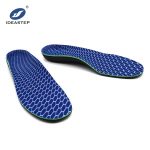
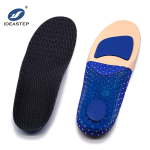
Modern orthotic fabrication continues to shift toward digital workflows, and 3D printed orthotic inserts have become a practical option for orthotic insole manufacturers looking to expand their custom product lines. We offer wholesale and OEM services for 3D printed orthotic inserts, working directly with fabrication labs, foot care clinics and orthotic brands to turn scanned foot data into functional, patient-ready inserts. Our process fits alongside traditional orthotic production so you can add digital custom products without overhauling your existing shop setup.

How 3D Printed Orthotic Inserts Fit Into Orthotic Manufacturing
Traditional orthotic fabrication relies on foam impressions, plaster casts and manual trimming, which takes skilled labour and consistent hands-on adjustment. 3D printed orthotic inserts replace much of that manual work with digital foot scans and CAD modeling. Once a foot scan is captured, your team can adjust arch height, shell rigidity and edge profiles before printing begins. This reduces human error and keeps geometry consistent across batches of patient-specific orthotics.
Our printing process supports varying shell stiffness. Stiffer structures work for high arch orthotic support and overpronation correction, while more flexible print profiles suit mild support or patients requiring softer pressure distribution. Each printed insert is designed to pair well with top layers including EVA orthotic sheet, foam or fabric cover materials your team already uses in assembly.
Our Wholesale And OEM Service For 3D Printed Orthotic Inserts
We operate as an OEM supplier for orthotic producers rather than selling direct to end users. Send us your scan files, STL models or finished design specs and our engineering team prepares files for printing. We handle post-processing including surface finishing, edge smoothing and quality checks before shipment. You receive inserts ready for bonding, covering and final fitting.
Our wholesale model supports small batch runs alongside larger production orders. This gives orthotic insole manufacturers room to test new orthotic designs or serve niche patient groups without committing to large inventory stock. We can also adjust surface texture, thickness and cut lines to match your brand’s existing orthotic insole OEM standards.
Key Applications For Our 3D Printed Orthotic Inserts
- Custom orthotics for patients with high arches and overpronation
- Rehabilitation orthotics used in physical therapy and podiatry clinics
- Patient-specific diabetic orthotic insoles with controlled pressure distribution
- Semi-rigid full-length inserts paired with TPU support components
- Custom orthotics requiring unique cut shapes via custom orthotic cutting workflows
Material Selection, Testing And Quality Assurance
Material choice directly impacts long-term performance of 3D printed orthotic inserts. We select medical-grade print polymers tested for fatigue resistance, dimensional stability and skin safety. Every production batch undergoes visual inspection, dimension verification and layer consistency checks. We track batch records so you can trace material lots for clinical applications.
We do not compromise on repeatability. When you reorder the same STL design, printed geometry stays consistent. This matters for clinics that need matching replacement inserts for returning patients, and factories scaling bulk OEM orders.
Collaborate On Your Custom 3D Printed Orthotic Project
Share your scan data, STL files or sample requirements and our team will review your project details to prepare a wholesale OEM quotation. We work closely with orthotic insole manufacturers to solve challenges around print accuracy, material selection and production lead times for your foot care product range.
Frequently Asked Questions
What file formats do you accept for OEM 3D printed orthotic inserts?
We mainly work with STL files exported from foot scanning software and orthotic CAD platforms. STEP files and physical samples are also acceptable if your team cannot provide a digital model. Our engineers will check geometry, wall thickness and print feasibility before starting production.
Can 3D printed orthotic inserts work with my existing orthotic assembly process?
Yes. Our printed inserts are made to bond easily with EVA orthotic sheet top layers, foam cushioning and fabric covers. Most labs and factories can drop them right into their current workflow without buying new specialized equipment.
What is your minimum order for wholesale OEM 3D printed orthotic inserts?
MOQ varies by project. We support small batch runs for clinics or limited product testing, alongside larger bulk orders for orthotic insole OEM brands. Reach out with your design details and target volume, and we will share exact MOQ and lead time for your case.
Are these 3D printed orthotic inserts suitable for diabetic orthotic insoles?
They can be used for diabetic orthotic insoles, subject to your clinical design specifications. We use medical-grade print polymers with low surface roughness, but the final pressure mapping and patient fitting remain the responsibility of your clinic or orthotic fabrication team.
How consistent is the geometry across repeated print runs?
Dimensional consistency is one of the main advantages of digital manufacturing. As long as you reuse the same STL file, each printed insert will match the original design. We still run batch checks to catch layer defects or warping before shipping.
Can you combine 3D printed shells with TPU support components in one finished insert?
Absolutely. Many of our customers pair 3D printed base shells with separate TPU support components to fine tune arch stiffness. This hybrid approach gives you more flexibility than printing the full rigid structure in one piece.
Related Post: 3D Printed Orthotics: Advanced Solutions for Foot & Ankle Health.