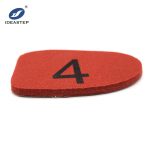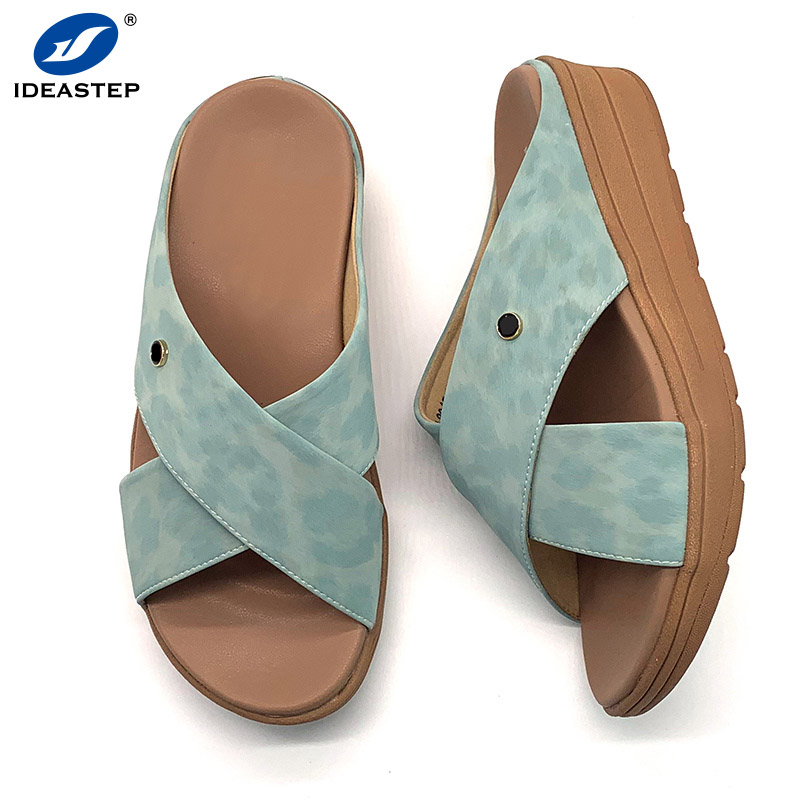
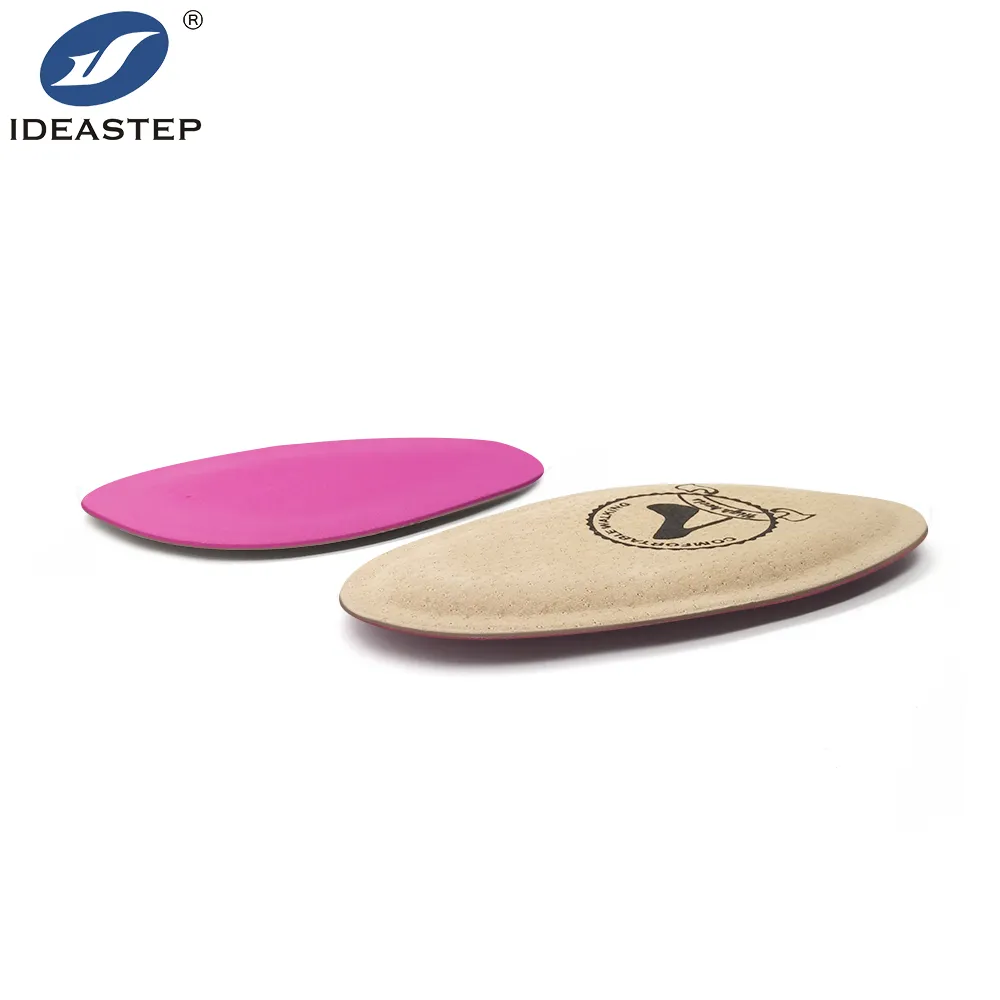
EVA insole heels are used in insoles where heel cushioning and controlled thickness are required. EVA is available in different hardness and density levels and can be molded or layered into different heel shapes.
The heel construction is normally developed together with the full insole and the target footwear. Heel thickness, heel cup shape, EVA specification, and the position of other cushioning materials all affect the finished product.
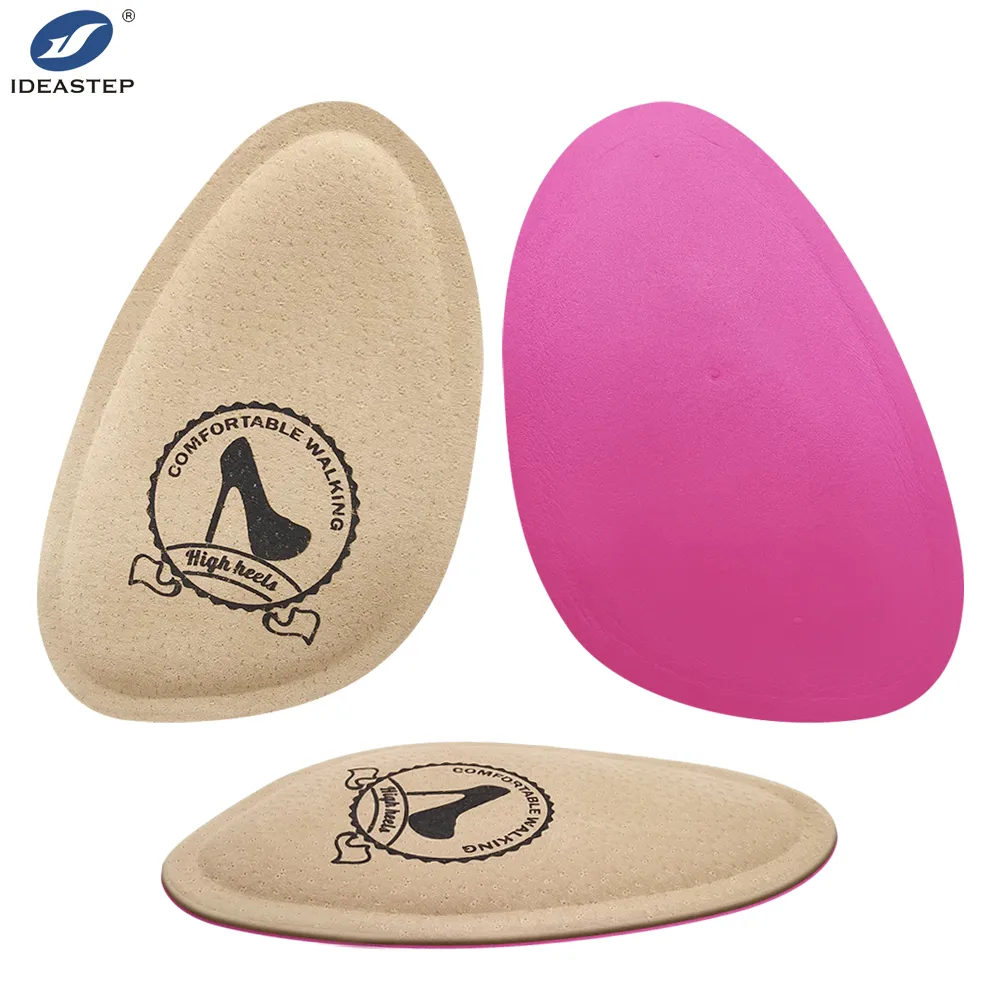
EVA Material for Heel Cushioning
EVA is commonly used in insoles because it is lightweight, flexible, and easy to process. Different hardness and density specifications can be selected for different product designs.
For example, a softer EVA can be used in the heel area when cushioning is the main requirement. A firmer EVA can be used where a more stable structure is preferred. EVA can also be combined with gel, PU, TPU, or other foam materials in a multi-layer construction.
The choice of material depends on the footwear, available space, required thickness, and intended use of the insole.
Heel Structure and Insole Thickness
Heel thickness and shape have a direct effect on how an insole fits inside a shoe. A heel cup can be added to create a more defined rearfoot structure, while different thickness zones can be used across the insole.
For shoes with limited internal space, excessive heel thickness can affect the fit. The heel section therefore needs to be considered together with the arch and forefoot rather than designed separately.
During sample development, checking the insole inside the target footwear can help confirm the overall thickness and fit before production.
Custom EVA Insole Heels for OEM
For an OEM project, development can be based on a product drawing, CAD file, existing design, or a set of specifications. The material and structure can then be discussed according to the intended footwear.
Specifications may include:
- EVA hardness and density
- Heel thickness and profile
- Heel cup depth and shape
- Arch height and structure
- Insole size and dimensions
- Gel or additional cushioning materials
- Top-cover material
- Logo and surface details
- Packaging requirements
These specifications can be confirmed during the sample stage and kept as the reference for subsequent production.
Sample Development and Production
Before bulk production, samples can be made according to the confirmed design. The sample can then be checked for dimensions, thickness, material combination, heel structure, surface finish, and fit inside the footwear.
If changes are required, the construction can be reviewed and adjusted before the final specifications are confirmed.
After sample approval, the confirmed specifications are used for bulk production. Keeping the material and dimensional requirements clear is particularly important for repeat orders.
Applications of EVA Heel Insoles
EVA heel constructions can be used in different types of footwear, including:
- Casual footwear
- Work shoes
- Sports footwear
- Walking shoes
- Comfort footwear
- Private-label footwear
The final construction varies according to the shoe design, available internal space, cushioning requirements, support structure, and target cost.
EVA Insole Heels for Wholesale Production
For wholesale production, the main considerations are usually the material specification, dimensions, heel structure, overall fit, and consistency between batches.
If you are working on an EVA insole heel project, you can contact us to discuss the construction and specifications. We can provide samples for evaluation and discuss the material and production options before the bulk order is confirmed.
Related Reading:
Custom Shoe Inserts for Heels for Orthotic Brands and Footwear Companies
What To Look For When Buying Comfortable Heels