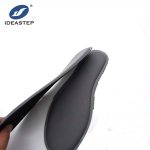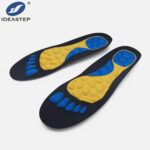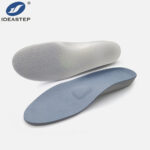
Manufacturing molded EVA insoles requires consistent control of heat, pressure, material, and mold design. These factors work together to determine the final shape, dimensions, and quality of the insole.
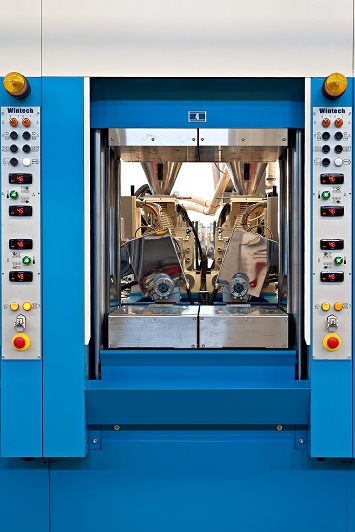
An EVA insole moulding machine is used to form EVA into a defined three-dimensional shape. For custom orthotic insoles, the molding process allows manufacturers to create features such as arch profiles, heel cups, rearfoot contours, and different thickness zones.
How EVA Insole Moulding Works
The basic process involves placing prepared EVA material into a mold and applying the required heat and pressure to form the desired shape. After molding, the insole is cooled and stabilized before trimming and other finishing processes.
The actual molding conditions depend on the EVA material, thickness, mold design, and machine configuration. These specifications need to be matched to the product being manufactured.
Why Use Molded EVA for Orthotic Insoles?
EVA is widely used in insole manufacturing because it is lightweight, flexible, and available in different hardness and density levels. This gives manufacturers room to develop products with different cushioning and support characteristics.
Molding also provides better control over the insole shape. Arch support, heel cups, rearfoot contours, and variable-thickness areas can be incorporated directly into the mold instead of being created from a flat sheet.
Machine and Mold Selection
The machine and mold should be considered together. The equipment needs to suit the EVA material and the required product dimensions, while the mold determines much of the finished insole’s geometry.
Important factors include EVA hardness and thickness, mold size, product shape, heating and pressure requirements, and expected production volume.
From Custom Design to Finished Insole
Custom orthotic insole production can start with a sample, technical drawing, CAD file, or basic product specification. The design is then translated into a mold suitable for production.
Samples should be checked before bulk manufacturing to confirm dimensions, thickness, shape, fit, and surface finish. Once the sample is approved, the confirmed specifications can be used for mass production and repeat orders.
OEM and Wholesale Production
For OEM projects, molded EVA allows the insole to be developed around a specific footwear design rather than relying only on standard shapes.
Depending on the project, specifications may include size, thickness, EVA hardness and density, arch profile, heel structure, top-cover material, logo, and packaging. EVA can also be combined with TPU, PU, or other materials when additional structural or cushioning features are required.
For wholesale production, keeping these specifications consistent is important for maintaining the same product quality across different batches.
What B2B Buyers Should Consider
When choosing an EVA insole moulding machine, it is worth looking at the complete production process rather than the equipment alone. Material compatibility, mold development, sample production, finishing, and quality control all affect the final product.
Before starting a project, buyers can provide an existing sample, drawing, or product specifications. This gives the manufacturer a clearer basis for evaluating the molding process and developing the production setup.
EVA Insole Moulding Machine for Custom Production
A suitable molding setup provides a practical way to produce shaped EVA insoles for different footwear applications, from everyday and comfort footwear to work, sports, and orthotic products.
If you are looking for an EVA insole moulding machine for custom or wholesale production, feel free to contact us to discuss your product requirements, molding process, and production needs.
Related Articles: Eva Insole Machine.