In the global footwear industry, EVA (Ethylene Vinyl Acetate) has become one of the most widely used sole materials due to its balance of lightweight performance, cushioning comfort, and manufacturing flexibility. For OEM and ODM shoe brands, EVA plays a critical role in product positioning, cost control, and end-user experience.
This article provides a practical guide for B2B buyers looking to source EVA sole materials, covering real manufacturing considerations, material selection strategies, customization options, and common production challenges that impact product quality at scale.
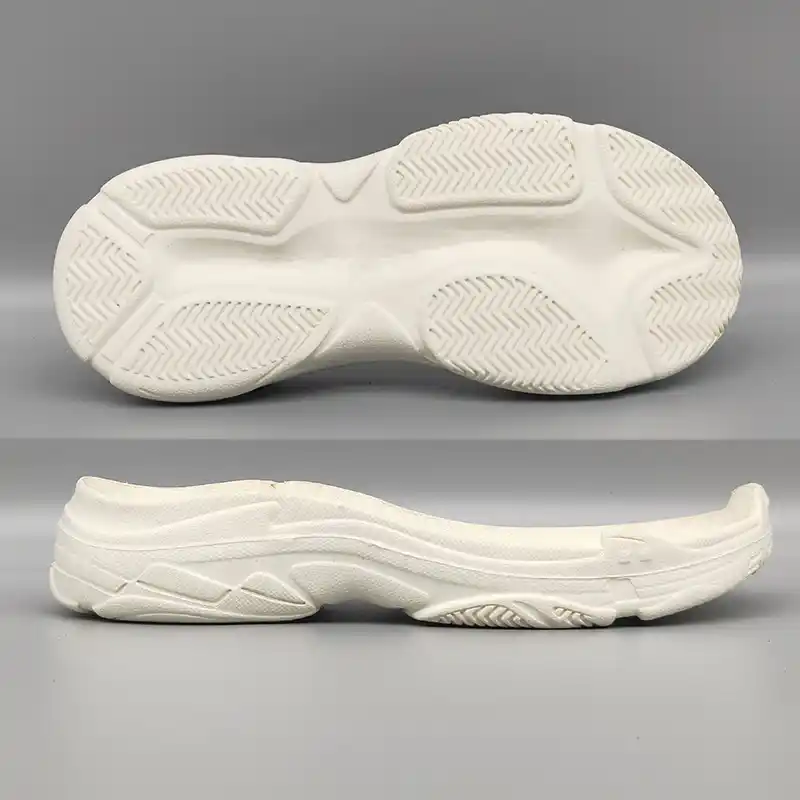
Why EVA Sole Material Is Widely Used in Footwear Manufacturing
EVA is used across almost every footwear category because it offers a practical balance between performance and cost. It is especially common in sports shoes, casual footwear, children’s shoes, and work shoes where comfort and weight reduction are key priorities.
Unlike rigid materials, EVA provides a soft cushioning effect that improves walking comfort while reducing overall shoe weight. For brands, this allows greater flexibility in product design and pricing strategy.
From a market perspective, EVA remains popular not because it is the most advanced material, but because it is the most commercially balanced solution for mass production footwear.
What Is EVA Sole Material?
EVA is a foam-based polymer material made from ethylene and vinyl acetate. By adjusting its formulation and foaming process, manufacturers can control its density, hardness, and elasticity.
In footwear applications, EVA is mainly used in midsoles and outsoles to provide cushioning and structural support.
- Cushioning: absorbs impact during walking and running
- Lightweight structure: reduces overall shoe weight
- Flexibility: adapts to foot movement for better comfort
However, EVA performance is highly dependent on formulation quality, density control, and production consistency.
Key Advantages of EVA Sole Material
Lightweight Structure for Better Performance
EVA significantly reduces footwear weight compared to rubber or PU. In sports and daily wear shoes, this directly improves comfort and reduces fatigue during long-term use.
Reliable Shock Absorption
The foam structure of EVA helps absorb ground impact, especially on hard surfaces. This makes it suitable for walking shoes, running shoes, and occupational footwear where repetitive impact is common.
Flexible OEM & ODM Design Capability
EVA is easy to mold and customize, allowing manufacturers to adjust:
- Density levels for softness or support
- Color matching based on brand requirements
- Tread patterns for grip and design identity
This flexibility is one of the main reasons EVA is preferred in OEM shoe development.
Cost Efficiency in Mass Production
Compared to PU and rubber, EVA offers lower production costs and faster processing cycles. This makes it suitable for brands targeting both entry-level and mid-range footwear markets.
EVA Sole Applications in Different Shoe Categories
Sports and Running Shoes
EVA is widely used in athletic footwear due to its lightweight cushioning. In performance models, EVA is often combined with TPU or rubber inserts to improve stability and durability.
Casual Footwear
For everyday shoes, EVA provides a soft walking experience that enhances comfort during long hours of use.
Children’s Shoes
EVA’s flexibility and shock absorption help protect developing feet, making it suitable for lightweight and safe children’s footwear.
Work and Safety Shoes
For workers who stand for long periods, EVA reduces foot pressure and improves long-term comfort, especially in service and industrial environments.
EVA vs Other Sole Materials
| Material | Weight | Cushioning | Durability | Cost |
|---|---|---|---|---|
| EVA | ★★★★★ | ★★★★☆ | ★★★☆☆ | ★★★★★ |
| PU | ★★★☆☆ | ★★★★★ | ★★★★☆ | ★★☆☆☆ |
| Rubber | ★★☆☆☆ | ★★★☆☆ | ★★★★★ | ★★★☆☆ |
EVA performs best in lightweight comfort and cost efficiency, while PU and rubber outperform it in durability and structural stability. In many OEM projects, hybrid constructions are used to balance these properties.
OEM & ODM Customization Options for EVA Soles
Brand Logo Integration
Logos can be embossed, debossed, or engraved directly onto the sole surface to enhance brand visibility.
Color Matching
EVA soles can be produced in custom colors using Pantone standards, ensuring consistency across product lines.
Density Adjustment
Different densities can be engineered for specific footwear applications:
- Soft EVA for comfort shoes
- Medium EVA for casual and sports shoes
- High-density EVA for work and performance footwear
Outsole Pattern Design
Custom tread patterns improve grip performance while also supporting brand differentiation in the marketplace.
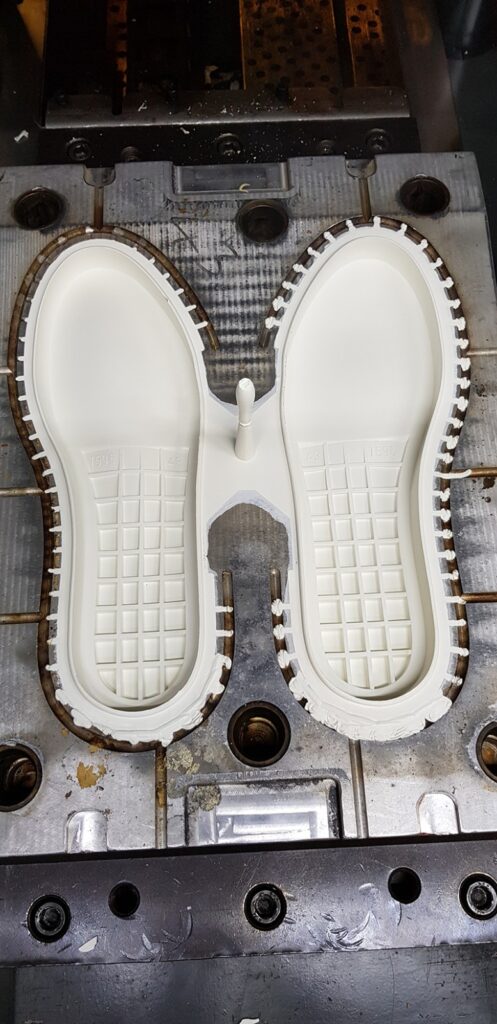
How EVA Soles Are Manufactured
- Material selection: choosing EVA resin and additives
- Formulation design: adjusting hardness and density
- Foaming process: creating lightweight cellular structure
- Molding: shaping through compression or injection molds
- Trimming: refining edges and dimensions
- Quality control: testing density, hardness, and compression resistance
- Packaging: preparing for safe international shipment
Common Issues in EVA Sole Production
- Compression set: long-term use may cause partial deformation
- Batch variation: inconsistent mixing can affect hardness
- Temperature sensitivity: performance may change in extreme heat or cold
These issues are usually controlled through proper formulation design and strict production quality systems.
How to Select the Right EVA Density
- Soft EVA: suitable for slippers, casual comfort shoes, children’s footwear
- Medium EVA: ideal for daily wear and light sports shoes
- High-density EVA: used in running shoes, work shoes, and supportive footwear
Incorrect density selection is one of the most common causes of performance issues in mass production, making supplier expertise essential.
Key Considerations for B2B Buyers
Material Consistency
Stable hardness and density across production batches is critical for brand quality control.
Compression Resistance
Good EVA should maintain shape under repeated pressure without collapsing too quickly.
Certification Compliance
International certifications such as REACH, RoHS, and SGS ensure product safety and export compliance.
Production Capacity
Manufacturers must be able to handle large-scale orders without sacrificing quality consistency or delivery timelines.
Conclusion
EVA sole material remains one of the most practical and widely used solutions in OEM and ODM footwear production. Its balance of lightweight performance, cushioning comfort, and cost efficiency makes it suitable for a wide range of shoe categories.
However, successful application depends heavily on proper density selection, material formulation, and manufacturing control. For global B2B buyers, choosing an experienced supplier is not only about pricing, but also about ensuring long-term product stability and consistent quality in mass production.
For more information on EVA, visit this page:https://www.aideastep.com/eva/