Many people first encounter “arch support” thinking it’s just a way to make their feet more comfortable. However, in sports medicine and podiatry, the arch of the foot is actually the starting point of the entire lower limb kinetic chain. Its stability directly affects the knees, hips, and even overall posture and gait.
People who experience chronic foot pain, knee discomfort, or fatigue while running often find that the root cause isn’t the knee or the shoes alone—it starts from the foot.
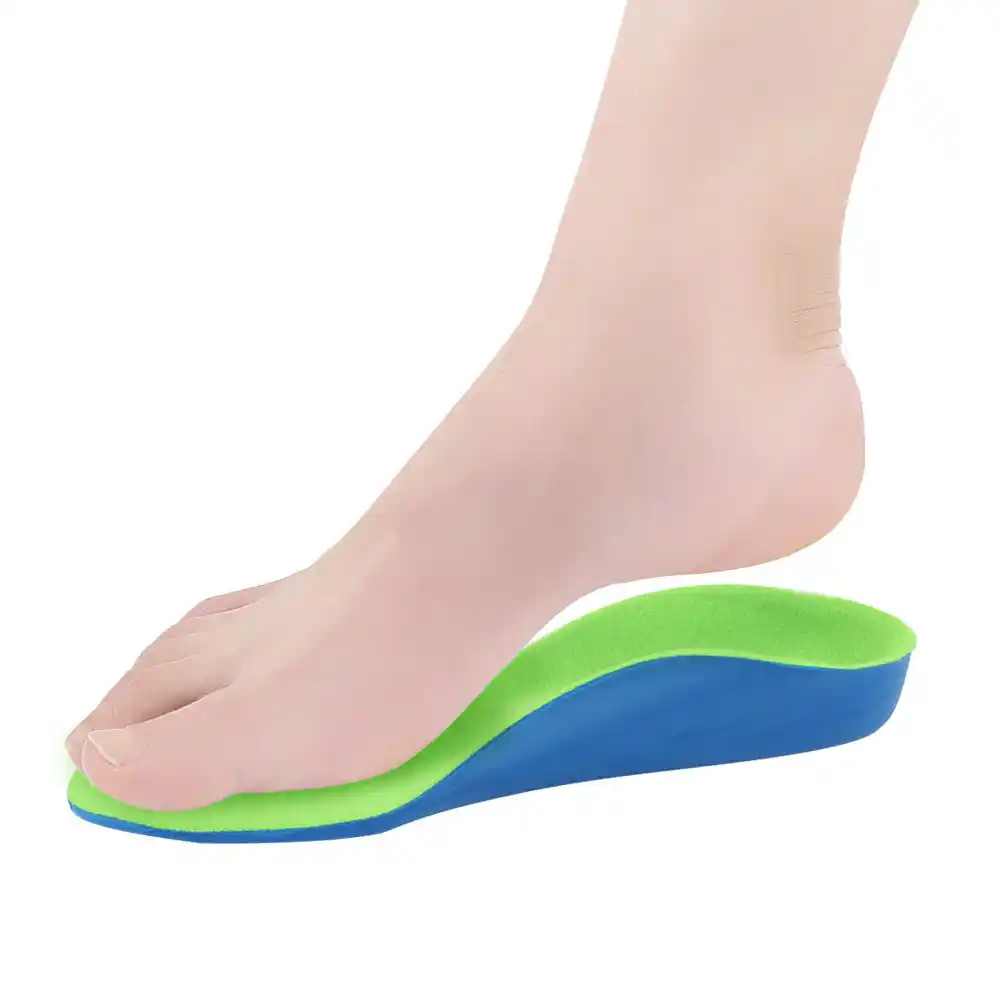
1. The Role of the Foot Arch in the Human Body
The human foot is not flat. It forms a natural arch, supported by bones, ligaments, and muscles. Common arch types include:
- Neutral Arch
- High Arch
- Flat Feet
The arch plays three critical roles during movement:
- Absorbing impact from the ground, especially during walking or running
- Distributing pressure to prevent localized overload
- Providing elastic rebound during push-off
If the arch is stable, these mechanisms function smoothly. But if the arch collapses or lacks support, problems often appear elsewhere in the lower limb.
2. How Foot Problems Affect the Knees
The lower limb functions as a continuous force transmission chain:
Foot → Ankle → Tibia → Knee → Femur → Hip
When arch support is insufficient, overpronation (excessive inward rolling of the foot) commonly occurs:
- The arch collapses inward
- The ankle rolls inward
- The tibia rotates inward
This seemingly minor misalignment has a direct effect on the knees. The knees are forced into a mild valgus position, sometimes called an “X-shaped” tendency.
The main concern is not appearance but altered joint loading:
- Increased pressure on the inner knee
- Patellar tracking may deviate
- Uneven cartilage stress over time
Many runners or individuals with stair-related knee discomfort experience symptoms caused by this mechanism.
3. Why the Hips and Lower Back Are Also Affected
The body doesn’t correct a single joint in isolation. When the knees are stressed, the hips compensate:
- Hip may rotate slightly inward or outward
- Pelvic stability decreases
- One side of the musculature may become chronically tight
Over time, this can lead to:
- Lower back soreness after standing
- Asymmetrical gait
- One leg becoming more easily fatigued
- Unstable running patterns
These changes usually develop gradually and are magnified from foot instability.
4. Common Physical Feedback from Insufficient Arch Support
When the arch lacks support, people often notice:
- Foot fatigue or discomfort, especially in the sole
- Pain or stiffness in the first steps of the morning
- Inner knee soreness after walking or running
- Calf tightness or fatigue
- Lower back discomfort after prolonged standing
These symptoms may seem unrelated, but they often originate from insufficient foot stability.
5. How Arch Support Changes the Kinetic Chain
Arch support, such as orthotic insoles, doesn’t forcibly “correct” the legs—it provides a stable base, allowing the foot to return closer to its natural alignment.
The effects usually occur on three levels:
- Reduce overpronation: The ankle no longer rolls inward excessively.
- Improve knee loading: Tibial rotation decreases, reducing the valgus tendency.
- Enhance standing and walking stability: Less wobbling during each step and lower energy expenditure.
The first noticeable change for most people is not “better posture,” but:
“Walking feels less tiring, and the soles feel more stable.”
6. Who Benefits Most from Arch Support?
Arch support is particularly beneficial for:
- Individuals with flat feet or low arches
- People who stand for long periods (teachers, healthcare workers, retail staff)
- Runners or athletes involved in impact sports
- Those with recurring knee discomfort
- People who feel fatigue or instability while walking
Especially for people combining running and prolonged standing, foot pressure accumulation is more significant.
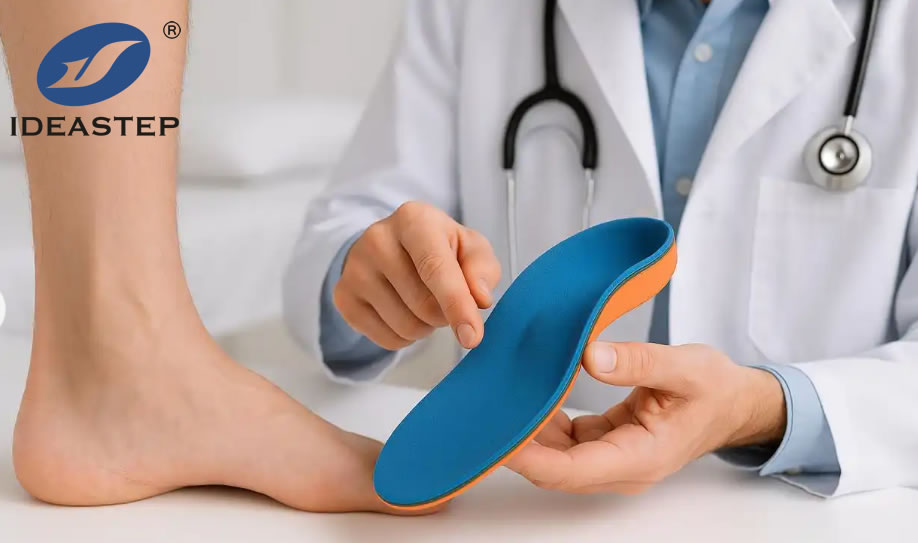
7. How to Choose the Right Arch Support
Arch support is not about being as rigid as possible, nor is a single type suitable for everyone. Key considerations include:
1. Matching Arch Height
Different feet have different arch structures. The support height must match the individual, or it may cause discomfort.
2. Support Firmness
- Soft support: Daily commuting, comfort first
- Medium support: Daily use + light exercise
- Firm support: Sports or correction needs
3. Usage Scenario
Different shoes (running, dress, work shoes) require different insoles for proper fit.
8. Common Misconception: Arch Support is Not a Leg Corrector
Many people mistakenly believe that arch support can “fix leg shape.” In reality, it’s closer to:
“A stabilizing foundation, not a forced correction device.”
Its role is to reduce improper loading and let the body move more naturally, not directly change bone structure.
9. Conclusion: Why Arch Support Affects More Than Just the Feet
The foot arch is the starting point of the lower limb kinetic chain. When it’s stable:
- Ankles are more neutral
- Knee loading is more balanced
- Hip compensation decreases
- Overall gait becomes more natural and efficient
Thus, arch support influences not only comfort but also the efficiency and stability of the entire lower limb during movement.
Related product links: EVA arch support