For footwear wholesalers and brand operators, a well-engineered insole is a critical component that shapes product differentiation and reduces downstream production headaches. Off-the-shelf inserts rarely align with shoe last geometry, biomechanical specs or mass assembly workflows. Drawing on hands-on experience supporting hundreds of B2B wholesale partners from prototype validation to container shipments, this article breaks down how custom shoe inserts resolve manufacturing bottlenecks across multiple footwear categories.
Common Pain Points Footwear Wholesalers Face When Sourcing Inserts
Most wholesale buyers encounter consistent sourcing and production hurdles during insole procurement. These are field-tested issues we address regularly at the sample and pre-production stage.
Generic insole templates lack universal fit. Each shoe last carries unique internal volume, toe box contour and heel pocket dimensions. Standard prefabricated inserts require extensive manual trimming, slowing assembly lines and creating inconsistent fit quality across production batches. This inconsistency leads to higher return rates and extra after-sales workload for wholesalers.
Basic comfort inserts cannot deliver targeted biomechanical performance. When sourcing functional footwear lines for flat feet, high arches or extended standing use, standard foam fails to provide reliable heel stabilization or metatarsal pressure redistribution. This limits your ability to market premium functional SKUs to retailers and clinical resellers.
Material options from many suppliers force undesirable trade-offs. Lightweight casual lines cannot accommodate thick rigid orthotics. Safety footwear needs sustained compression resistance that soft memory foam cannot maintain. Many manufacturers only offer fixed foam hardness grades, restricting your product portfolio expansion.
High minimum order quantities block new line testing. Small-batch seasonal collections, medical footwear runs and limited stock pilot lines demand low-MOQ sampling without locking wholesalers into large, slow-moving inventory commitments.
Factory assembly compatibility is frequently overlooked. Some orthotic designs feature thick edges or poor lamination properties. These inserts may delaminate during lasting or create unwanted bulging inside finished shoes, triggering retailer complaints.
Custom Insole Specifications For Different Footwear Product Lines
A widespread industry misconception is that a single orthotic profile suits all footwear ranges. Custom inserts must be engineered to match product positioning and internal shoe volume for each wholesale line.
Casual and Everyday Footwear Lines
Casual SKUs prioritize low weight and subtle arch support. We design low-profile EVA inserts with mild arch contours. Key manufacturing requirements include precision CNC cutting matched directly to shoe last outlines. The insert preserves shoe internal volume while delivering all-day fatigue reduction for end users.
Athletic and Performance Footwear Lines
Sports inserts focus on shock absorption, metatarsal cushioning and dynamic stability. Blended EVA or PU foams are calibrated for rebound and compression set resistance. The profile mitigates repetitive impact for training and running footwear. Breathable top covers are integrated as an optional upgrade to extend product lifespan.
Safety and Work Footwear Lines
Work boot inserts must retain structural integrity under sustained static load. The core requirement is resistance to permanent compression. Denser foam composites with reinforced heel cups support wearers during 8+ hour standing shifts, reducing plantar fascia stress without long-term collapse.
Medical and Therapeutic Footwear Lines
Orthopedic and rehab footwear requires biomechanically precise inserts built from 3D foot scan datasets. Arch height, heel pitch and pressure zones are calibrated for flat feet, high arches and varied gait patterns. For wholesale partners supplying podiatry and physical therapy channels, we provide traceable biomechanical documentation to support product claims.
Dress and Formal Footwear Lines
Formal footwear has tight internal space constraints. Our custom dress shoe orthotics use thin, edge-skived profiles. Arch support remains low-profile and concealed. Finished inserts fit slim shoe lasts without toe crowding or altering the shoe’s external silhouette.
Custom Insole Production Solutions Optimized For Wholesale & Factory Workflows
Custom orthotic manufacturing should integrate seamlessly into your existing production pipeline instead of adding operational complexity for your supply chain.
Last-Aligned Design and Digital Modeling
Our workflow starts with your shoe last files, 2D technical drawings or physical last samples. We merge shoe geometry with foot pressure data and 3D scan outputs to build CAD models. This guarantees accurate insert fit before moulding or cutting commences.
Material Selection and Performance Tuning
We maintain a full material library including EVA, PU, memory foam, cork and composite top fabrics. Hardness, thickness and laminated layers are adjusted to your specs. All material combinations are tested for weight, durability and compliance with REACH and RoHS standards required for EU and North American wholesale distribution.
Prototyping Methods: CNC Cutting and 3D Printing
For fast iteration, CNC milling produces precise physical samples directly from CAD data. Complex medical orthotics use 3D printed prototypes to validate biomechanical performance before mould investment. This cuts costly mould rework in later production phases.
OEM and ODM Customization For Private Label
Wholesale clients can customise top cover fabrics, embossed or printed logos, surface textures and colourways. Under ODM collaboration, we co-develop new insole profiles aligned with your target market’s foot health needs. OEM projects follow your existing design specifications for private label bulk production.
Flexible MOQ for Sampling and Bulk Orders
We separate low-volume sampling from mass manufacturing. This setup lets wholesalers and clinic distributors validate small runs for market feedback before scaling to full container orders.
Balancing Orthotic Performance Against Shoe Design Constraints
A core capability of custom insole engineering is balancing biomechanical function with fixed internal shoe volume.
Arch height is calibrated to available shoe cavity space. An aggressive orthotic arch will not work if it forces upper bulging. Our engineering team adjusts arch geometry rather than simply reducing overall support.
Edge skiving is critical for streamlined factory assembly. We taper insert edges into feathered thin profiles. This removes ridges inside the shoe and improves bonding during the lasting process.
Pressure mapping defines targeted relief zones. Heel and metatarsal pads are positioned precisely to reduce peak pressure without creating new pressure hotspots.
Surface finishes are matched to shoe lining materials. Anti-slip or breathable top textiles are selected so inserts stay anchored and do not shift inside finished footwear.
B2B Partnership Workflow From Sample Request to Bulk Shipment
Our process is built for predictable, transparent collaboration with footwear wholesalers and manufacturing partners.
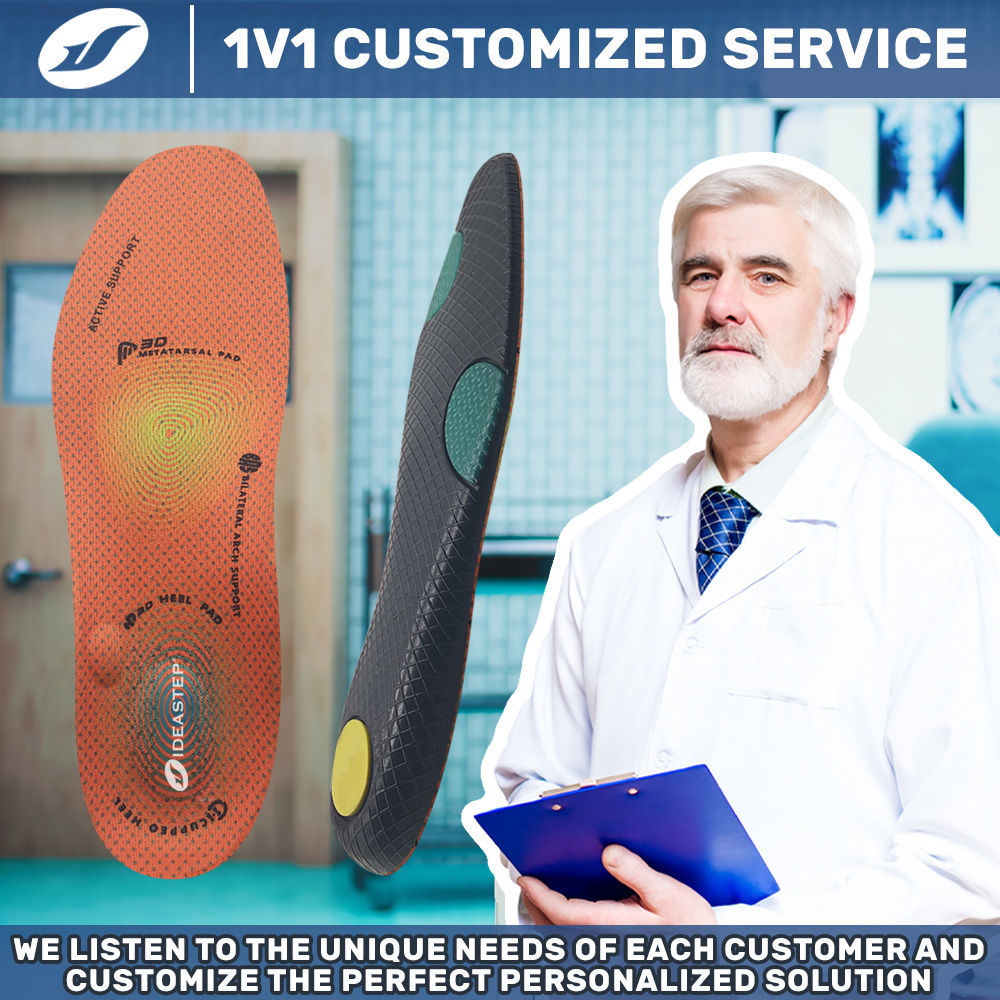
- Requirement Discovery: We collect shoe last dimensions, target segment foot conditions, material specs, budget and compliance requirements.
- Prototype Development: Digital modelling and sample fabrication. Physical samples are supplied for your internal assembly and performance testing.
- Pilot Batch Production: Small production runs validate assembly compatibility, dimensional tolerance consistency and QC procedures.
- Mass Manufacturing: Stable serial production with in-line QC and final random inspection prior to shipment.
- Ongoing Technical Support: Our team supplies biomechanical datasheets, test certificates and design adjustments for future footwear SKUs.
Frequently Asked Questions From Footwear Wholesale Buyers
What is the turnaround time for custom insole sampling?
Standard prototype lead time ranges from 5 to 10 working days depending on design complexity. 3D printed medical orthotic samples may need extra time for biomechanical review.
Can you develop inserts using only our shoe last data?
Yes. We create custom inserts using shoe last STL files, technical drawings or physical last samples. Full patient foot scans are not required for general consumer footwear lines.
Can you provide compliance documentation for EU and US markets?
We issue REACH, RoHS and relevant material test certificates per batch to support wholesale import into European and North American markets.
Do you supply semi-finished blanks if our team prefers final cutting in-house?
We offer semi-finished orthotic blanks for wholesale partners who want to complete trimming and finishing within their own production facility.
Request Your Custom Insole Technical Proposal and Samples
If you are a footwear wholesaler, brand operator, podiatry clinic distributor or shoe factory sourcing OEM or ODM custom orthotic inserts, share your shoe specifications and project scope. Our orthotic engineering team will prepare a tailored technical proposal and sample plan aligned with your footwear manufacturing requirements.
Related Reading: Ideastep Custom orthopedic sole inserts for business for shoes maker.