EVA (Ethylene Vinyl Acetate) foam is one of the most widely used polymer materials in footwear, orthotics, sports equipment, and packaging.
As a result, it is valued for being lightweight, flexible, and cost-efficient.
At the same time, however, it also presents certain limitations that make it less suitable for some high-performance applications.
Given this balance of strengths and weaknesses, a common question naturally arises: is EVA material good or bad?
In reality, the more accurate answer is that it depends on how the material is formulated and where it is used.
To better understand this, this article takes an industrial and manufacturing perspective to break down EVA foam, including its structure, performance characteristics, advantages, and limitations.
What Is EVA Foam Material?
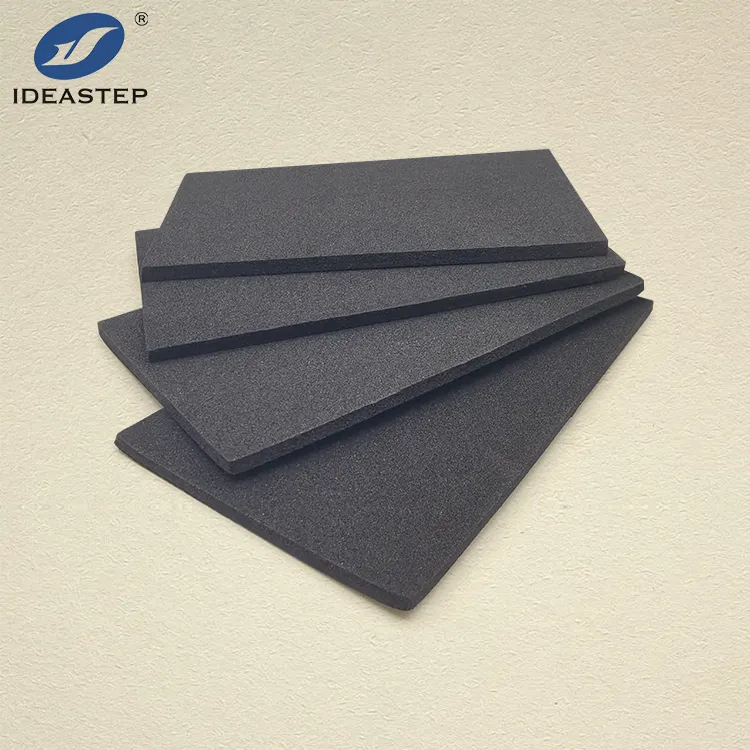
EVA (Ethylene Vinyl Acetate) is a copolymer made from ethylene and vinyl acetate. Through foaming and molding processes, it becomes a soft, flexible, and shock-absorbing material widely used in commercial and industrial products.
In practice, EVA foam can be engineered with different:
- Density levels
- Hardness grades
- Rebound performance
- Compression resistance
Therefore, it is suitable for applications ranging from soft cushioning layers to structural midsole components in footwear systems.
Key Properties of EVA Foam
EVA is not a single fixed material—instead, it is a tunable foam. Its performance, therefore, depends heavily on formulation and processing conditions.
1. Lightweight Structure
EVA foam has a low density, typically ranging from 0.10 to 0.30 g/cm³.
As a result, it is significantly lighter than rubber and many polyurethane foams. Consequently, it is widely preferred in lightweight footwear and cushioning applications.
2. Shock Absorption & Energy Return
EVA compresses under pressure and rebounds quickly, helping absorb impact forces during walking or running. Because of this, it is widely used in:
- Athletic footwear midsoles
- Orthotic insoles
- Protective padding systems
3. Closed-Cell Water Resistance
In most cases, EVA foams feature a closed-cell structure. As a result, they resist water absorption and perform reliably in humid or outdoor environments.
4. Flexible Manufacturing Compatibility
In addition, EVA can be easily cut, laminated, thermoformed, or molded. This makes it highly adaptable for OEM and ODM production.
Advantages of EVA Material
EVA foam is widely adopted across industries because of its balanced performance profile.
1. Comfortable Cushioning Performance
EVA provides soft yet stable cushioning, thereby reducing pressure on joints and improving walking comfort in footwear and insoles.
2. Cost-Effective for Mass Production
Compared to PU or TPU-based materials, EVA generally offers lower production costs. At the same time, it still maintains acceptable performance for many standard applications. As a result, it becomes an ideal choice for large-scale manufacturing where cost efficiency and production stability are key priorities.
3. Versatile Applications
EVA is used across a wide range of industries, including:
- Shoe midsoles and insoles
- Sports protection gear
- Packaging inserts
- Medical cushioning components
- Industrial shock absorption pads
4. Easy Customization
Moreover, manufacturers can adjust EVA density, hardness, and rebound rate to meet different product requirements—from soft comfort layers to firmer support structures.
Limitations of EVA Foam
1. Compression Set Over Time
One of the main limitations of EVA is compression set, meaning it may gradually lose thickness and cushioning after prolonged use under heavy load.
2. Heat Sensitivity
In addition, EVA can soften or deform under high temperatures, which limits its use in heat-intensive environments.
3. Moderate Durability
Compared to TPU or high-grade polyurethane foams, EVA generally shows lower abrasion resistance. As a result, it may wear out faster in demanding or high-stress applications.
4. Sustainability Concerns
Finally, because EVA is petroleum-based and not biodegradable, it raises environmental concerns in sustainable product development.
EVA Foam in Footwear and Orthotic Insoles
EVA plays a central role in modern footwear and orthopedic insole systems.
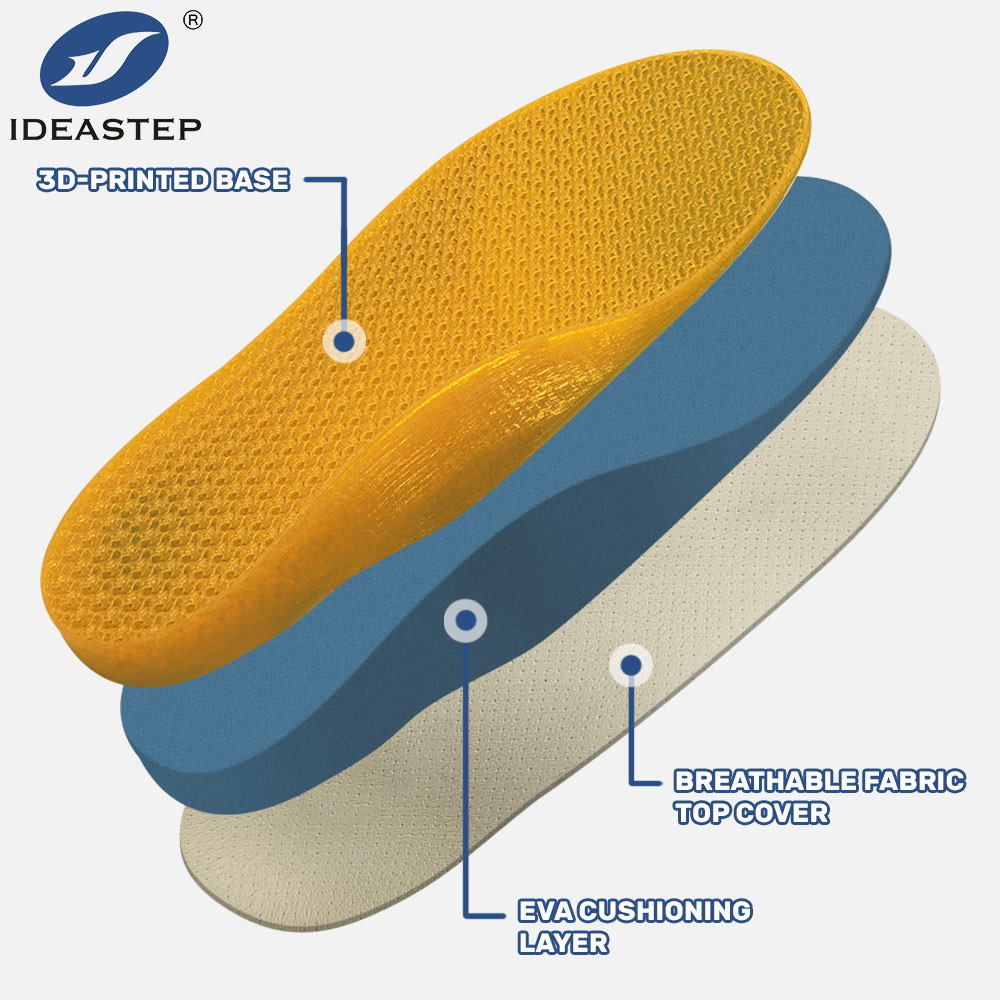
In these applications, EVA is often engineered in multi-layer or multi-density structures:
- Soft EVA layers: improve cushioning and pressure relief
- Medium-density EVA: balance comfort and stability
- Firm EVA layers: provide arch support and structural control
Additionally, in orthotic design, EVA is frequently combined with:
- PU foam for durability
- Gel pads for localized pressure relief
- Thermoplastic support shells for biomechanical correction
This hybrid approach helps enhance performance while compensating for EVA’s inherent limitations.
EVA Foam Density and Performance Relationship
In manufacturing practice, EVA performance is closely linked to density and hardness:
- Lower density EVA → softer cushioning, lower durability
- Medium density EVA → balanced comfort and support
- Higher density EVA → firmer structure, greater support
However, compression set resistance and rebound performance can vary significantly. This variation is mainly influenced by formulation quality and foaming technology used during production.
EVA vs PU, Rubber, and TPU
EVA vs PU Foam
- EVA: lighter, more water-resistant, lower durability
- PU: better long-term cushioning, heavier, higher cost
EVA vs Rubber
- EVA: softer, lighter, higher shock absorption
- Rubber: more durable, better traction, heavier
EVA vs TPU
- EVA: more comfortable, cost-efficient, less wear-resistant
- TPU: highly durable, elastic, suitable for high-performance use
Is EVA Foam Safe and Reliable?
EVA is generally considered safe for both consumer and industrial use.
Specifically, it is:
- Non-toxic in finished form
- Free from heavy metals in standard formulations
- Widely used in footwear and medical-related applications
- Approved for skin-contact products
However, while EVA is generally safe, material safety and durability still depend heavily on manufacturing quality and formulation control. In particular, even small variations in composition or processing conditions can significantly affect final performance.
Industrial Perspective: Why EVA Is Still Widely Used
From a manufacturing standpoint, EVA remains one of the most practical materials due to its balance of:
- Processing efficiency
- Cost control
- Design flexibility
- Wide application range
In footwear and orthotic production, EVA is often used as a base material system. In most cases, rather than functioning as a standalone solution, it is combined with other materials to achieve better performance balance and structural support.
As a result, high-performance products typically rely on engineered combinations of EVA with PU, TPU, or structural reinforcements to achieve improved biomechanical outcomes.
So, Is EVA Material Good or Bad?
EVA foam is neither universally good nor bad. Instead, its value depends on the application context.
EVA is a strong choice for:
- Footwear midsoles and insoles
- Orthotic cushioning systems
- Sports and protective equipment
- Lightweight industrial padding
EVA is less suitable for:
- Heavy-duty mechanical environments
- Long-term high-load applications
- High-temperature conditions
Overall, in most consumer and orthopedic applications, EVA remains one of the most practical and cost-effective foam materials available today.
Final Thoughts
EVA foam continues to play a key role in global manufacturing because of its unique balance between comfort, weight, and cost efficiency. At the same time, while it does have clear limitations in durability and heat resistance, its overall versatility ensures that it remains a core material in the footwear and orthotic industries.
From a manufacturing perspective, the real performance of EVA depends not only on the material itself but also on formulation design, density control, and engineering structure. In other words, small changes in processing and composition can significantly affect its cushioning, rebound, and long-term durability.
As a result, when EVA is properly engineered and combined with the right production techniques, it becomes more than just a foam material—it functions as a performance-driven material system capable of supporting a wide range of industrial and medical applications.
Related Articles: What are the EVA materials used for?.