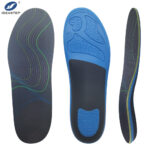
Semi rigid orthotics combine structural support with controlled flexibility. They are commonly used in orthotic products where a balance between stability, cushioning and movement is required.
For manufacturers and wholesale buyers, the performance of these products depends on several factors, including shell material, thickness, arch geometry and cushioning layers. Understanding how these elements work together helps when developing products for different footwear and support requirements.
1. Materials Used in Semi Rigid Orthotics
Material selection affects the flexibility, durability, weight and support characteristics of a semi rigid orthotic.
| Material | Main Properties | Typical Application |
|---|---|---|
| PP (Polypropylene) | Lightweight, relatively rigid and thermoformable | Support shells |
| TPU | Flexible, durable and resistant to repeated bending | Support structures and reinforcement |
| EVA | Lightweight with adjustable hardness and cushioning | Base and cushioning layers |
| PU | Elastic with good shock absorption | Heel and forefoot cushioning |
| Poron | Soft cushioning and compression recovery | Cushioning layers |
| Polyester / Nylon | Durable and suitable for surface finishing | Top covers |
PP is commonly used for support shells because its thickness and shape can be adjusted during product development. TPU provides an alternative when greater flexibility and repeated bending performance are required.
EVA and PU are often added to improve cushioning. Their hardness and thickness should be selected carefully so that cushioning does not compromise the supporting structure.
2. Structural Design and Key Components
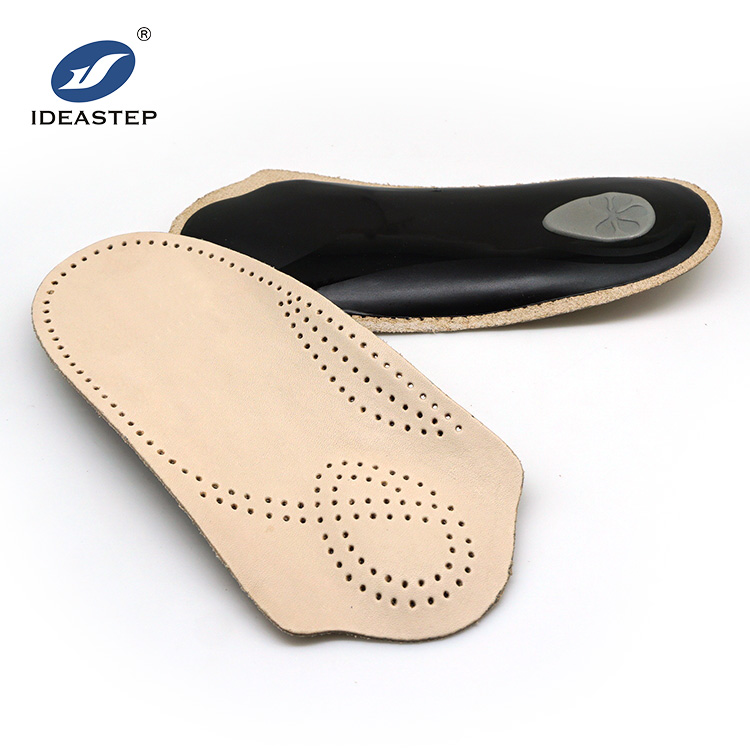
Most semi rigid orthotics use a support shell combined with one or more cushioning layers and a top cover.
Support Shell
The shell provides the main structural support and is usually made from PP or TPU. Its performance depends on material hardness, thickness and shape.
Important design factors include arch height, heel cup depth, shell coverage and forefoot flexibility. These details influence how the orthotic responds to pressure and movement.
Cushioning Layer
EVA, PU and Poron are common choices. They can be placed above or beneath the shell, depending on the intended construction.
A suitable cushioning layer should provide compression and recovery without making the overall structure excessively soft.
Top Cover
Polyester, nylon and microfiber fabrics are frequently used as top covers. Material selection affects surface durability, appearance and the overall finish. Color, texture and branding can also be adjusted for different product specifications.
3. Manufacturing Processes
Semi rigid orthotics may involve several production processes depending on their construction.
| Process | Application | Production Consideration |
|---|---|---|
| Thermoforming | Shaping PP support shells | Temperature and forming accuracy |
| Injection molding | Producing TPU components | Mold design and dimensional consistency |
| Die cutting | Cutting EVA, PU and fabric | Cutting precision |
| Laminating | Bonding multiple layers | Adhesion strength |
| CNC processing | Trimming and shaping components | Dimensional accuracy |
PP shells are commonly shaped through thermoforming, while EVA, PU and fabric layers are cut and assembled separately. Multi-layer products require careful control of adhesive application and surface preparation to reduce the risk of delamination.
4. Quality Control
Consistent production requires checks on both incoming materials and finished products. Key inspection points include:
- Material properties: Hardness, density and thickness.
- Dimensional accuracy: Length, width, arch profile and heel cup dimensions.
- Flexibility: Shell response to bending and repeated deformation.
- Bonding strength: Adhesion between the shell, cushioning and top cover.
- Surface finish: Edge quality, fabric alignment and visible defects.
- Batch consistency: Whether bulk production matches the approved sample.
For new designs, prototype testing helps identify problems with shell thickness, flexibility and layer compatibility before mass production begins.
5. Considerations for Wholesale Buyers
When sourcing semi rigid orthotics, buyers should provide clear product specifications rather than relying on general descriptions such as firm or flexible.
The main details to confirm include:
- Shell material and thickness: PP or TPU, with defined specifications.
- Support structure: Arch profile, heel cup design and shell coverage.
- Cushioning materials: EVA, PU, Poron or a combination.
- Size range: Available sizes and dimensional tolerances.
- Top cover: Fabric type, color and surface requirements.
- Production details: MOQ, sample availability, lead time and packaging.
Drawings, reference samples or technical specifications can help manufacturers assess production feasibility and provide more accurate quotations. Material and structural changes should be confirmed through samples before bulk production.
Explore More: Semi rigid orthotics.