In the insole industry, “foot alignment” is often discussed in a very technical way. But in real OEM and ODM production, it usually comes down to something much more practical: how a finished insole behaves after hours of walking, standing, and repeated load inside different types of footwear.
Custom orthotic insoles are designed to manage that behavior. They are not just soft inserts. They are structured components built to guide how the foot interacts with the ground inside work shoes, sports footwear, and medical-use products.
Foot Alignment in Real Use Conditions
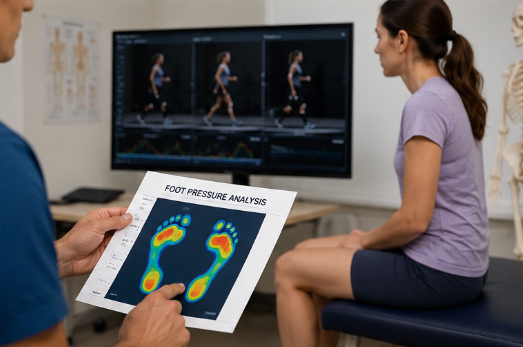
In daily movement, the foot is constantly adjusting to impact. Most of this happens without notice. When alignment is balanced, pressure spreads naturally across the heel, arch, and forefoot. When it is not, certain areas take more load than they should.
In practice, this is what users describe as “tired feet” after standing too long, or discomfort concentrated in the heel or arch area. In footwear development, these issues are usually traced back to how the insole manages alignment under load.
How Custom Orthotic Insoles Control Foot Position
Custom orthotic insoles are developed based on foot shape data, pressure points, or physical fitting samples. In OEM projects, the goal is not to change the foot, but to guide how pressure is distributed during movement.
Instead of forcing correction, the insole works through structured zones. Certain areas provide support, while others allow controlled flexibility. This balance is what keeps the foot stable during walking or long periods of standing.
In real production, this structure is adjusted through mold design, density control, and layer combination rather than a single material change.
Arch Support as a Structural Control Point
Arch support is usually the most sensitive part of an orthotic insole. Even small adjustments in height or hardness can change how the entire product performs in real use.
From a manufacturing point of view, the arch area is designed to control midfoot collapse during load. When the arch is too soft, the insole loses stability. When it is too rigid, it affects comfort. Most OEM designs sit somewhere in between, depending on the target market.
Pressure Distribution During Walking
Every step creates a shift of force from heel to toe. In standard foam insoles, this force is mostly absorbed without structure. In orthotic designs, the goal is to manage how that force is spread across the footbed.
In real use testing, this means reducing concentrated pressure points—especially in the heel strike and forefoot push-off stages. This is also where material layering becomes important in production.
Materials Used in Custom Orthotic Systems
Most custom orthotic insoles are not made from a single material. Instead, they combine different layers to achieve both comfort and stability.
- EVA foam: used as the base cushioning layer to absorb impact and provide structure flexibility
- PU materials: used in comfort-focused designs where long-term rebound is required
- TPU or thermoplastic components: used for arch structure and alignment control
In OEM production, the combination of these materials is adjusted based on footwear category and price positioning.
How Custom Orthotic Insoles Are Made in OEM Production
In most factory workflows, custom orthotic insoles follow a structured development process. It usually starts with foot data collection or sample evaluation, followed by mold adjustment and prototype testing.
Once the structure is confirmed, material layering and lamination are finalized for mass production. At this stage, consistency becomes the main focus—especially for large-volume orders from brands and wholesalers.
Small differences in density, arch height, or bonding quality can affect comfort performance across an entire batch, so production control is critical.
Where Alignment-Focused Insoles Are Used
Custom orthotic insoles are used across several footwear categories, depending on design and material strength:
- Work boots and industrial footwear
- Safety shoes for manufacturing and construction
- Sports and running footwear
- Medical and footcare-related applications
- Daily comfort insoles for retail brands
Each category requires a slightly different balance between cushioning and structural control.
Conclusion
The science behind custom orthotic insoles is not only about foot correction. In real production terms, it is about controlling how materials, structure, and pressure behave together inside a shoe.
For footwear brands, distributors, and OEM buyers, the value of orthotic insoles lies in this balance—stable alignment support, consistent production quality, and predictable performance across different footwear applications.